
Our reviewers evaluate salary independently. Learn how we stay transparent, our salary methodology, and tell us about anything we missed.

Our reviewers evaluate salary independently. Learn how we stay transparent, our salary methodology, and tell us about anything we missed.
Early in my career, I made a classic mistake. I treated salary like a fixed label, instead of a moving target tied to scope.
I thought, “I’m a writer, so my salary will look like other writing roles.” But technical writers get paid more because the job is not just writing. It’s reducing risk, preventing support tickets, documenting complex workflows, and keeping product knowledge from turning into tribal lore.
So in this guide, I’ll walk you through what an entry-level technical writer’s salary looks like, what influences your starting pay, how it compares to similar roles, and what I’d focus on if I wanted to increase my salary trajectory quickly.

Most salary numbers you’ll see online are messy because they mix different definitions of “entry-level,” different locations, and different job scopes. Some “entry-level” listings are closer to junior or early mid-level, especially when companies want someone who can run independently with minimal on-the-job training.
Here’s how I recommend grounding your expectations.
First, triangulate across multiple salary sources as a reality check.
For example, Salary.com lists an average U.S. entry-level technical writer salary of around $64,201 (Oct 1, 2025), while ZipRecruiter lists an average of around $81,001 (as of Jan 3, 2026). And on Levels.fyi, entry-level technical writer compensation across top companies in the U.S. can range from $49,920 to $100,000, depending on the company and compensation mix.
Second, interpret “entry-level” as a band, not a single number. In practice, entry-level compensation looks like a base salary plus occasional additional pay (bonus, profit-sharing, stock, overtime in certain contexts). Some companies also have a structured pay breakdown with clear ranges per level. Others negotiate case-by-case based on education, experience, and responsibility.
Third, pay attention to salary trajectory, not just starting salary. A role that starts slightly lower but gives you real ownership, mentorship, and exposure to complex projects can lead to faster salary growth potential than a role with a higher starting number but limited scope.
If you want context on what the day-to-day work looks like at this level, read what an entry-level technical writer does alongside this salary guide. Salary makes more sense when you connect it directly to responsibilities.
Entry-level technical writers often do the same categories of work as experienced writers, just with less ownership and more support. That “less ownership” detail matters because responsibility is one of the biggest drivers of pay.
Most entry-level roles include writing and updating technical documentation such as how-to guides, product documentation, software documentation, instruction manuals, installation manuals, and user manuals. You will spend a lot of time collaborating with subject matter experts to turn product specifications and engineering notes into clear procedures.
You’ll also edit and update existing documents, which is one of the highest-value skills early in your career because it teaches you how real documentation breaks over time.
Where pay starts to rise is when your duties shift from “write what I’m told” to “own a slice of the documentation lifecycle.”
That can look like:
Another factor that pushes pay upward is technical complexity. If you’re documenting system architecture documentation, API behavior, or workflows that require careful risk management, you’re closer to the “higher leverage” end of technical writing. That doesn’t require you to be an engineer, but it does require comfort with technical challenges and the ability to verify what you write.
Entry-level salaries tend to be higher when the role involves greater ownership, more cross-functional coordination, and greater responsibility for accuracy and consistency, not just writing volume.
If you’ve ever compared two entry-level postings and thought, “How is this the same job?” you’re not imagining it. Entry-level technical writer salaries shift based on a handful of predictable factors, and once you know them, the range starts to feel less random:
Understanding these factors will help you assess salary ranges and identify roles that align with your financial goals and career trajectory.
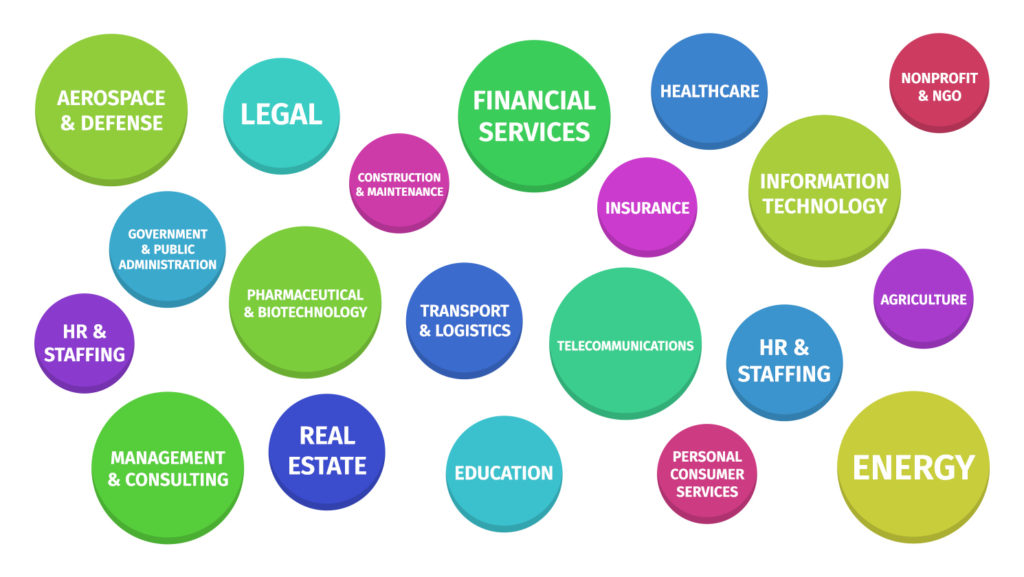
Salary comparisons can be useful, as long as you compare roles that are truly similar in job duties and required skills.
A common comparison is technical writing vs content writing. In many companies, content writing leans toward marketing, brand voice, and persuasion. Technical writing focuses on procedures and documentation that help users complete tasks.
That difference matters because technical writing is often closer to product risk reduction. If the documentation is wrong, users fail, support volume spikes, or the product gets blamed. Companies tend to pay more for roles that reduce those downstream costs.
Another comparison is technical writers vs general writing roles. For a late-2025/early-2026 snapshot from salary sites, PayScale lists an average Technical Writer salary around $70,016 (2026), compared with $57,801 (2026) for Content Writer and $50,000 (2026) for Writer/Author.
Again, these are averages across broad populations, not “entry-level only,” but they help explain why technical writing often benchmarks differently than general writing work.
You can also compare technical writing to adjacent communication roles like content strategists, UX writers, and instructional designers. In practice, compensation depends on where the role sits in the org. If it’s embedded in product teams with measurable outcomes (conversion, retention, fewer tickets), pay tends to rise. If it’s treated as “nice to have” support content, pay tends to compress.
If you want higher entry-level pay, target roles where the work is tied to product documentation, system changes, or customer success outcomes. If you want faster pay growth, target roles where you can build specialized skills and show measurable impact.
Entry-level technical writing is a ramp. The biggest driver of salary growth potential is how quickly you move from executing tasks to owning outcomes.
Most career progression looks like a shift in scope:
A huge salary lever is industry specialization. If you specialize in high-demand domains like cloud, APIs, security, or regulated environments, your compensation tends to rise faster because your skills are harder to replace. Another lever is changing employers. This is not a moral statement; it’s just how markets work. Many technical writers see their biggest jumps when they move to a company with higher pay bands or a more technical product surface area.
Certifications and professional credentials can help, but only when they translate into real capability. I like certifications that require you to build artifacts, learn industry-specific tools, or demonstrate regulatory-compliance workflows. Advanced degrees can matter in some niches, but they are rarely the most efficient path to higher pay compared to building proof through projects.
If you want a clear overview of how roles progress, I recommend reading the technical writer career path. The real secret to faster salary growth is not “work harder.” It’s “increase scope responsibly,” then document your impact so you can negotiate from evidence.
If I were optimizing for salary growth as an entry-level technical writer, I’d focus less on chasing a perfect number today and more on building leverage for the next role. Here’s what that looks like in practice:
By focusing on developing high-value skills, building niche expertise, and tracking your impact, you can position yourself for faster salary growth and better opportunities in the technical writing field.
Entry-level technical writers work in a variety of environments, and these settings influence both compensation and day-to-day stability. Here’s what you can expect:
Choosing an environment that values documentation as a critical part of product quality can provide both stability and opportunities for growth, especially early in your career.
If you remember one thing from this salary guide, let it be this: entry-level technical writer salary is not a single number, it’s a function of scope.
The fastest way to improve your compensation is to increase the scope you can handle reliably. Learn the tools. Get comfortable with SMEs. Develop technical aptitude. Build a portfolio that proves you can handle real documentation, not just pretty writing.
Then, when you negotiate, negotiate from evidence.
Here are the most frequently asked questions about the entry-level technical writer role:
It depends heavily on location, industry, and job scope. A practical approach is to triangulate across multiple salary sites and then estimate where your specific role lands based on scope, specialization, and location.
Sometimes. Some companies include bonuses, overtime (in specific contexts), or stock compensation. Many entry-level roles are primarily base salary, but total compensation can vary widely based on company size and industry.
Salary growth is usually fastest when you take on more scope, such as owning a doc set, managing review cycles, or specializing in a technical domain. Many writers see bigger jumps when moving from entry-level to mid-level responsibilities, especially if they can show measurable impact.
It can, but it’s rarely the biggest factor compared to experience, domain knowledge, and responsibility. A bachelor’s degree is common, and advanced degrees may help in specialized industries. In many hiring loops, a strong portfolio and proof of competence matter more than a specific degree.
Freelance can pay more per hour, but it comes with more risk and unpaid overhead. Your earnings depend on your ability to find projects, manage clients, and price your work correctly. Full-time roles often provide more stability and a clearer growth path early on.
The technical writer occupation continues to have steady demand, driven by the need to convert complex information into usable documentation and support digital products. Even when overall growth is modest, ongoing openings come from turnover and replacement, which keeps the market active for new entrants.
Get the weekly newsletter keeping 23,000+ technical writers in the loop.
Learn technical writing and advance your career.
Please check your email for a confirmation message shortly.





















Get our #1 industry rated weekly technical writing reads newsletter.
Your syllabus has been sent to your email