Our reviewers evaluate software independently. Learn how we stay transparent, our methodology, and tell us about anything we missed.

Our reviewers evaluate software independently. Learn how we stay transparent, our methodology, and tell us about anything we missed.
If you’ve ever tried to write a novel, you already know the truth: the hard part is not “writing sentences.” The hard part is keeping a story coherent for 80,000 to 120,000 words while your brain keeps inventing new problems to procrastinate with. I’ve written long-form books, built documentation systems that span hundreds of pages, and I’ve spent years inside AI writing workflows while building writing products .
So when I say most “AI novel writer” tools are really just generic text generators with a fancy landing page, I’m not being cynical. I’m trying to save you time.
Here’s my pick of the 12 best AI novel writing tools from the platforms reviewed.
A quick heads up before we get into the detailed reviews. Fiction and nonfiction authors need different things from AI. Fiction writers need character management, narrative structure, voice consistency, and scene-level control. Nonfiction writers (and authors building an audience) care more about outlining, research workflows, repurposing, and sometimes SEO optimization.
So as you read, don’t just ask “Which tool is best?” Ask “Which tool is best for the part of my process that’s currently breaking?”
Most AI writing lists ignore a key reality: a novel is a workflow, not a prompt. You need ideation, planning, drafting, rewriting, editing, and continuity management. Some tools are great at one stage and weak at the others, which is fine if you know what you’re buying.
Below, I review each tool the way I’d evaluate it if I were starting a novel this month.

Squibler is one of the more “novel-native” options because it’s built around long-form writing workflows instead of short-form templates. Full disclosure: Squibler is my product.
But that’s why I know it’s designed for books, chapters, scenes, and the real project management that comes with getting a draft finished.
If you want a tool that feels like it expects you to write a novel, not a landing page, Squibler is a strong starting point.
When I evaluate novel tools, I’m obsessed with momentum. The tool has to keep you moving when your motivation fades, because that’s when most novels die. Squibler gives structure to the process, so you’re not reinventing your workflow every time you sit down to write.
It’s also easier to maintain narrative cohesion when the tool supports the way novels are actually built: scene by scene, with character and plot threads you can reference while drafting.
Pros
Cons
LEARN MORE ABOUT SQUIBLER: Check out Squibler on their website.

Jasper is not a fiction-first tool, but I’m still including it because some novelists are also building platforms. If you’re writing a novel and simultaneously writing newsletters, blurbs, ads, author bios, or companion content, Jasper’s voice controls can keep everything consistent.
Think of Jasper less as “write my novel” and more as “keep my author voice consistent across everything I ship.”
A lot of authors underestimate how much writing happens around the book. Even if you’re traditionally publishing, you’ll write pitches, blurbs, updates, posts, and marketing assets. Jasper is strong when you need the same tone across multiple formats without constantly re-explaining your style.
For fiction drafting itself, Jasper is not where I’d start. For packaging, positioning, and platform writing, it can be useful.
Pros
Cons
LEARN MORE ABOUT JASPER: Check out Jasper on their website.
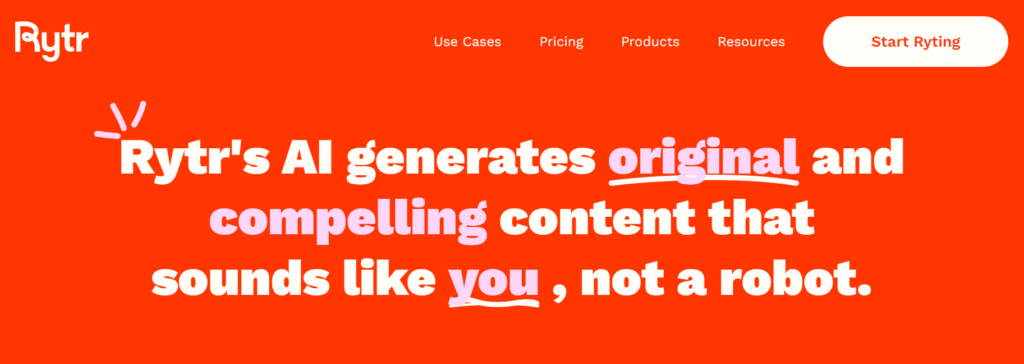
Rytr is a practical option if you want a lightweight writing assistant without paying premium pricing. It’s not going to replace a dedicated fiction tool, but it can help with early drafts, scene variations, and quick rewrites.
If you’re an aspiring novelist or you’re experimenting without committing to an expensive stack, Rytr is a reasonable entry point.
Not everyone needs a sophisticated novel engine. Sometimes you just need something that helps you get words on the page and keep moving. Rytr is useful when your goal is momentum and volume, especially in early drafting.
I also like budget tools for experimentation. You can test whether AI helps your process before investing in a more specialized system.
Pros
Cons
LEARN MORE ABOUT RYTR: Check out Rytr on their website.
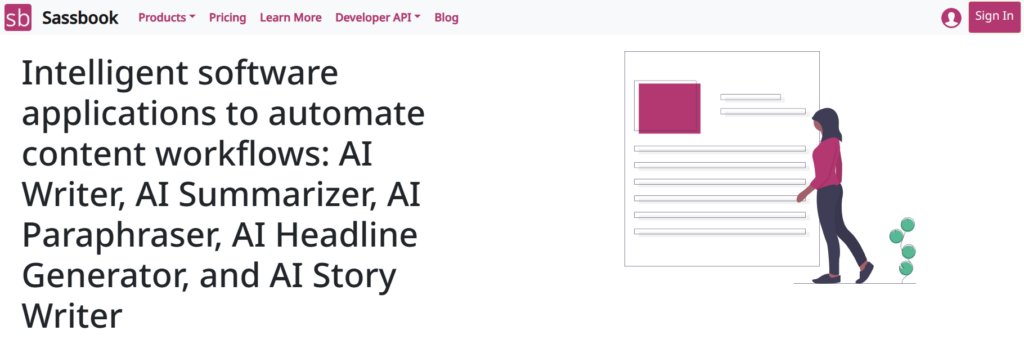
Sassbook is interesting because it leans into rewriting and analysis rather than only generation. If you already have text and you want to tighten it, restructure it, or experiment with alternatives, Sassbook can be helpful.
This is the kind of tool that earns its keep during revision, not during ideation.
The biggest failure mode I see with AI novel writing is “AI-generated filler.” Writers generate too much too quickly, then the draft turns into a pile of fluent paragraphs with no spine. Sassbook is more useful when you’re refining what you already wrote.
If you’re the type of writer who likes to draft rough, then rewrite aggressively, Sassbook fits that workflow better than many general tools.
Pros
Cons
LEARN MORE ABOUT SASSBOOK: Check out Sassbook on their website.
AI Dungeon is a different category. It’s interactive storytelling where you “play” your way into plot ideas, character moments, and world details. It’s not a structured novel drafting tool, but it can be incredibly productive for worldbuilding and exploratory writing.
If outlining kills your creativity, AI Dungeon can help you discover story material through improvisation.
Worldbuilding is difficult because it’s abstract until it’s lived. AI Dungeon makes it lived. You can throw your character into a situation and see what emerges, then take the best pieces back into your manuscript.
It’s also useful for writers who struggle with idea expansion. Instead of asking AI for “plot ideas,” you generate experience inside the world and harvest the best outcomes.
Pros
Cons
LEARN MORE ABOUT AI DUNGEON: Check out AI Dungeon on their website.
Shortly AI is built around a clean drafting experience. The core concept is simple: you write, it continues. You steer it. It continues again. That minimalism is a feature, not a limitation.
If you get overwhelmed by tool complexity, Shortly AI can keep you in flow.
A lot of writing tools try to be everything. Novel writing often needs the opposite. It needs focus. Shortly AI is useful when you want to sprint through a draft without constantly stopping to tinker with settings.
This tool shines when your bottleneck is writing volume and you don’t want the interface to distract you.
Pros
Cons
LEARN MORE ABOUT SHORTLY AI: Check out Shortly AI on their website.
ProWritingAid is not primarily a generative AI novel writer. It’s an editing and analysis tool, and honestly, this is the category many authors need more than generation.
If you already have a draft, ProWritingAid helps you improve clarity, pacing, repetition, and consistency across a manuscript.
Most writers don’t need more words. They need better words. ProWritingAid is the tool I’d reach for when I want to reduce repetition, tighten sentences, and catch the patterns I stop seeing after rereading the same chapter ten times.
It’s also helpful for narrative consistency. If your character voice drifts or you repeat the same phrasing across scenes, tools like this surface the problem faster than your brain can.
Pros
Cons
LEARN MORE ABOUT PROWRITINGAID: Check out ProWritingAid on their website.
ChatGPT is the most flexible “writing assistant brain” on this list. It’s not built specifically for novels, but it becomes incredibly powerful when you use it like a collaborative partner: outlining, brainstorming, character development, scene planning, and revision.
This is the tool I use when I want to talk my way into a better draft.
The biggest advantage of ChatGPT is the conversational loop. You can brainstorm plot twists, test character motivations, explore alternate scene outcomes, and build outlines quickly. It’s also great for “talking points” style planning, where you map out what a chapter must accomplish before drafting it.
The downside is structure. ChatGPT will generate a scene that sounds plausible even if it contradicts your last chapter. So it works best when you bring your own planning system.
Pros
Cons
LEARN MORE ABOUT CHATGPT: Check out ChatGPT on their website.
Copy.ai is not fiction-first, but it’s useful if your novel writing is connected to content repurposing. Authors writing serialized fiction, building newsletters, or creating companion content can use Copy.ai to turn one story idea into multiple assets.
If you’re writing creative nonfiction or hybrid projects, it becomes more relevant.
A lot of authors are building businesses now, not just books. That means the novel is one part of a larger system: email list, landing pages, content marketing, social posts, and audience growth. Copy.ai helps you repurpose and distribute, which is a different skill than writing the book.
For pure fiction drafting, I would not pick Copy.ai first. For author platforms, it can be useful.
Pros
Cons
LEARN MORE ABOUT COPY.AI: Check out Copy.ai on their website.

Writesonic is good at generating multiple versions quickly. For novelists, that’s useful when you’re stuck on a scene and you want options, not a final answer.
I think of it as a “variation engine.” It’s not the whole system, but it can speed up exploration.
When I’m blocked, I don’t need perfect prose. I need three plausible directions so I can pick one and continue. Writesonic is useful for that moment, especially for dialogue alternatives or rewriting the same beat in different tones.
It also has a more modern interface than some budget tools, which helps if you plan to use it frequently.
Pros
Cons
LEARN MORE ABOUT WRITESONIC: Check out Writesonic on their website.
AI-Writer is positioned more toward long-form writing than quick snippets. It’s not a dedicated fiction engine, but it can help generate structured drafts, summaries, and expansions that you can adapt into narrative form.
This can be helpful for creative nonfiction or story-adjacent projects where structure matters.
Some authors want help building a structured draft from a concept, especially if they’re writing serial content, creative nonfiction, or a novel that includes research-driven elements. AI-Writer fits better when you want the tool to push you toward structure rather than freeform improvisation.
It’s also relevant if you care about SEO compatibility for digital storytelling, but I’ll be honest: SEO is usually secondary for novel writing unless you’re building an audience through content.
Pros
Cons
LEARN MORE ABOUT AI-WRITER: Check out AI-Writer on their website.

Simplified is a broader content platform that includes writing, planning, and optimization features. For novelists, it’s most relevant when your fiction work intersects with digital storytelling, serialization, or content strategy.
If you’re a writer building an audience through content, Simplified’s combination of creativity and SEO features can be useful.
This is less about “help me write chapter 14” and more about “help me build a writing engine around my projects.” If you’re producing story content regularly and you want content planning tools alongside drafting, Simplified fits.
For pure fiction writing, you may prefer a tool like Squibler plus a separate editing layer. For fiction plus platform growth, Simplified can be a practical all-in-one environment.
Pros
Cons
LEARN MORE ABOUT SIMPLIFIED: Check out Simplified on their website.
Here’s the simplest way I can explain this: fiction is continuity plus emotion. Nonfiction is structure plus truth. Some tools can support both, but most lean toward one side.
If you’re writing fiction, prioritize tools that support narrative structure, character management, and natural-sounding prose. Sudden voice drift, inconsistent character motivation, and “AI-generated filler” are your main enemies, so choose tools that help you revise and maintain cohesion. In this list, Squibler, AI Dungeon, Shortly AI, ProWritingAid, and ChatGPT tend to fit fiction workflows best, depending on your writing style.
If you’re writing nonfiction or creative nonfiction, your bottleneck is often outlining and research. You need a system for organizing facts, building arguments, and avoiding confident mistakes. Tools like ChatGPT can help you outline, Simplified can help you plan and distribute, and Copy.ai or Jasper can help you repurpose content. The key is adding a fact-check habit to your workflow, because AI can sound correct even when it is not.
Most authors end up using a stack, not one tool. The real question is which tool you use for which job.
ChatGPT is a great brainstorming partner and outlining engine, but it is not a manuscript manager. It’s best when you want interactive ideation, character development conversations, and revision experiments. If you use it for drafting full chapters, you’ll want a separate place to track character sheets, story bible details, and continuity.
ProWritingAid is the opposite. It won’t generate your plot, but it will make your prose cleaner and your manuscript more consistent. If you already have words on the page, this kind of tool can be worth more than another generator.
Shortly AI and Rytr are both “get words fast” tools, but they feel different. Shortly AI is more about flow and continuation. Rytr is more about quick drafts and variations at a budget. If you’re a sprint writer, Shortly AI usually feels better. If you’re experimenting cheaply, Rytr is fine.
Squibler is the most novel-shaped tool in the core list because it’s designed for long-form projects. If you want a structured environment, it tends to outperform general tools. AI Dungeon is less structured but better for creative exploration. I’d use AI Dungeon to discover material and Squibler to turn that material into chapters.
Jasper and Copy.ai are not fiction-first. They’re best when you’re building an author platform. If you’re writing fiction and also running a business, they can help with the writing you do around the book.
AI is powerful, but it has failure modes that matter a lot in fiction. The biggest one is AI-generated filler. The model will keep writing even when it has nothing meaningful to say. That creates a draft that feels bloated and emotionally flat.
The second problem is narrative cohesion. AI will contradict itself if you let it. It may change character voice, forget plot constraints, or introduce new facts that never existed. This is not the model being malicious. It is simply not “tracking your novel” the way you are.
The third risk is disconnect with the text. If you generate too much too quickly, you stop feeling like the author. You become an editor of AI output. Some writers love that. Most writers eventually hate it because the book stops feeling like theirs.
My rule is simple: keep human decision-making at the center. Use AI to generate options, explore possibilities, and accelerate revision, but do not outsource creative direction. The best novels are the product of taste, not speed.
I’m keeping the main list aligned with the tools already in the article, but if you’re the kind of writer who likes to test what’s next, here are a few emerging or notable tools and trends to watch in 2026.
Tools like Novelcrafter are pushing “planning system first” workflows, where AI is integrated into scene-level drafting and character management instead of being a generic chat window. That direction matters because story coherence is the big bottleneck, not sentence fluency.
I’m also seeing more “AI-guided writing” features: tools that act like a coach and give feedback loops, not just output. That’s where features like an AI feedback feature, describe-style buttons, and guided revision are heading, and it’s the first time AI starts to feel like it supports craft instead of just volume.
If you’re writing nonfiction alongside fiction, tools like Notion AI and content planning platforms like Dibbly Create are worth watching because they connect outlining, planning, and publishing workflows. That matters if your book is part of a content engine, not just a standalone project.
If you want to get better at writing long-form content in general, I’d start with my guide on what technical writing is because it teaches you the underlying discipline that makes long projects readable. A good novel is not “technical writing,” but the skills transfer more than people expect, especially around clarity and structure.
If you’re building a writing workflow, you’ll also benefit from understanding the document development life cycle. Novels have drafts, revision passes, editorial stages, and formatting requirements, and thinking in systems makes the process less painful.
If you’re exploring adjacent tools, you might like my breakdown of the best AI story writers and the best AI book writer tools. And if you’re writing scripts or adapting stories, check out my list of AI script generators.
If you’re curious where all of this is going, I also collected insights from professionals in what I learned from technical writers on the future of AI, which helps frame what’s hype versus what’s changing how writers work.
The first thing I evaluate is whether the tool helps me maintain narrative cohesion. A novel is not a single output. It’s a chain of scenes that must logically and emotionally connect. If a tool makes it harder to keep character motivation consistent, it’s a dealbreaker.
I look for tools that either support scene-level workflows or make revision and continuity checks easier. This is why editing tools matter so much in fiction stacks.
Characters are where fiction lives or dies. If your protagonist starts sounding like a different person halfway through the book, readers feel it immediately. Tools that support character sheets, consistent voice, and reusable style constraints are more valuable than tools that just generate content quickly.
Even if the tool does not have a formal “character management” feature, I want it to respect constraints when I provide them.
This is the hardest balance. AI can produce fluent prose, but it often inflates scenes with filler. I test tools by pushing them through multiple rewrites. If the third rewrite turns into repetitive phrasing or vague emotion, I know I’ll spend too much time cleaning up.
I also care about sentence-level control. Some tools make it hard to steer the voice. If I cannot keep the prose sounding like me, I will abandon the tool.
Even if you’re a discovery writer, you still have a planning system. It might just live in your head. The question is whether the tool supports the way you plan. Some writers need beat sheets and structured arcs. Others need flexible notes, scene goals, and fast iteration.
I prefer tools that either include a planning layer or play nicely with one. Tools that force you into a workflow you hate are a trap.
Novel writing is rewriting. So I evaluate tools by how they support revision. That includes restructuring scenes, tightening dialogue, improving pacing, and removing repetition. If the tool only helps with drafting, it’s incomplete for serious novel work.
This is also where AI feedback features matter. A tool that can surface inconsistencies or repetitive patterns saves you hours.
The writing interface matters more than most people admit. If it’s clunky, distracting, or full of menus that pull you out of flow, you will not use it consistently. I’m looking for a tool that helps me stay in the story.
This is why minimal tools like Shortly AI can beat “powerful” tools for certain writers. The best tool is the one you will actually open every day.
Pricing is not just the monthly cost. It’s also the hidden cost of writing limits. If a tool throttles you mid-chapter, your workflow breaks. That friction is expensive.
I always compare pricing to the amount of writing you realistically need to do. Novels are big. A tool that is “cheap” but restrictive can cost more in time and frustration than a pricier tool that keeps you in flow.
If you work with editors, co-authors, or beta readers, team support matters. Even if you write solo, export formats matter because your manuscript eventually needs to live in standard tools for editing and publishing.
I look for tools that make it easy to move text in and out cleanly. Lock-in is a problem for authors.
Most writers pick a tool based on marketing. I pick based on pain. If you struggle to outline, you want ChatGPT plus a planning system like Notion AI. If you struggle to draft, you want a low-friction drafting tool like Squibler or Shortly AI. If you struggle to polish, you want ProWritingAid as your foundation.
Once you know the bottleneck, the tool choice becomes obvious.
Planners need structure, scene goals, and character management. Discovery writers need fast iteration and a way to explore possibilities. The same tool can feel magical to one writer and unusable to another.
If you are a planner, prioritize tools that support narrative structure and tracking. If you are a discovery writer, prioritize tools that help you explore without boxing you in.
This is the biggest upgrade you can make. Drafting tools help you create raw material. Editing tools help you turn raw material into a novel. Expecting one tool to do both perfectly is how you end up disappointed.
A simple stack that works for many authors is: one drafting tool plus one editing tool. For example, Squibler plus ProWritingAid, or Shortly AI plus ProWritingAid, with ChatGPT as your brainstorming layer.
Chatbots are powerful, but only if you treat them like a collaborator, not a ghostwriter. Use them to brainstorm plot options, test dialogue alternatives, tighten a scene goal, or outline a chapter’s talking points before drafting.
Then take that output into your main writing environment and write the scene with intention. That’s how you avoid disconnecting with the text.
Do not judge tools by demos. Pick one real chapter. Test outlining, drafting, rewriting, and editing. Try three revisions. See if the tool helps you maintain voice. See if it introduces filler. See if you feel more in control or less.
If the tool makes you feel like you’re managing the tool instead of writing the novel, move on.
If you want the AI to support your creativity, you need guardrails. That means keeping a story bible, tracking character voice, and defining scene goals before generation. It also means treating AI output as raw material, not final prose.
The authors who get the best results are the ones who stay in charge.
AI novel writing tools can help authors tackle challenges like writer’s block, narrative flow, and character consistency. These tools enhance your process, offering support for brainstorming, drafting, and revision.
The right tool depends on your workflow. Whether you need structure or flexibility, there is an option to suit your style. By combining these tools with your creativity and judgment, you can produce an authentic, engaging novel.
Use AI as a collaborator to maintain momentum and focus on crafting a story that connects with readers.
Here I answer the most frequently asked questions about AI novel writing tools.
Yes, but it depends on how you use it. AI is best at accelerating ideation, generating alternatives, and speeding up revision passes. It is not great at maintaining long-range narrative cohesion unless you provide structure.
If you use AI as a creative assistant and keep editorial control, you can absolutely write faster and revise smarter.
A chatbot like ChatGPT is flexible and conversational. It’s great for brainstorming, outlining, and quick rewrites. A dedicated novel tool is usually built around chapters, scenes, and long-form workflows, which helps you stay organized and maintain consistency.
If you only use a chatbot, you’ll probably need a separate planning system. If you use a novel tool, you may still want a chatbot for ideation.
You avoid filler by giving the AI constraints and by editing aggressively. Instead of prompting “write a scene,” prompt “write a scene with a clear goal, a conflict beat, and a turn at the end.” Then cut anything that does not move plot, character, or tension.
Also, do not generate huge chunks at once. Generate small pieces, revise, and integrate. That keeps the prose intentional.
Some tools serve both, but fiction and nonfiction have different needs. Fiction requires character management, voice consistency, and narrative structure. Nonfiction requires outlining, research integration, and careful fact-checking.
If you write both, you’ll likely use a stack: a fiction-friendly drafting tool plus a planning and repurposing tool for nonfiction work.
It can, if you outsource too much. The disconnect happens when you become an editor of AI output instead of an author making choices. The fix is to use AI for options and exploration, then write the final version yourself or rewrite heavily in your voice.
If you keep human decision-making at the center, AI usually increases creativity because it reduces the fear of blank pages.
From a workflow perspective, yes, many authors publish AI-assisted work. The bigger questions are originality, disclosure expectations, and the policies of whatever platform or publisher you’re using. Those rules can vary, so you should always check the specific guidelines that apply to your publishing path.
What matters most is that the final manuscript is cohesive, original, and clearly shaped by a human author’s taste and intent.
Get the weekly newsletter keeping 23,000+ technical writers in the loop.
Learn AI prompting and advance your career.
Please check your email for a confirmation message shortly.





















Get our #1 industry rated weekly technical writing reads newsletter.
Your syllabus has been sent to your email