Our reviewers evaluate career opinion pieces independently. Learn how we stay transparent, our methodology, and tell us about anything we missed.

Our reviewers evaluate career opinion pieces independently. Learn how we stay transparent, our methodology, and tell us about anything we missed.
I like templates because they keep me honest. They force clarity on the story, the plan, the budget, and the evaluation before I’m deep in draft mode with a deadline breathing down my neck.
A good template gives you structure, not content. It helps you capture the same core information most funders expect: the problem, the project, the people served, the outcomes, the budget, and why you can deliver.
It also protects your time. When you have a reusable skeleton, your energy goes into tailoring to the funding agency’s priorities instead of formatting from scratch.
I treat templates like scaffolding. I keep the headings and the logic, then I rewrite the sentences so they match your mission statement, your voice, and the funder’s language.
The fastest way to customize a template is to tailor three things early: your target population, your measurable outcomes, and your proof that you can execute. When those are specific, the rest of the proposal becomes easier to write and easier to believe.
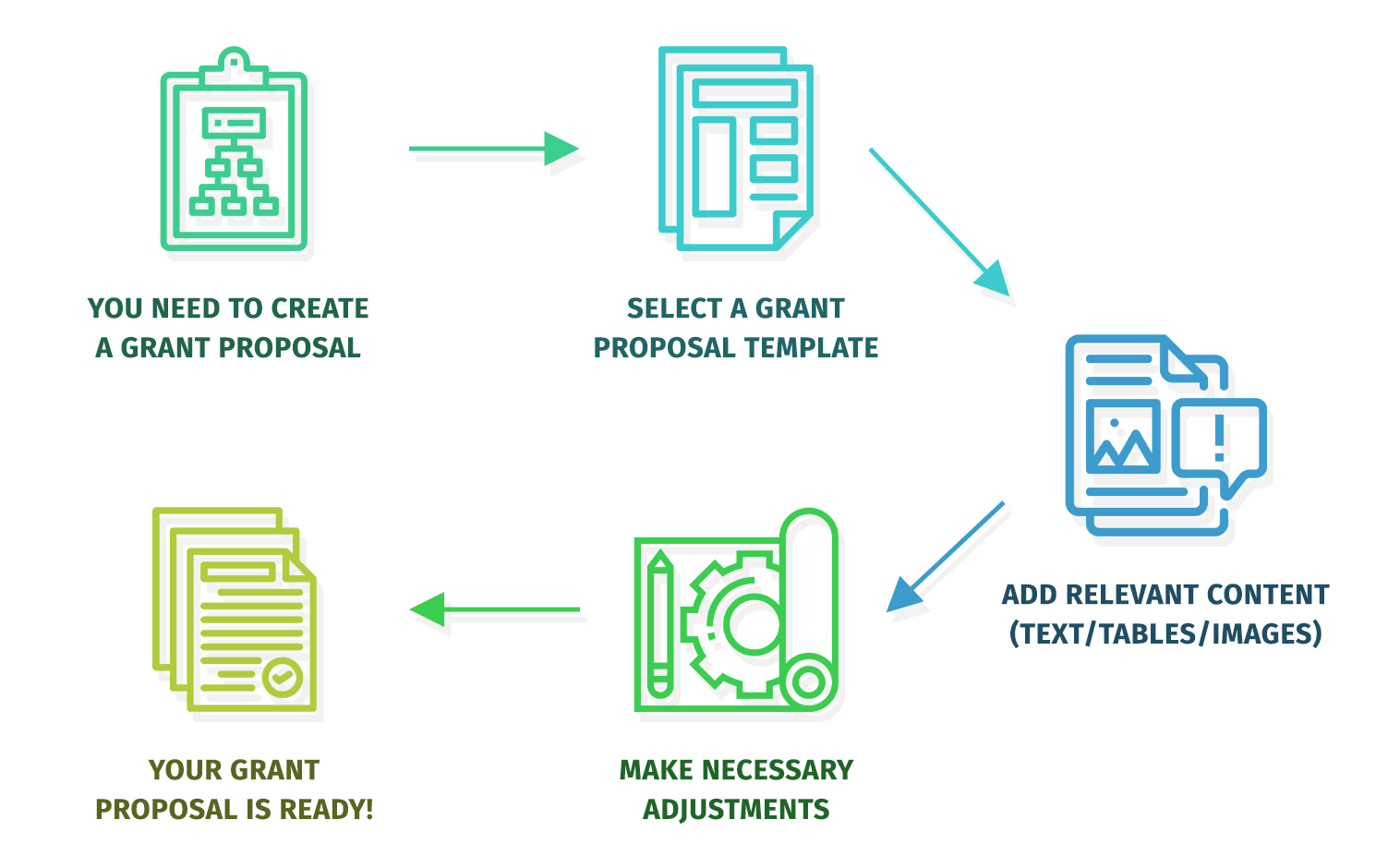
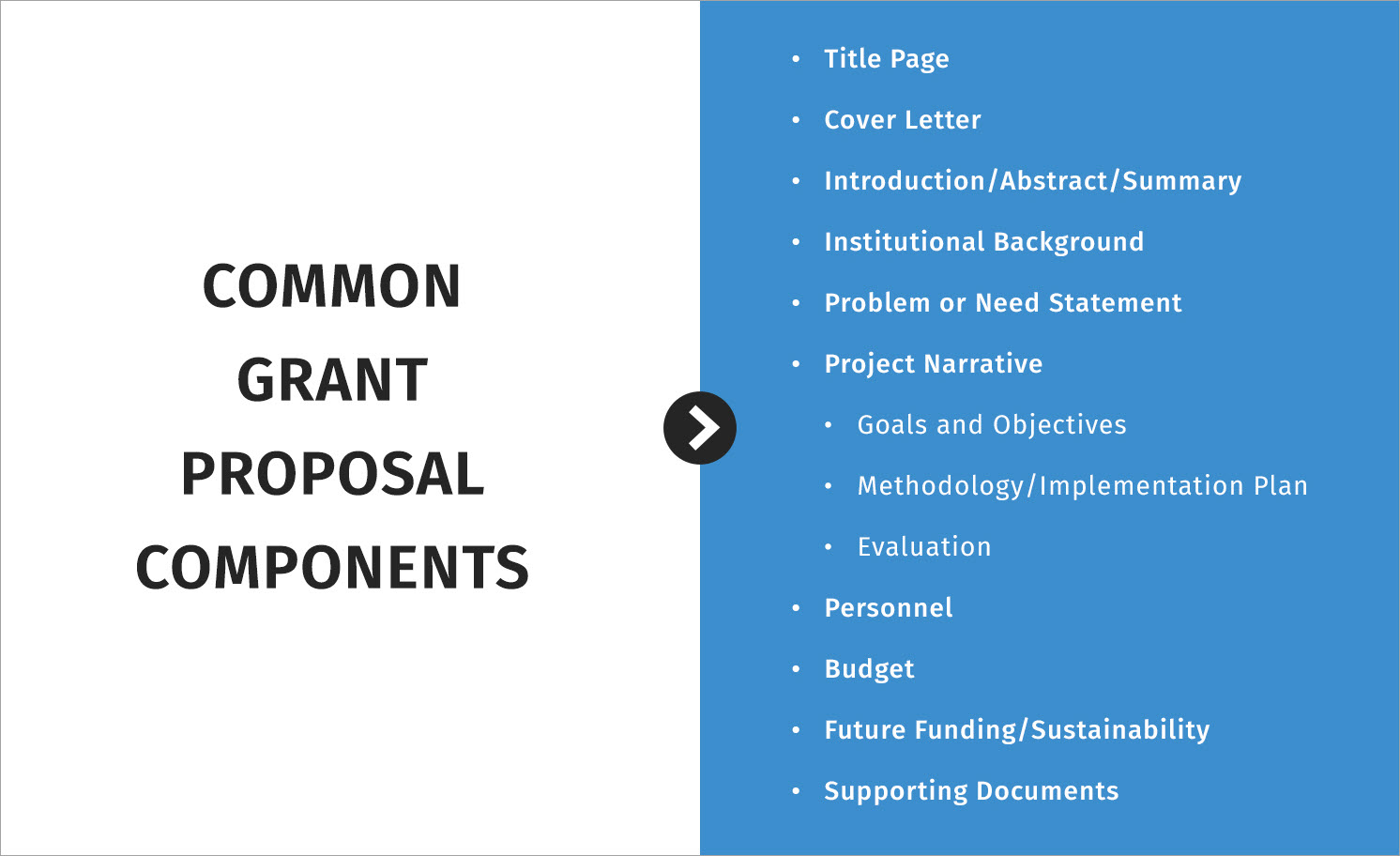
Below are the eight core templates I reuse across most grant applications. You can mix and match depending on the funder’s application guide, but the underlying structure is surprisingly stable.
Your cover letter is the handshake. It should be short, confident, and clear about what you’re requesting and why you’re a fit.
I usually write the cover letter last, because it’s easier to summarize once the narrative and budget are finalized. If you want a deeper walkthrough, I break down the structure in my guide to grant proposal cover letters.
Use this structure (written in your own voice):
Subject: Grant Request for [Project Name] – [Organization Name]
Open with one sentence naming the funding request and the project period. Then add one sentence that states the problem and who benefits.
In the middle, include one sentence on the solution and one sentence on the measurable results you expect by a specific date. Close with a polite next step, like offering to share supporting documents or answer questions.
The executive summary is the “reviewer shortcut.” It should let a reviewer understand the project without reading anything else.
Strong executive summaries do five things quickly: they state the problem statement, the project idea, the implementation plan, the timeline, and the expected impact.
Use this structure:
Start with the project name, funding request, project dates, and target population. Then explain the need in 2–3 sentences, using one or two high-value statistics and a clear gap in services.
Next, describe the solution and implementation plan in 3–5 sentences total. Finish with measurable outcomes, how you will evaluate results, and a quick budget snapshot that signals where the money actually goes.
Before we dive deeper, if you’re interested in getting feedback from grant writing experts on a grant cover letter that you write, then check out our grant writing certification course.
The statement of need is where you earn urgency without sounding dramatic. You’re proving there is a real problem, your beneficiaries are affected, and the funding request is grounded in reality.
A strong statement of need also sets up the rest of the proposal. When this section is clear, your goals and objectives feel logical, your methods feel necessary, and your budget feels justified instead of arbitrary.
Start with a crisp problem statement in concrete terms. If someone reads only your first two sentences, they should still understand what is wrong, who is affected, and where it is happening.
Next, prove the problem using data and case-specific information. I like to include one or two local statistics plus one additional credibility signal, such as program waitlists, school attendance data, clinic utilization, hotline volume, or service gaps that your stakeholders can verify.
Then make the beneficiaries real without turning the proposal into a novel. One short story can help, but only if it clarifies the need and connects to measurable outcomes. The safest approach is a short, specific example followed by a sentence that ties it back to the broader community impact.
After that, identify the risk factors and what happens if nothing changes. This is where you quantify the “cost of inaction,” whether that is increased emergency care, higher dropout rates, housing instability, missed screenings, or reduced workforce readiness. The goal is not fear. The goal is showing that delay has consequences.
Then name the gap. Explain why existing services, programs, or systems aren’t solving this problem right now. Keep this respectful and factual, because reviewers don’t want blame, they want clarity.
Close by connecting the need to your goals and objectives. This is where you bridge the problem to your plan: what you will produce as outputs, what will change as outcomes, and how that maps to the project timeline. If you do this well, your project stops feeling like “a good idea” and starts feeling like “a necessary next step.”
Include stakeholders explicitly when it strengthens credibility. That can be a sentence about who helped identify the need, such as partner agencies, schools, community leaders, program officers, or advisory groups.
Match your tone to funding requirements. If a funder prioritizes equity, prevention, workforce development, or rural access, your need statement should reflect that lens naturally, not as a last-minute keyword sprinkle.
Avoid vague claims like “many families struggle.” Replace them with numbers, dates, and service-area specifics whenever possible. If you can’t quantify something, make it observable, like a documented waitlist increase over a defined period.
The biggest mistake is writing the need like a generic issue that could be pasted into any proposal. If the section could be dropped into a different state, different city, or different program without changing much, it’s too broad.
The second mistake is mismatching the need with the rest of the proposal. If you claim the problem is urgent and large, but your goals are tiny and your timeline is vague, the proposal feels miscalibrated.
Goals are broad. Objectives are specific, measurable, and time-bound. I like to write objectives as commitments the evaluation plan can verify. If an objective can’t be measured, it belongs in the narrative, not in the objective list.
Use this structure:
Start with one program goal that describes the big outcome you’re pursuing. Then write 2–4 objectives that include a number, a target population, and a time window.
For each objective, define one key success indicator that tells the reviewer exactly how you’ll measure it. If your project has delivery targets, include cadence and volume, such as how many sessions, how often, and for how many participants.
Close with 1–2 sentences connecting the objectives back to your mission statement, so the project feels like a natural extension of your work.
This is the action plan, and it’s where projects either feel real or feel aspirational. Reviewers want to see what you’ll do, who will do it, and how the work unfolds across the program implementation period.
I write this section like project management documentation. It should be clear enough that someone new could understand the workflow without a meeting, and specific enough that the budget feels inevitable, not invented.
Reviewers want to see a clear structure. That usually means a short overview, a sequence of project activities, and a practical timeline.
They also want to see competence. That comes through when you name staff members and responsibilities, show how partnerships work in real life, and describe what supporting documents and systems will keep execution consistent.
Open with a short approach overview that states what you will do and why it works. If you’re using a known model, describe it briefly, then explain how it fits your community and target population.
Then describe project activities in phases. A setup phase typically includes hiring, onboarding instructions, training materials, procurement, or partner coordination. A delivery phase includes the actual service, education, outreach, or implementation steps. A wrap-up phase includes evaluation tasks, reporting, sustainability actions, and transition planning.
After phases, include a paragraph on staffing. Name the roles, percent effort if relevant, and who is accountable for major milestones. If a role is part-time, say so, because it impacts feasibility.
Then add a paragraph on partnerships. Reviewers trust partnerships when responsibilities are specific. Name what each partner contributes, what the communication cadence looks like, and how decisions are made when something changes.
Close with a timeline summary that matches your project timeline and your project budget. If your plan requires materials, travel, or consultants, those should be visible here, not introduced later in the budget section.
Strategy is the “why this approach” layer. It includes how you will recruit participants, how you will reduce barriers to access, and how you will keep implementation consistent across staff.
Strategy can also include earned revenue strategies if they fit the funder and the project. If a program will eventually generate revenue through service fees, training, memberships, or sliding-scale models, you can mention it as part of your sustainability logic, but only if the assumptions are realistic and aligned with funding requirements.
Language matters here. Use simple, operational wording, and define any specialized terms. If a reviewer has to decode your program model, they will assume implementation will be confusing too.
If your program relies on repeatable delivery, it helps to mention the internal toolkit you’ll use, such as scripts, curricula, SOPs, safety protocols, templates, referral workflows, or case management guides. You don’t have to attach everything, but you should signal that the program is built on more than good intentions.
Your evaluation plan is how you prove effectiveness. It’s also where you signal maturity, because a reviewer can tell whether your measurement plan is doable or wishful thinking.
I keep evaluation feasible. Reviewers prefer a simple plan that will actually get done over a complex plan that collapses in execution.
Use this structure:
Start by stating the purpose of evaluation in 1–2 sentences, then name the measurable outcomes you’ll track. Next, explain your data collection plan using both quantitative data and qualitative data.
If you’re tracking quantitative data, specify what numbers you’ll track and how often. If you’re tracking qualitative data, specify methods like interviews, focus groups, participant feedback, or testimonials, and explain what you’ll learn from them.
Close with your reporting timeline, including progress reports and the final report, and name who is accountable for delivering each reporting requirement.
Budgets win or lose trust fast. Your project budget should match your project objectives and your methods section, and your budget justification should explain the logic behind each major line item.
If you want a detailed walkthrough, I wrote a full guide to grant proposal budget templates.
Use this structure:
Open with a short funding request summary that states the amount requested and what it covers. Then explain your budget by category in short paragraphs.
For personnel, name roles, percent effort, duration, and how staffing supports delivery. For fringe, state your fringe rate and what it includes. For travel, tie travel directly to project delivery and specify assumptions. For supplies, tie quantities to activities and explain the basis for estimates.
End with a budget justification paragraph that explains why the costs are reasonable, necessary, and aligned to the plan.
This section answers “why you.” It should show capacity, credibility, and fit for the project without reading like an About Us page.
I focus on what matters to a funder: legal status, track record, staffing capacity, and evidence you can execute and report. This is also where you reduce risk, because a funder is not only funding the project, they’re funding your ability to manage the award responsibly.
It proves you are established enough to deliver. That can be years in operation, stable leadership, consistent programming, or a track record of managing similar projects.
It proves you have capacity. That includes full-time and part-time staffing levels, role clarity, systems for tracking services, and the ability to manage partnerships without chaos.
It proves you are credible. That can be past results, previous grant recipients you can cite, audits or sound financial controls if relevant, and evidence your team can handle reporting.
Start with organization information in two or three sentences: mission statement, legal status, year established, and service area. Don’t bury the basics, because reviewers often look for them quickly.
Then describe your relevant programs and results. Keep it connected to the proposal. This is not your entire history, it’s your proof of fit. Mention one or two outcomes that show success, even if they’re small, as long as they are real and measurable.
Next, describe capacity in practical terms. Name key staff members involved in the project, how roles are supervised, and how work is coordinated. If you have part-time staff, volunteers, or contractors, say how they’re managed and how continuity is maintained.
Then describe your strategic priorities. This is where you show the project is not a random one-off. Connect the proposed work to a longer-term plan, such as a multi-year strategic plan, expansion goals, or program maturation.
Close with readiness and controls. Briefly describe the systems you use for documentation, procurement if applicable, partner coordination, and reporting. The goal is to make the reviewer feel you can handle the award without creating a compliance headache.
Avoid writing like marketing copy. Reviewers trust specificity more than adjectives. “We served 1,200 clients across three counties last year” is stronger than “We are a leading organization in the region.”
Avoid an “everything we do” list. If you do too much in this section, you dilute the relevance. Make it easy for reviewers to connect your history and capacity directly to this project.
Templates are only half the system. The other half is staying organized, staying compliant, and building repeatable habits.
If you want structured learning that reinforces these proposal sections with practice, Candid’s learning catalog is a strong option for foundation-style grant writing.
If you want to stop reacting to deadlines, a grant calendar and work plan template is one of the simplest improvements you can make. GrantStation’s guide to building a grants calendar is a useful model even if you track everything in your own spreadsheet.
If you want the full workflow that wraps around these templates, pair this article with my grant writing process guide. It’ll help you turn templates into a system instead of a one-off document.
Grant writing templates are powerful tools that help simplify the application process, improve consistency, and save time. When used correctly, they provide structure while leaving room to customize content for each funder’s priorities and guidelines.
The key to success is tailoring templates to reflect your organization’s mission, the needs of your beneficiaries, and the specific goals of each grant. By focusing on clarity, measurable outcomes, and alignment with the funder’s criteria, you can ensure your proposals are impactful and compelling.
Use these templates as a starting point, adapt them to your unique projects, and pair them with strong grant writing habits. This approach will not only make your applications more efficient but also increase your chances of securing funding.
Here I answer the most frequently asked questions about grant writing templates.
They work well as internal drafting templates, but you must always follow the funder’s application guide. Government grants are usually stricter about formatting, attachments, and compliance language, so you’ll often map your draft into a required form.
The executive summary and the evaluation plan are quick credibility signals. The summary tells the reviewer what they are funding, and the evaluation plan tells them how you will prove it worked.
Mirror the funder’s priorities in your statement of need and measurable outcomes, then match your section headings to their scoring criteria. After that, adjust tone and terminology to fit the funder’s style, and remove anything that doesn’t serve the rubric.
AI can help you draft faster, but it can’t verify your facts, eligibility, or compliance. If you use it, treat it like a drafting assistant and still run human review for accuracy, budget alignment, and adherence to rules.
Keep the evaluation plan simple and feasible. Track a small set of outcomes, collect consistent data, and commit to reporting on a realistic timeline. Reviewers tend to trust honest, doable evaluations more than ambitious evaluations you can’t deliver.
Get the weekly newsletter keeping 23,000+ technical writers in the loop.
Learn grant writing and advance your career.
Please check your email for a confirmation message shortly.





















Get our #1 industry rated weekly technical writing reads newsletter.
Your syllabus has been sent to your email