Our reviewers evaluate career opinion pieces independently. Learn how we stay transparent, our methodology, and tell us about anything we missed.

Our reviewers evaluate career opinion pieces independently. Learn how we stay transparent, our methodology, and tell us about anything we missed.
When I wrote software documentation in my first technical writing job (at a video editing software company), I learned something that still shapes how I think about “documentation work.”
Writing is only half the battle. The other half is making sure the right version gets approved, stored, protected, and used by the people who need it. If the process is messy, even great writing turns into business risk.
I’ve spent years building documentation workflows, working with SMEs, and watching how information moves across product, engineering, support, and operations teams. I’m sharing this because document management looks “simple” until you’re the person cleaning up version chaos during an audit.
I’m going to be specific about what document managers own, where the role overlaps with document control, and how to tell if you’re being hired as a true manager or a glorified file organizer.
Okay, no more rambling. Let’s get into it.
A document manager leads the people, processes, and systems that keep an organization’s documents consistent, secure, and usable at scale.
If you want the short mental model I use: A document manager protects the company’s “source of truth.”
That typically includes:
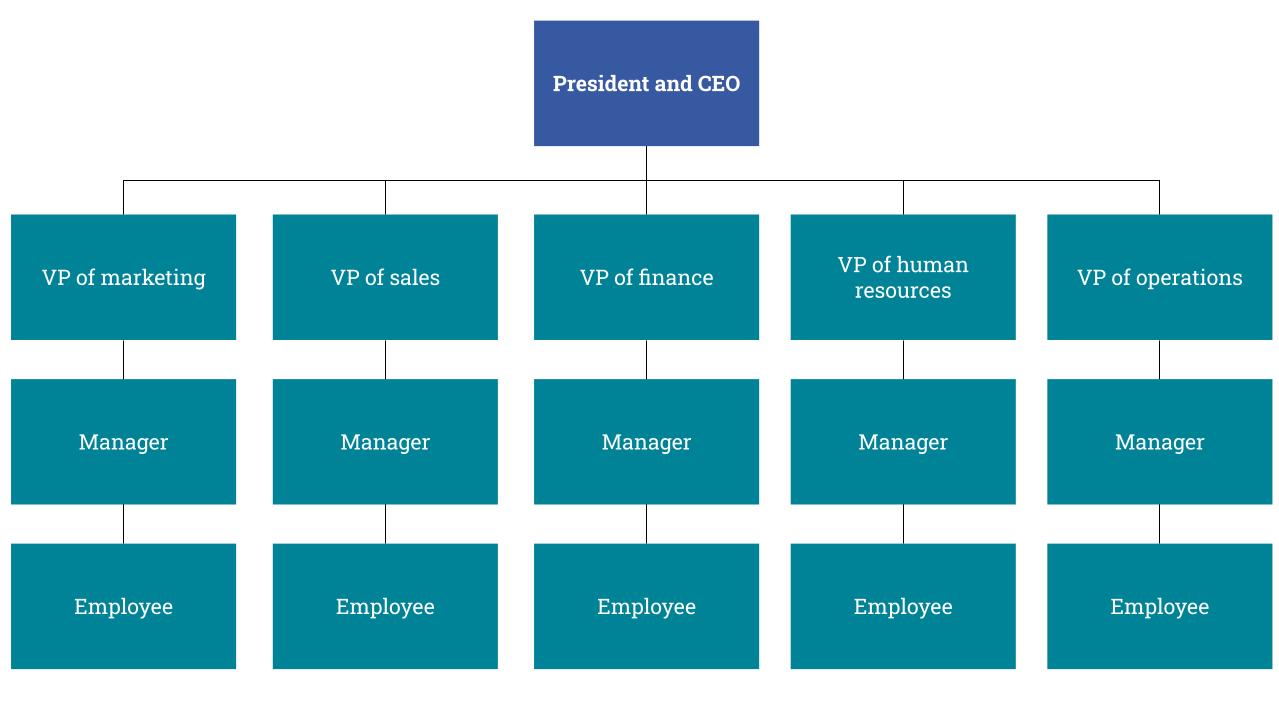
This role often sits at the intersection of operations, compliance, IT, and project management. You’ll work with cross-functional teams, and you’ll spend a lot of time translating “document control problems” into business language management cares about: risk, cost, schedule, and quality.
If you’re new to the broader ecosystem, it helps to understand the relationship between document management and document control. Document management is the umbrella strategy. Document control is the stricter, process-heavy slice that enforces approvals, traceability, and compliance.
Most companies reach a point where “shared drive plus good intentions” collapses under real-world pressure. The pressure comes from three places:
More employees, more teams, more projects, more documents. Suddenly you have dozens of SOPs, policies, templates, contracts, training materials, and project docs floating around, and nobody can answer: “Which one is current?”
Even if a company isn’t in a heavily regulated industry, it still handles sensitive information: HR docs, contracts, customer data, vendor agreements, internal financials. Document security and information security stop being “nice to have” and become mandatory.
In regulated industries, document management ties to audits. Healthcare organizations, for example, need to care about privacy controls around protected health information, which is where frameworks like HIPAA show up in the real world.
If you operate in the EU (or serve EU users), GDPR is part of the conversation, which makes access control, retention rules, and audit trails even more important.
This is why document managers tend to have real leverage inside organizations. You’re improving organizational efficiency, reducing rework, and lowering legal and compliance exposure.
A lot of companies only learn this after a painful moment: A failed audit, a security incident, a lawsuit, a client dispute, or a project delay caused by version confusion. A document management department exists so those moments happen less often.
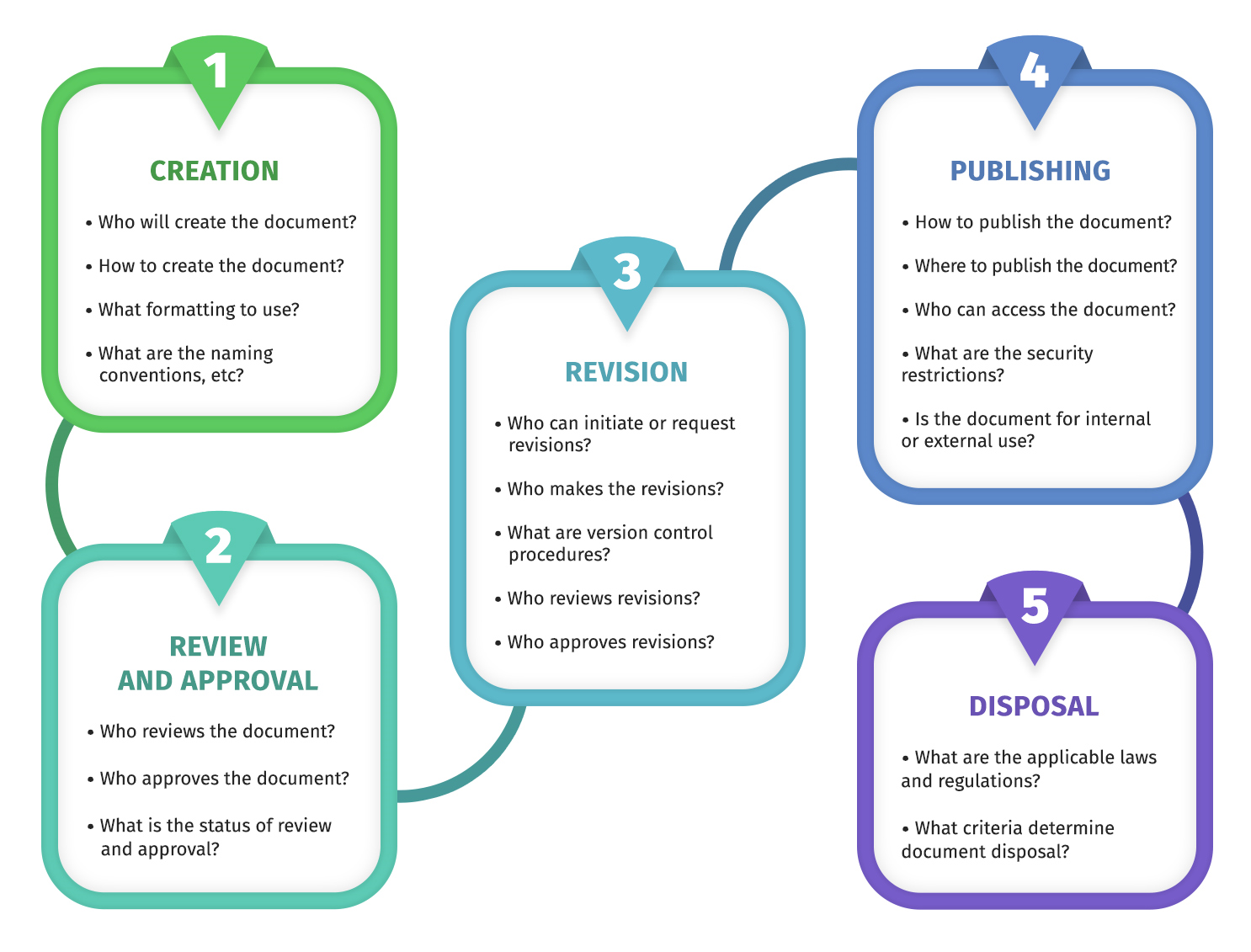
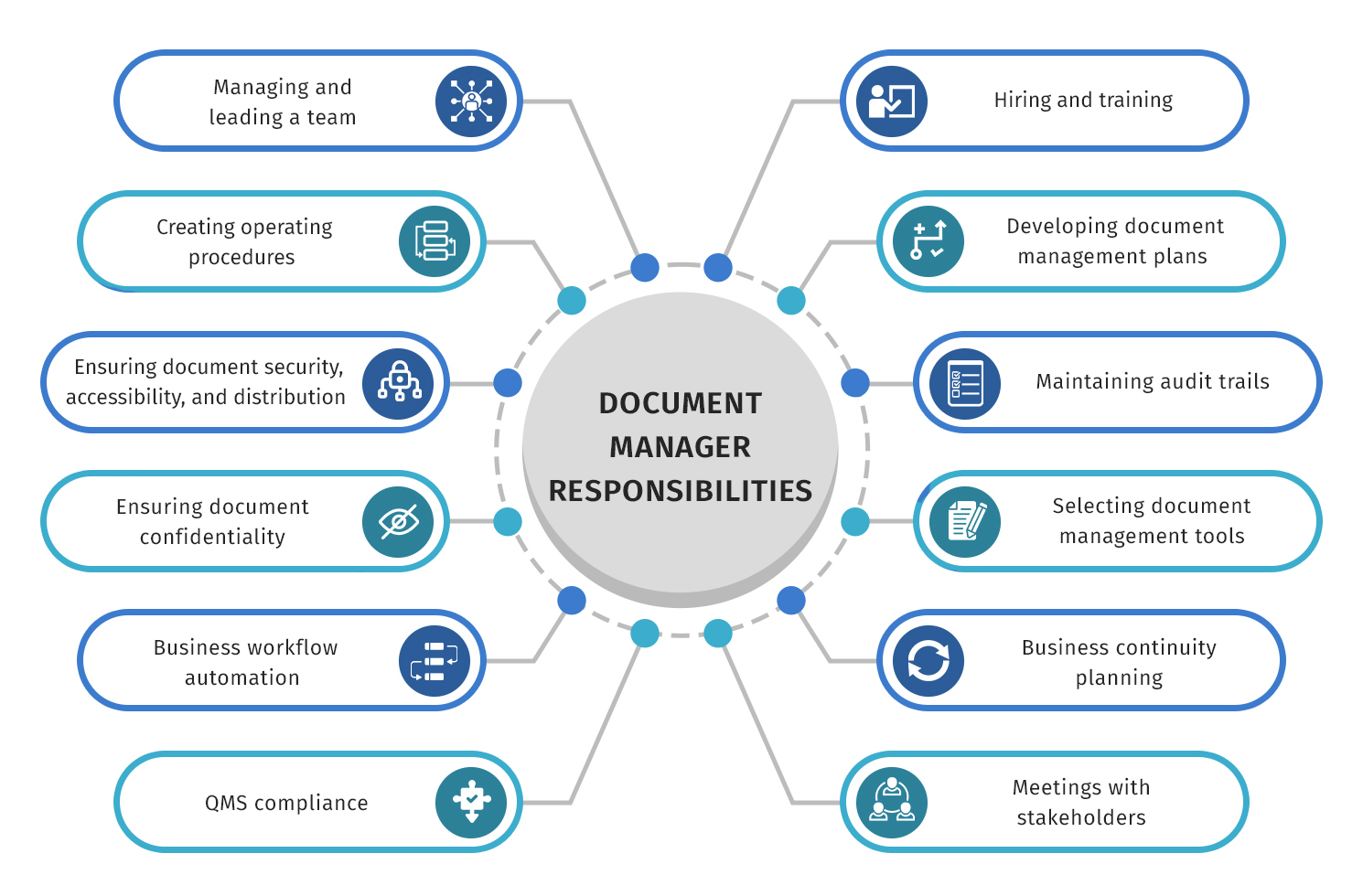
A document manager’s responsibilities vary by industry, but the core ownership areas are consistent.
This is where you define (and maintain) the rules:
This overlaps with formal document control procedures when audits or standards compliance are involved.
Most true document manager roles involve leadership:
In practice, you’ll spend a lot of time enabling other teams. A good document manager makes it easier to do the right thing than the wrong thing.
Document managers often drive digital transformation for documentation:
If your organization is ISO-aligned, this gets even more structured. ISO 9001 talks about “documented information” and emphasizes control, availability, and protection of information as part of a functioning quality management system.
This is the less glamorous, high-impact part:
A document manager who can show leadership here becomes very hard to replace, because you’re protecting the company from problems nobody wants to own.
I’ve met a lot of smart, hardworking people who struggle in this role, and it’s rarely because they lack knowledge. It’s because they underestimate the human side of document management.
Here are the qualities I see in document managers who thrive:
If you’re reading this thinking, “That’s project management,” you’re not wrong. This role has a huge intersection with project management, especially in construction, engineering, and regulated product orgs.
Most document managers end up owning some mix of these systems:
Either way, you need visibility into:
If you want to compare platforms, our roundup on document management software options is a useful starting point.
Titles in this space get messy fast. Different industries use different language, and some companies slap “manager” on roles that are senior IC jobs. Here’s how I think about the divergence and intersection of these roles:
A quick way to sanity-check a job posting is to ask: Are you being hired to run document management systems and set standards, or are you being hired to execute document control tasks under someone else’s standards?
If it’s the first one, you’re closer to a document manager. If it’s the second one, you’re closer to a document controller.
Document manager roles show up anywhere documentation creates operational risk, which is basically everywhere, but some industries have a much heavier presence.
Common industries include:
Career progression often looks like:
In my experience, the fastest path upward is skill stacking:
That combination tends to raise both your income potential and your promotion options.
The exact requirements vary by company size and industry, but most employers look for a mix of education, systems comfort, and practical leadership.
Certifications can help, especially if you’re moving into a compliance-heavy industry. Employers generally care less about the certificate itself and more about what it signals: You understand document control standards, quality control standards, and how to run a documented process.
One practical tip: If you want to move into this role from a writing background, it helps to understand how document work scales. Reading about the document control process can make you sound much more “systems-minded” in interviews.
Document manager pay depends on scope, industry, and location. The challenge with salary research is that “document manager” can mean different things in different companies. Some roles are true department leaders. Others are closer to senior coordinators.
Still, current U.S. benchmarks cluster in a pretty consistent band:
The biggest factors that push salary up are:
If you’re comparing this role to document control leadership roles, note that salaries can step up when the job is tied to compliance and governance.
A document manager is one of those roles that looks simple from the outside and becomes critical the moment something goes wrong.
When it’s done well, nobody thinks about it. People find what they need, approvals happen smoothly, version control is clean, and audits are more boring than stressful.
When it’s done poorly, everything gets louder:
If you like building systems, improving workflows, and making information reliable across a company, document management can be a surprisingly satisfying career path.
Just make sure you’re clear on what you’re signing up for. The strongest document manager roles come with real ownership: systems, standards, training, and cross-team influence. If the posting is vague, ask direct questions about scope, tooling, and whether you’ll be empowered to enforce standards.
That one difference often determines whether the job feels like leadership or like endless cleanup.
Here are the most frequently asked questions about document managers.
A document manager typically oversees document standards, permissions, version control, review and approval workflows, training, and system performance. They also coordinate with IT and compliance to maintain secure storage, audit trails, and retention processes.
No. A document controller is usually execution-focused (routing, logging, version control on projects or departments). A document manager is broader, owning company-wide systems, standards, governance, and often team leadership.
A Bachelor’s degree is often preferred but not always required. Requirements vary by company size and industry. Employers tend to care most about your ability to run systems, enforce standards, and manage risk through repeatable processes.
Healthcare, law, construction, engineering, manufacturing, finance, and government are common. Any industry with high document volume, sensitive information, or compliance requirements tends to hire for this role.
Start with a DMS or EDMS (plus basic workflow and permissions concepts). Then learn common supporting tools such as spreadsheets for tracking, reporting dashboards, and collaboration platforms used by your organization.
If you are new to document control management and are looking to learn more, we recommend taking our Technical Writing Certification Course, where you will learn the fundamentals of managing technical documents.
Learn documentation engineering and advance your career.
Your syllabus has been sent to your email