
I didn’t start using AI story generators because I wanted a robot to “write for me.” I started using them for the same reason I built my career in AI: I like systems that help me move faster without getting sloppy.
When I’m staring at a blank page, the hardest part is usually getting traction. A solid outline, a believable character voice, a few plot turns I didn’t expect. That’s where a good AI story generator earns its keep.
Writing fiction is fun until you’re stuck on page one for three days. These are the AI story generators I use in 2026 to beat writer’s block, build stronger plots, and get to a real draft faster.
Here’s my pick of the 6 best AI story generators from the tools I tested and used the most:
If you’ve ever tried to write a story from scratch, you already know the problem isn’t “ideas.” It’s turning ideas into something structured, paced, and readable.
A good AI story generator doesn’t replace your imagination. It helps you get unstuck, generate options, and move from concept to outline to draft without burning a weekend.
Alright, let’s get into it.
Below are the best AI story generators I’d use in 2026, with the same structure for each one so you can compare quickly.
These tools aren’t all solving the same problem. Some are “get me an outline fast” tools. Some are “help me rewrite this scene” tools. Some are “keep a long story organized” tools.
So as you read these, think about your use case first. Short story. Novel. Series. World-building. Co-writing. That context matters more than the marketing pages.
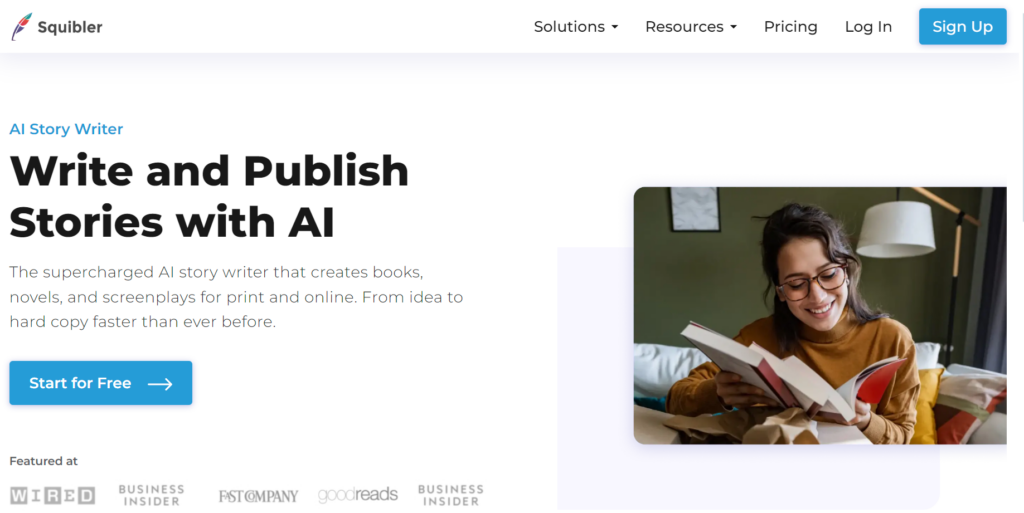
Squibler is what I use when I want my story ideas to turn into an actual draft, not just a pile of prompts. It’s built around structure, organization, and long-form writing momentum.
It works especially well when you’re building a larger project like a novella, a novel, or a multi-chapter story. You can keep characters, settings, and story elements organized so the story stays coherent as it grows.
It’s also one of the better options when you want a writing environment that feels like a real workspace. Not just a text box. That matters when you’re writing consistently and need repeatable workflows.
I picked Squibler because it helps me stay organized while writing quickly. When stories get longer, structure becomes the difference between “this is fun” and “why am I lost in chapter four.”
Pros
Cons
LEARN MORE ABOUT SQUIBLER: Check out Squibler on their website.

Jasper is best when you care about consistent voice across lots of content. It’s strong as an AI writing assistant for repeatable tone, especially if you’re writing stories tied to a brand, IP, or content series.
This tool shines when you want to build a “house style” and keep it stable. That might sound like marketing, but it matters for creators too, especially if you write serialized stories or publish regularly.
It’s also helpful for generating multiple angles quickly. Hooks, summaries, character intros, alternate openings. Jasper is one of the faster tools for producing options you can choose from.
I picked Jasper because voice consistency is hard at scale. If you’re producing a lot, Jasper helps keep your tone stable while still letting you explore different story variants.
Pros
Cons
LEARN MORE ABOUT JASPER: Check out Jasper on their website.

Writesonic is one of my go-to tools when I want speed. It’s great for brainstorming plot directions, generating variants, and getting a draft moving quickly.
If you’re early in the process, it’s useful for turning a vague idea into something you can outline. It’s also helpful for experimenting with genre selection and tone adjustments without re-prompting from scratch a dozen times.
This is the kind of tool I use when I want volume. Multiple ideas. Multiple drafts. Multiple hooks. Then I pick the best and start shaping it like a writer.
I picked Writesonic because it’s fast and flexible. When I’m brainstorming, I’d rather generate ten decent options quickly than spend an hour trying to force one perfect first draft.
Pros
Cons
LEARN MORE ABOUT WRITESONIC: Check out Writesonic on their website.
Rytr is the tool I recommend when you want something affordable that still works. It’s simple, clean, and good for quick drafts, outlines, and story fragments.
It’s not trying to be the fanciest platform. It’s trying to give you a user-friendly interface where you can write and iterate without fighting the tool.
If you’re testing whether AI-driven storytelling fits your process, Rytr is a good entry point. It helps you get value without feeling like you’re making a big investment upfront.
I picked Rytr because it’s a great value tool that still helps you move faster. If you’re writing casually, experimenting, or building a habit, low friction matters.
Pros
Cons
LEARN MORE ABOUT RYTR: Check out Rytr on their website.
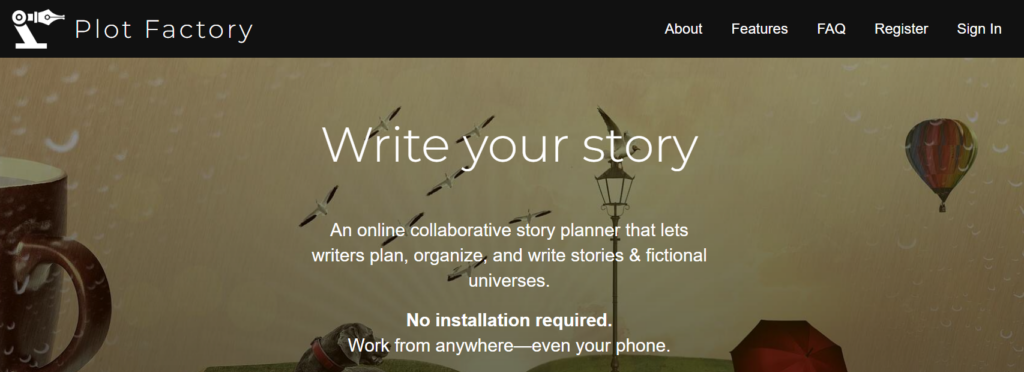
Plot Factory is for writers who love planning. If you’re the type who wants to map characters, arcs, timelines, and world details before you draft, this is a strong fit.
It’s less about one-click story generation and more about creating a system for storytelling. That includes organizing scenes, tracking plot points, and keeping world-building consistent.
If you’re writing something with a lot of moving parts, Plot Factory helps you avoid continuity errors. That makes the writing process smoother, especially once your story gets longer.
I picked Plot Factory because organization is underrated in creative writing. When you have a strong plan, AI outputs become more useful because you can guide them with real constraints.
Pros
Cons
LEARN MORE ABOUT PLOT FACTORY: Check out Plot Factory on their website.
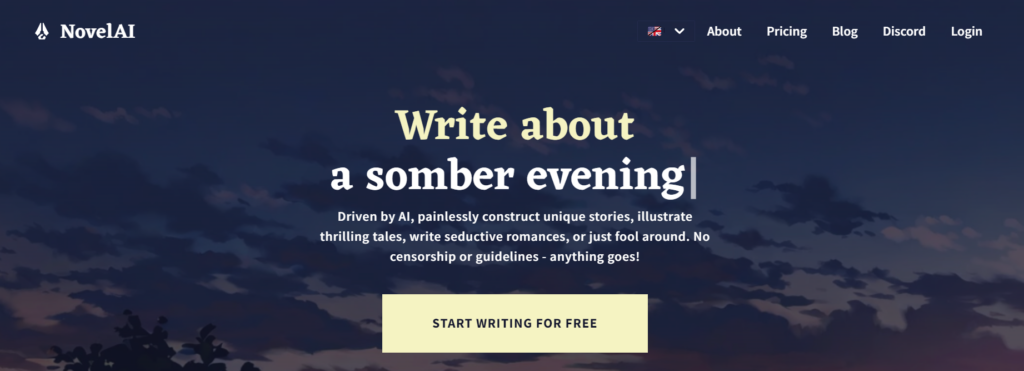
NovelAI is built for co-writing with AI over time. It’s one of the better options when you want the AI to “stay with” your story and maintain continuity across scenes and chapters.
This is useful for serialized writing, longer fiction experiments, or any time you want the tool to remember tone, characters, and ongoing plot context. A personalized knowledge base feel is the difference between random generations and cohesive drafting.
If you like writing interactively, NovelAI tends to be a strong fit. It feels more like a collaborative partner than a prompt machine.
I picked NovelAI because continuity is everything in long stories. When the AI can keep track of story context, you spend less time re-explaining and more time writing.
Pros
Cons
LEARN MORE ABOUT NOVELAI: Check out NovelAI on their website.
An AI story generator is a tool that creates story content from a prompt. That can mean plot ideas, outlines, scenes, dialogue, character descriptions, or full short stories depending on the platform.
Most of these tools act like an AI writing assistant with a creative tilt. You give it constraints like genre, tone, target audience, and story length, and it generates suggestions you can refine.
If you’re working on scripts too, this overlaps a lot with my roundup of AI script generators and the more script-focused tools in AI script writer tools.
When I’m evaluating AI story generators, I’m mostly looking for whether the tool improves my writing process. Not in theory. In practice, on a Tuesday afternoon, when I’m tired and still need to ship a draft.
I care about output quality, but I care even more about how easy it is to steer the output. If the tool gives me a strong first draft but makes refinement painful, it’s not a smooth experience. It’s extra work disguised as magic.
I also think about value like an investor, not a shopper. The best tool is the one you’ll use consistently, because it fits your writing workflow, budget, and project type.
Choosing the right tool starts with your project, not the tool list. A short story, a novel, and a serialized fiction series all need different levels of structure, memory, and planning support.
Next, be honest about how you write. If you’re a planner, pick a tool that supports outlines, character profiles, and world-building. If you’re a discovery writer, pick a tool that excels at variants, prompts, and scene expansion.
Finally, think about workflow and commitment. If you’re just testing the waters, a free AI story generator or a lighter tool can be enough. If you’re building a serious writing habit, the best investment is the platform that makes you want to write more often.
Here’s my criteria for choosing AI story generators.
I’m looking for stories that stay internally consistent. Even in short drafts, the best tools keep character voice and logic intact without drifting.
The tool should help with outlines, beats, and transitions. If it can’t maintain a clear beginning, middle, and end, it’s not helping.
Tone and genre selection matter because they shape everything. I want tools that let me steer the voice and style without rewriting the whole thing manually.
I care more about revision tools than generation tools. A platform that makes script refinement easy will save you more time long-term than one that generates flashy first drafts.
I’m not only looking at cost. I’m looking at whether the tool is worth the investment for how often you’ll use it, and whether the paid plan unlocks features you’ll actually rely on.
Here are detailed steps for picking the right AI story generator for you.
If you outline heavily, prioritize structure, planning, and organization. If you write by discovery, prioritize creative variants and flexible rewriting tools.
A story for kids, a thriller, and a romantic comedy don’t need the same pacing or tone. The best results come when you define your target audience upfront.
This is the fastest way to see differences in output quality. Use the same prompt, then compare coherence, pacing, and how much editing you had to do.
Drafting is the start. Editing is the finish. Pick a tool where refinement feels fast, natural, and repeatable.
AI story generators are valuable tools for breaking through writer’s block, speeding up drafts, and exploring creative ideas. They complement your imagination, helping you turn ideas into structured stories more efficiently.
The right tool depends on your project and workflow. Whether you’re writing novels, short stories, or serialized content, there’s a generator to match your needs. These tools work best when combined with your personal editing to refine tone and maintain your unique voice.
By using the tools and tips in this guide, you can create engaging stories more efficiently while staying true to your style.
Here I answer the most frequently asked questions about AI story generators.
Yes, but “worth it” depends on your use case. Free plans are great for brainstorming, testing prompts, and generating early ideas. If you’re writing consistently, you’ll usually want a paid plan for longer outputs and better refinement.
In most cases, you can publish what you generate, but you should treat this as a workflow and policy question, not just a writing question. Check the tool’s terms, keep your own revision process, and avoid using AI to imitate a living author’s style.
They’re one of the best tools for writer’s block, honestly. The trick is asking for options, not perfection. Generate three openings, three plot turns, or three character backstories, then pick the one that feels most “you.”
If you’re writing long-form, you’ll usually want structure plus continuity. Tools like Squibler, Plot Factory, and NovelAI tend to fit that style better than lightweight generators.
Give it constraints. Define genre, tone, target audience, character goals, and conflict. Start with an outline request first, then generate scenes based on that outline.
Yes, and the better ones do it in a way you can reuse. Character profiles, settings, and story rules become much more useful when you can store them and keep continuity across scenes.
Get the weekly newsletter keeping 23,000+ technical writers in the loop.
Learn AI prompting and advance your career.
Please check your email for a confirmation message shortly.





















Get our #1 industry rated weekly technical writing reads newsletter.
Your syllabus has been sent to your email