
Our reviewers evaluate career opinion pieces independently. Learn how we stay transparent, our methodology, and tell us about anything we missed.

Our reviewers evaluate career opinion pieces independently. Learn how we stay transparent, our methodology, and tell us about anything we missed.
The first grant budget I helped review looked “fine” until we tried to match it to the narrative. Suddenly, the project dates were vague, the staffing math didn’t add up, and the budget justification was basically “trust us.” That is the fastest way to lose a reviewer’s confidence.
I write a lot about proposals and structured writing, and grant budgets feel like the most unforgiving version of that. Your budget has to be readable, defensible, and perfectly aligned with the story, all while following the funder’s application rules.
This article is for anyone building a grant budget from scratch, whether you’re a nonprofit staffer, a grants specialist, or a freelance grant writer supporting multiple organizations. I’ll explain what a good budget template includes, how to complete it, and which specialized templates you should use when a funder requires a specific format.
If you want to see how budgets fit into the full proposal, I recommend reading my guide on how I write grant proposals in 8 steps alongside this. If you learn best by comparing finished documents, keep my favorite grant writing examples open while you build.
A grant budget template is a structured way to present your costs so a funder can quickly understand what you’re buying, why you need it, and when you’ll spend it. Most templates have two parts: a budget summary (high-level totals by category) and a budget worksheet (line-item details that roll up to the summary).
A good template also forces consistency. If your narrative says “we’ll run four workshops,” your worksheet should show the staffing, supplies, travel, or venue costs that make four workshops realistic, not theoretical.
Most funders expect default categories even if they don’t call them that. You’ll almost always see personnel (salary and fringe), travel, equipment, supplies, contractual or consultants/subcontracts, and “other,” plus a place for indirect costs (often labeled F&A).
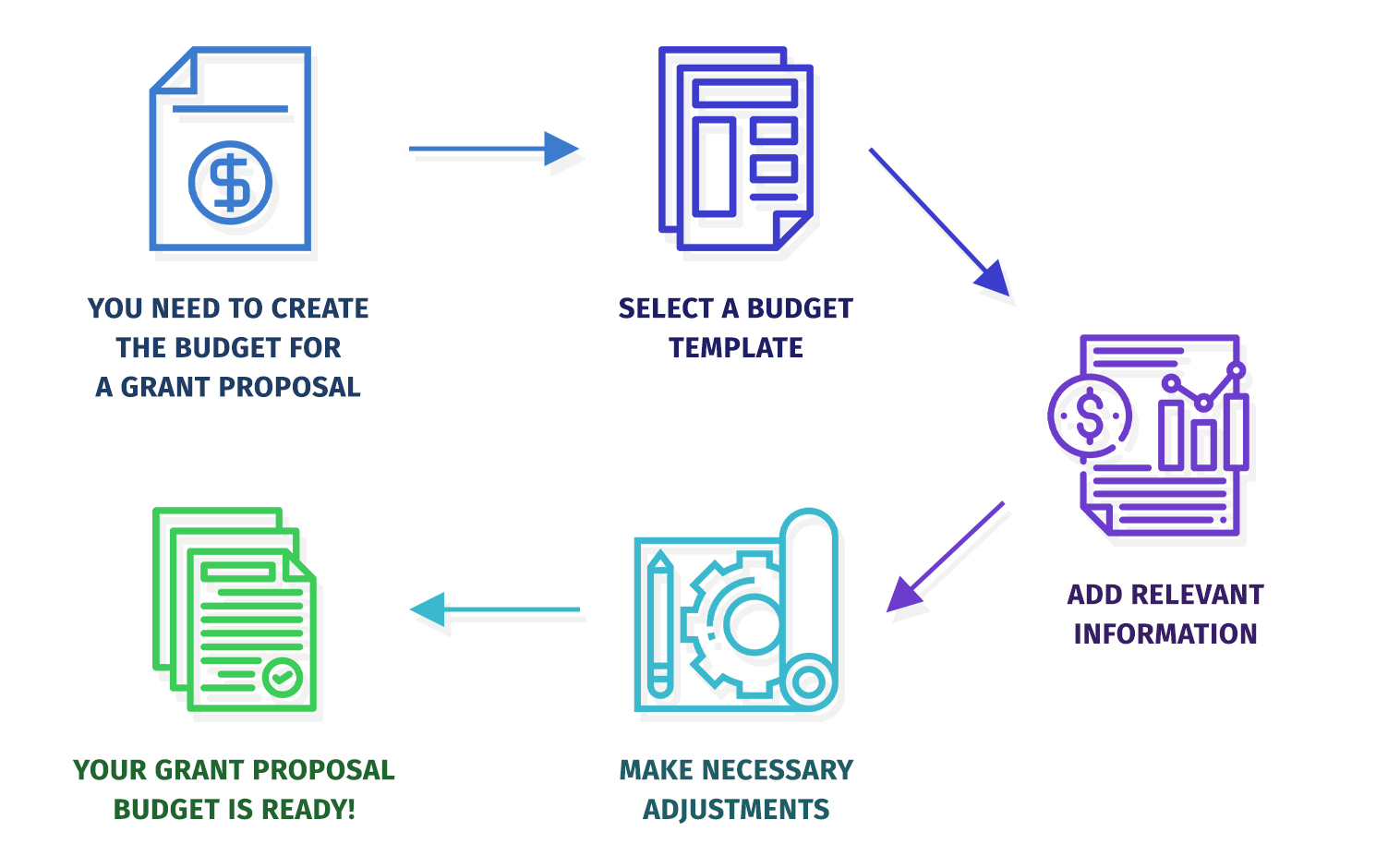
I treat budget development like a mini project plan. If you skip the early planning, you’ll spend your “writing time” doing math, chasing missing details, and reworking numbers after leadership changes the scope.
Start by writing down your project dates and your budget period, even if you only have a draft. Many budget problems come from a mismatch between what the narrative describes and what the budget period can realistically support.
If your funder uses annual budget periods for multi-year awards, I build one worksheet per year. That makes staffing, inflation assumptions, and ramp-up costs easier to explain in the budget justification.
Some funders want a simple table in the application portal. Others require a specific spreadsheet upload, sometimes with auto-calculating features and locked cells.
When in doubt, follow the funder’s template exactly and treat your own internal worksheet as the “source of truth.” The easiest way to avoid formatting mistakes is to build in your worksheet, then copy totals into the required application format at the end.
Even if the funder never sees your internal account codes, you should use them. They make approval, reporting, and grant close-out easier because finance can map your line items to real bookkeeping categories without guessing.
This is also where I decide how detailed the “line-item budget” needs to be. A small foundation might accept broad buckets, while government grants often want precise quantities, unit costs, and calculation notes.
I always build direct costs before touching indirect costs. Direct costs are what make the project real, and they drive the narrative’s credibility.
Once direct costs are stable, I calculate indirect costs using the funder’s rules. If the funder has a direct cost cap or a maximum indirect rate, I treat that as a hard constraint early, not something to “fix later.”
Direct costs are expenses that clearly support the project’s work. This is where reviewers decide if you understand what it takes to execute.
Personnel is usually the biggest line item, which is why reviewers scrutinize it first. I list each role, the percentage of time on the project, the rate (hourly or annual), and the calculation that produces the total.
Then I apply fringe rates consistently. If you use a blended fringe rate (common in nonprofits and universities), state the rate and what it includes, like fringe benefits, payroll taxes, and insurance, so your budget justification does not feel hand-wavy.
This is where I get extremely explicit about scope. If you hire a consultant, I state what they will deliver, how many hours or days, and why outsourcing is necessary instead of staffing internally.
If the work is substantial and involves another organization, it may be a subaward instead of a simple subcontract. Subawards typically require their own documentation and their own budget detail, so I confirm the funder’s definition early.
Reviewers do not like mystery numbers. If you need supplies, I list the quantity and the basis for the estimate, even if it’s as simple as “based on last year’s program spend.”
For equipment, I explain why the equipment is required to deliver the program outcomes. If you list five laptops, you should also show the staffing or participant plan that makes five laptops reasonable, not arbitrary.
Travel gets rejected when it feels like a perk. I justify travel by tying it to project milestones, stakeholder needs, or program delivery, then I use conservative estimates and clear assumptions.
If the funder requires per diem rates or specific travel documentation, I mirror their language and keep the calculations clean. “Two staff, two trips, two nights” is easier to trust than a single lump sum.

Indirect costs are the real costs of running the operation behind the program, like rent, accounting, and admin support. Funders vary widely on whether they allow indirect costs and how they calculate them, so I treat this section like a compliance check.
Facilities and administrative costs (F&A) are often calculated as a percentage of a cost base. In some settings, that base is MTDC (modified total direct costs), which excludes certain categories like equipment over a threshold or subaward amounts beyond a limit.
If you’re working with a grants specialist or finance partner, this is where you want them involved. A small mistake in your MTDC structure or rate application can create a mismatch between your budget summary and the funder’s expectations.
A budget justification (sometimes called a budget narrative) explains each category in plain language so the reviewer understands what they’re paying for. It’s also where you prove you did your homework.
I write justifications in the same order as the worksheet. That makes it easy for reviewers to cross-check and reduces the chance they miss a key expense rationale.
If you want a credible external reference for what a budget narrative looks like in a government context, Grants.gov includes a Budget Detail and Narrative template and guidance that shows the kind of explanations reviewers expect.
Cost sharing can make your application stronger, but only if you can prove it. If the funder requires a match, I treat cost share like its own mini-budget with the same level of detail as the requested funds.
I also document cost share sources, timing, and restrictions. If the match comes from staff time, I show the calculation and who is committing that time.
Some organizations use a cost-sharing calculator, a cost-sharing template, or a cost-sharing distribution/signature form to formalize commitments. If your funder or organization has a cost-share policy, follow it exactly, because “we’ll figure it out later” is a red flag in grant management.
Some grants require specialized budget formats that you cannot improvise. If you’re applying for a program with strict categories, use their template and build your internal worksheet to mirror it.
For research or academic grants, you may see templates that assume MTDC or TDC cost bases, formal F&A rates, and structured justification sections. In health and research funding, certain awards (like NIH career development formats such as a K23 budget) may also require extra detail, including training-related expenses or demographic information tied to program reporting.
I’ve found that specialized templates are easiest when you treat them like “data entry forms” and do your real budgeting work in your own worksheet first. Once the logic and totals are stable, you map them into the required format with fewer errors.
Before I submit, I run a tight alignment pass. I check that project dates match the narrative, that the budget period totals roll up correctly, and that every major narrative activity has a budget line item that supports it.
Then I do a sanity check for credibility. Are rates realistic, are quantities defensible, and did we accidentally include costs the funder does not allow?
Finally, I do a “reviewer scan” test. If a reviewer skims the budget summary and budget justification for two minutes, will they feel safe funding this, or will they feel like they need to ask ten questions?
If you want the broader system that wraps around budgeting, I recommend pairing this with my grant writing process walkthrough and the library of grant writing templates I use. They help you keep the narrative, the budget, and the attachments consistent.
A winning grant budget isn’t about squeezing numbers into a spreadsheet. It’s about proving you can execute exactly what you promised, down to the last dollar. If you treat your budget like a credibility document (and align it tightly with your narrative), you won’t just submit cleaner applications, you’ll submit ones reviewers actually feel confident funding.
Here, I will answer the most frequently asked questions about grant proposal budget templates.
A grant proposal budget template is a structured format for listing project costs by category and line item, usually paired with a budget justification. It helps funders quickly understand what you’re requesting and why the costs are necessary.
A budget worksheet lists detailed line items, calculations, and assumptions. A budget summary rolls those numbers up into higher-level categories like personnel, travel, supplies, contracts, and indirect costs.
Start by confirming the funder’s allowed rate and the required cost base, such as MTDC. Then apply the rate consistently and document the logic in your budget justification so a reviewer can cross-check it quickly.
You need a specialized template when the funder provides a required spreadsheet or specifies a strict format, categories, or calculation rules. Government and research grants are the most common examples, but some foundations also require exact formats.
The biggest mistakes are mismatches between the narrative and the numbers, unclear calculations, unrealistic staffing assumptions, and missing required cost share documentation. The fix is always the same: plan early, justify clearly, and run an alignment check before submission.
Get the weekly newsletter keeping 23,000+ technical writers in the loop.
Learn grant writing and advance your career.
Please check your email for a confirmation message shortly.





















Get our #1 industry rated weekly technical writing reads newsletter.
Your syllabus has been sent to your email