Our reviewers evaluate career opinion pieces independently. Learn how we stay transparent, our methodology, and tell us about anything we missed.

Our reviewers evaluate career opinion pieces independently. Learn how we stay transparent, our methodology, and tell us about anything we missed.
In this guide, I’ll walk you through the question types I’d prep, how I’d answer them, and how to show your work without rambling.
I’ll be honest: UX writing interviews are sneaky. Not because interviewers are trying to trap you, but because the “real” questions are often hidden inside normal-sounding prompts.
“What’s your process?” is really “Can you work inside a product development process without slowing everyone down?”
“Walk me through a case study” is really “Do you make good decisions with limited space, conflicting opinions, and tight deadlines?”
If you’re new to Google roles, start with the role overview first, because it gives you the right mental model for how the team thinks: what a Google UX writer does.
When people hear “UX writer interview,” they often imagine a pure writing test. In reality, writing is only one slice.
Google is looking for evidence that you can:
If you’re coming from technical writing, you might already be strong on structure and accuracy. The shift is learning to think in flows instead of pages. If that’s you, this comparison helps: UX writer vs technical writer.

Every team runs interviews a little differently, but the loop follows a familiar pattern.
First you’ll have a recruiter conversation. This is a fit check and logistics check. You might talk about the role, your experience, location, and what the timeline looks like. The recruiter will also look for a portfolio link that is easy to access.
Then you’ll talk with a hiring manager or someone close to the team. This is where the questions get more role-shaped. They might ask about your process, how you work with designers, how you handle feedback, and how you think about content strategy.
After that, many teams add some form of skills assessment. Sometimes it’s a writing exercise. Sometimes it’s a portfolio review plus live critique. Sometimes it’s both.
If you want a low-stakes way to practice speaking answers out loud, Google has a free tool called Interview Warmup with question sets, including UX Design prompts. It’s not “the Google interview,” but it’s useful for practicing concise, structured answers: Google’s Interview Warmup for UX Design questions.
One practical tip: treat every round like a portfolio round.
Even when you’re answering a behavioral question, the best answers often reference work. Not in a braggy way, but in a “here’s what I did and what changed” way.
If you need help getting your application materials clean before you even reach interviews, these are the two guides I’d use first: UX writer resume guide and UX writer LinkedIn profile guide.
With our UX writer course, you can learn the fundamental skills of UX writing. You can also learn the tips to answer technical and non-technical Google UX writer interview questions:

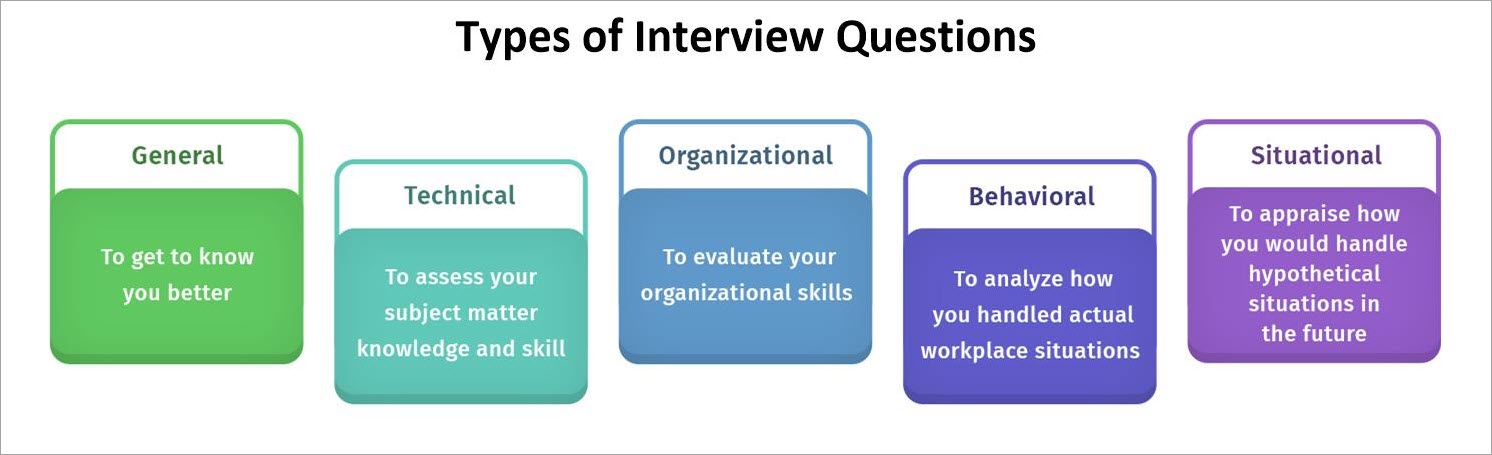
These are the questions I see most often, plus the answer shape I’d use. I’m not giving you scripts. I’m giving you structures.
I’d answer in terms of outcomes, not definitions. UX writing is how you help users complete tasks with less confusion and more confidence. It’s part of the interface. It reduces friction. It builds trust.
I’d walk through a basic process: understand the user goal, map the flow, identify key moments (errors, empty states, decisions), draft options, test with design and research input, iterate, and align to style guidelines.
I’d say clarity wins first, then voice lives inside clarity. You can be warm without being vague. You can be playful without being confusing. I usually start with the plainest version, then layer in voice if it does not reduce comprehension.
I’d describe a simple template: what happened, why it happened (if known), what the user can do next, and any recovery link or action. Then I’d mention that error messages should be consistent across patterns, not reinvented every time.
I’d talk about the signals available: usability testing feedback, task completion, reduced support tickets, fewer abandoned flows, fewer backtracks, and better comprehension in research.
I’d show how I handle conflict without drama: align on the user goal, reference research or usability evidence, offer a few alternatives, and make the tradeoff explicit.
If you want a broader question bank to practice outside the Google context, use this as your baseline and then adapt: UX writer interview questions and answers.
One personal note here.
Early in my career, I thought the best answer was always “the clever line.” It took me way too long to learn that the best answer is usually “the line that prevents the most confusion.” That mindset shift helps a lot in interviews, because it changes how you talk about your work. You start sounding like a product teammate, not just a writer.
A Google UX writer interview lives and dies by your portfolio review.
I’ve seen talented writers undersell themselves because they treat the portfolio like a gallery, not a story.
Here’s what I suggest.
One study should show flow thinking (onboarding, setup, checkout, permissions, something with multiple steps).
One should show problem solving under constraints (error states, edge cases, policy language, localization).
If you have a third, make it strategic (taxonomy, content guidelines, pattern library, content audit).
Interviewers are busy. Your job is to make the work easy to absorb. Use short sections: problem, context, constraints, process, decisions, before and after, outcome, what you’d improve.
Instead of “I changed the button label,” say “I changed the button label to match the user’s mental model and reduce ambiguity, because research showed users did not understand the previous term.”
A screenshot of the flow, a few key microcopy lines, and a simple rationale beats a 20-slide deck.
Sometimes an interviewer will challenge your choices to see how you react. Treat it like collaboration, not judgment. Ask clarifying questions. Offer alternatives. Explain tradeoffs.
If you need examples of what good UX writing portfolios look like, start here: UX writer portfolio examples.
Also, do not hide everything behind passwords unless you have to. If you must use passwords, make the access instructions obvious. You’d be shocked how many great candidates lose momentum because an interviewer cannot open the work.
This category is where Google checks whether you understand how UX writing fits into iterative design workflows.
A lot of candidates give vague answers like “I collaborate closely with designers.” That’s not wrong, but it does not prove you can operate inside a real workflow.
Here’s what I’d describe instead.
I start with the flow, not the screen. I want to understand where the user is coming from, what they are trying to do, and what decisions the interface needs them to make.
I identify constraints early. Character limits, localization, accessibility, legal requirements, content guidelines, and any engineering limitations. Constraints are not annoying. They are the job.
I draft options, not one answer. I usually bring 2 to 4 options for key moments, especially labels and critical messages. Options help teams discuss tradeoffs instead of arguing about taste.
I use systems thinking. If this is an error message, I want to know the pattern across the product. If this is onboarding, I want to see how the language works across steps. I try to avoid one-off copy unless it is truly unique.
I partner with research when possible. Even small usability testing feedback can prevent weeks of debate. If research is not available, I still try to validate with proxies: support insights, previous studies, and internal pattern libraries.
I document decisions so the product stays consistent. This is where content guidelines, word lists, and terminology systems matter. If you can show that you create reusable patterns, you will stand out.
If you want a credible external reference for content design principles that map well to Google style, I’d skim Material Design’s writing guidance and apply the same mindset in your answers: Material Design UX writing best practices.
These questions are usually where people ramble.
The trick is to answer with a structure.
Here’s a simple version of STAR, but more UX focused:
And here are the scenarios I’d prep for, because they show up constantly.
Quick tip. Before interviews, write down three stories and label them by what they prove.
Then reuse those stories across different prompts. That keeps you from inventing new examples in the moment.
This is the part that scares people, mostly because it feels like you’re being judged in real time.
The good news: most UX writing exercises are predictable.
They test:
Common formats include rewriting a flow, improving error messages, writing onboarding steps, or producing multiple label options with rationale.
How to practice for this, without overcomplicating it:
If you want a structured path to build these skills with feedback, this is the most direct option we have at TWHQ: UX writing certification program.
Final note: If you do only one thing to prepare, do this: take your best case study and practice presenting it in five minutes.
Five minutes forces clarity. It forces prioritization. It makes you sound like someone who ships.
That’s it. I wish you all the best.
Here are the most frequently asked questions about Google UX writer interview questions.
Often, yes. Many teams include a writing exercise, a live critique, or a portfolio based assessment. The exact format varies by team, but you should assume you will need to demonstrate microcopy and process, not just talk about it.
Bring a portfolio that is easy to access, 2 to 3 strong case studies, and a clear way to explain your decisions. Also bring a few stories that show collaboration, ambiguity handling, and process improvement.
I like 2 to 3. Two is usually enough if they are strong and varied. Three can help if one is more strategic, like content guidelines or terminology and taxonomy work.
They look for systems thinking, collaboration, content strategy instincts, comfort with UX patterns, and the ability to use research or evidence to make decisions. They also watch how you respond to critique.
Use a structure. Keep it short. Explain the situation, what you did, what changed, and what you learned. Anchor the story in user outcomes and team collaboration, not personal drama.
Lean on your strengths. Technical writing gives you clarity, structure, and accuracy. Then add UX proof through microcopy practice and case studies. This guide can help you bridge the gap: how to become a UX writer.
If you are new to UX writing and are looking to break-in, we recommend taking our UX Writing Certification Course, where you will learn the fundamentals of being a UX writer, how to dominate UX writer interviews, and how to stand out as a UX writing candidate.
Get the weekly newsletter keeping 23,000+ technical writers in the loop.
Learn UX writing and advance your career.
Please check your email for a confirmation message shortly.





















Get our #1 industry rated weekly technical writing reads newsletter.
Your syllabus has been sent to your email