Our reviewers evaluate career opinion pieces independently. Learn how we stay transparent, our methodology, and tell us about anything we missed.

Our reviewers evaluate career opinion pieces independently. Learn how we stay transparent, our methodology, and tell us about anything we missed.
Landing jobs on LinkedIn can be either satisfying or straight-up annoying. Since I don’t want to take too much of your time, I’ll give you a crash course of how to optimize your LinkedIn profile. Hopefully you’ll find it helpful, and if you have anything to add, feel free to reach out.
Let’s start.
If you only optimize two sections, make them your headline and about section. That’s where people decide whether they keep scrolling.
After that, the rest of your profile should feel like evidence. Your featured section should show real work samples. Your experience should read like impact, not chores. Your skills should match what you want next. Your recommendations should prove you’re good to work with and your learning should prove you’re current.
If you’re still clarifying your direction, start with what does a technical writer do and decide what lane you want your profile to attract.
This is where most technical writer profiles underperform. Not because people are “bad at LinkedIn,” but because they write like they’re afraid of being specific.
Specific wins on LinkedIn, especially for technical writers.
Your headline is your SEO title. LinkedIn search is keyword-driven, recruiters search with filters and phrases, and your headline helps LinkedIn match you with relevant roles.
The easiest headline mistake is being too generic: “technical writer at a company.”
That just means you have a job. It doesn’t say anything about what kind of work you do, which teams you work with, or what roles you want next. A headline that includes industry-relevant keywords while still sounding human is much better.
A simple formula that I found to work: role + specialty + audience/industry + methodologies/tools + outcome
Here are examples you can adapt (keep them natural and personal):
If you’re early-career, don’t hide it. A headline like “junior technical writer | knowledge base articles | learning Docs-as-Code” is honest and still searchable.
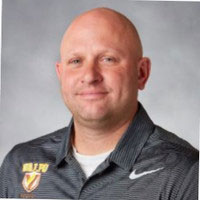
First, below is an example of the right professional headshot:

Then, an example of a good headline that makes an impression is as follows:

This is where people get weird. They shove in every tool they’ve ever heard of, and the headline reads like a broken vending machine.
Instead, I suggest choosing keywords from the following three buckets:
You don’t need all of them. You just need the ones that match your target job descriptions.
Your summary works best when it feels like a short story with a point, not a corporate bio. This structure includes storytelling, professional accomplishments, and career aspirations without sounding like you’re trying to be inspirational.
Here’s a template you can paste and personalize:
“I’m a technical writer who helps [target audience] do [goal] with user-friendly documentation. I’ve written [doc types] for [industries or product types], and I’m happiest when I’m turning messy SME knowledge into something a user can follow.
My approach is [methodologies]. I work with [engineers, product managers, support], run review cycles, and focus on consistency and maintenance so docs don’t rot after the next release.
Recent work: [one or two key achievements with outcomes].
Tools: [technologies].
I’m currently focused on [professional aspirations], especially with teams in [domain] that see documentation as part of the product.”
If you want a summary that’s more memorable, include a single line about your career journey. The trick is to keep it relevant. “I came from support and got obsessed with turning repeat questions into docs” works because it’s tied to documentation clarity and user experience.
Keep paragraphs skimmable. Use concrete nouns: “API reference,” “release notes,” “knowledge base,” not “content.”
Also, if you have numbers, use them, even if they’re imperfect. “Cut repeat tickets by improving onboarding docs” is stronger than “improved documentation.”
This is the part that separates “I have a LinkedIn profile” from “I get DMs from recruiters.” A technical writer’s experience section should read like a set of mini case studies.
Instead of listing responsibilities, I prefer this format: what you owned, what you shipped, who it was for, and what changed because of it.
You can do this in plain paragraphs. For example:
“In this role, I owned the help system for [product]. I partnered with engineers and support to document workflows, redesigned the information architecture, and shipped a set of onboarding guides and troubleshooting content. The goal was simple: reduce confusion and make the docs easier to maintain through releases.”
That single paragraph tells me more than ten bullets.
If you want to look credible fast, name real outputs: API guides and reference docs, onboarding tutorials, user manuals, product manuals, how-to guides, release notes, SOPs, internal process documentation, white papers.
Then add the environment: docs in a CMS, Docs-as-Code with Git, content in Confluence, publishing through WordPress, structured authoring in Flare or Framemaker.
That combo signals you’ve worked in real systems, not just in Google Docs.
Your featured section should be your proof hub.
You can showcase one strong writing sample, one short case study, and one “how I work” artifact. That third item can be a doc plan, an information architecture diagram, a style guide excerpt, or a before-and-after rewrite.
If you’re early-career and you don’t have work you can share publicly, you can still create portfolio pieces that simulate real work. Here’s the framework: publish a sample help article, a short onboarding guide, and a simple API guide based on a public API. Then pin those in the featured section.
If you need a blueprint, technical writer portfolio is the fastest way to see what “good enough to get interviews” looks like.
Most people ignore media uploads, and it’s a missed opportunity.
Screenshot of a doc site you shipped, an architecture diagram, a one-page writing sample PDF, or a short Loom walkthrough of a doc set make you feel real. Recruiters love anything that reduces uncertainty.
If you have a talk, a workshop, or a publication, upload it. If you wrote a white paper you can’t share, upload a redacted excerpt and describe what you owned.
The Experience section on your profile should look like this:

This section is your credibility layer.
Your skills should map to the job description language recruiters search for.
I’d treat endorsements like a lightweight alignment tool.
First, endorse someone you worked with. Then ask for two specific endorsements that match your target roles. Two is enough. “API documentation” and “technical editing” are a good pair for many software docs roles. “User manuals” and “attention to detail” are relevant for hardware and regulated teams.
Recommendations are better than endorsements because they describe how you work.
I like to ask for recommendations from three angles:
Make it easy for them by giving a prompt:
“Could you mention the documentation project we worked on, what I delivered, and what it was like to review docs with me?”
That prompt produces recommendations that sound real, not generic.

Recruiters love profiles that show you’re current, but they can smell “look at my badges” energy. The goal is to show professional growth through learning that leads to output.
You can show learning in three places that matter:
If you’re active in professional organizations, mentioning it helps too. For example, being involved with the Society for Technical Communication signals you care about industry best practices.
I’d focus on the things that change your employability:
Instead of “completed course on content strategy,” write: “completed content strategy course and applied it to restructure a help center taxonomy.”
Instead of “attended webinar on Docs-as-Code,” write: “migrated docs to Git-based reviews and built a lightweight PR checklist.”
You’re not trying to prove you can learn. You’re proving you can apply what you’ve learned.
You don’t need to become a full-time LinkedIn poster. You do need to be discoverable and connected.
Keep connection requests short and contextual: “Hey, I’m a technical writer working on API documentation and onboarding guides. I liked your post about Git review cycles. Would love to connect.”
That’s enough. No pitch. No ask. Just a real reason.
If you’re aiming for software documentation, join technical writing and developer documentation groups, content strategy groups, and documentation forums where people share tooling workflows.
If you’re aiming for a niche industry, join industry-specific groups. A technical writer in healthcare or fintech will often get better opportunities through niche community connections than through general networking.
Once a week is plenty. Comment on a post with something useful. Share a small lesson from a documentation project. Post a tiny before-and-after rewrite. Share a template you created.
The goal isn’t to be loud. It’s to be visible enough that when someone clicks your profile, it looks alive and aligned with your goals.
If you attend an industry conference or workshop, post one takeaway and tag a speaker. If you read a technical writing publication and it helps you, share it with a sentence about how you applied it.
This is one of the easiest ways to look engaged without trying to be a content creator.
Here is how you can enter a link to your portfolio:

This is how Cody shares his key contact information on his LinkedIn profile:

As soon as you create your LinkedIn account, you can use it in several ways to enhance your professional career. In addition to networking with others in the technical writing industry, having your resume on LinkedIn helps you gain exposure, letting employers and connections alike know you are seeking a job. Once uploaded, LinkedIn also uses your resume for job recommendations, helps build your network, and personalizes your feed.
While your profile offers a broader picture of yourself, your resume is a fact-based document tailored to a specific job, such as technical writing. So, upload a personalized resume to drive traffic to your LinkedIn profile. The most proactive way to stay in viewers’ sight is to make your resume a LinkedIn post that will appear in your connections’ home page feeds.

Your LinkedIn profile goes stale if your work evolves, but the profile doesn’t.
I’d do a quick monthly refresh:
If you’re interviewing, it helps to align your LinkedIn story with the examples you’ll use live, so skimming technical writer interview questions is a nice way to keep your narrative consistent.
An effective technical writer’s LinkedIn profile is not about sounding impressive. It’s about being obvious.
Be obvious about what you write, who you write for, what methodologies you use, what tools you’re strong with, and what proof you have. Then back it up with projects, recommendations, and learning that shows professional growth.
If the right team lands on your profile, you want them thinking: “Yep. This person does exactly what we need.”
Once again, I wish you the best of luck and I hope my post helps you land a job on LinkedIn.
All the best.
Get the weekly newsletter keeping 23,000+ technical writers in the loop.
Learn technical writing and advance your career.
Please check your email for a confirmation message shortly.




















Get our #1 industry rated weekly technical writing reads newsletter.
Your syllabus has been sent to your email