Our reviewers evaluate software independently. Learn how we stay transparent, our methodology, and tell us about anything we missed.

Our reviewers evaluate software independently. Learn how we stay transparent, our methodology, and tell us about anything we missed.
Hiring a ghostwriter is expensive, and writing a book alone can feel like a never-ending process. For authors looking to move faster without sacrificing their voice, AI book writer tools have become invaluable.
These tools are designed to assist with everything from brainstorming and structuring to drafting and editing, making them versatile for various writing projects. Whether I’m crafting a novel, working on a nonfiction book, or trying to get past a creative block, these tools help me stay productive and focused throughout the process.
Here’s my pick of the 13 best AI book writer tools from the options I tested.
I’ve been writing professionally for a long time, but what changed everything for me was building writing systems, not just writing harder. Early in my career I was documenting complex software, then I wrote long-form manuals and books, and eventually I built an AI writing platform (Squibler). That means I’ve seen this from both sides: the author side that just wants the words to sound right, and the product side that knows where AI actually helps versus where it hallucinates and wastes your time.
Most lists mix “AI copy tools” with “book writing tools” like they’re the same thing. They’re not. Below are the tools I’d use for long-form projects, with a focus on fiction workflows, nonfiction workflows, and conversational assistants that help you brainstorm, outline, and revise without turning your book into generic mush.
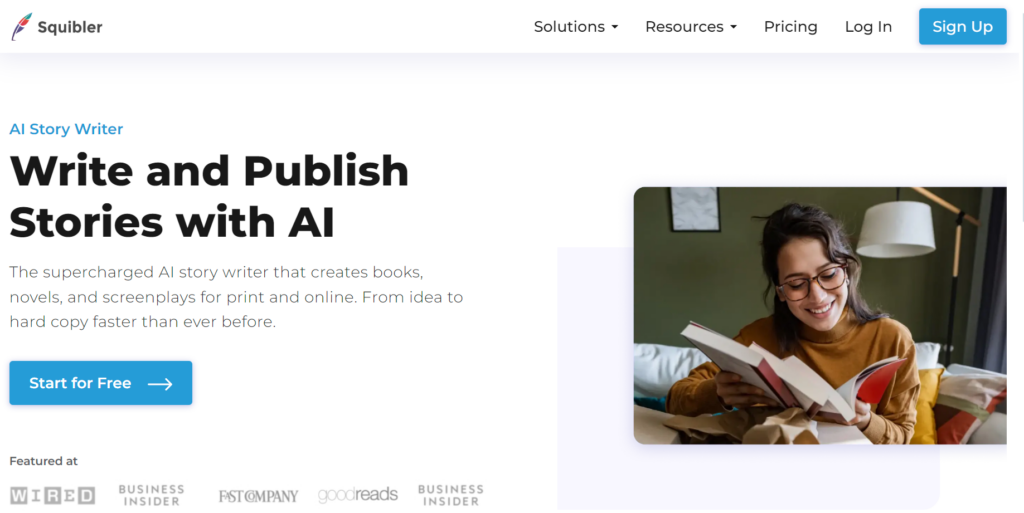
I built Squibler specifically for authors, not marketers. It’s structured around books, chapters, scenes, and the repeatable pieces that make long-form writing less chaotic.
If you’re trying to go from idea to finished draft without duct-taping five apps together, Squibler is the most “end to end” option on this list.
I’m biased here because I’m close to the product, but that’s also why I’m confident about what it does well. When you’re writing a book, the real pain is not “writing sentences.” It’s staying consistent across hundreds of pages while keeping momentum, and Squibler is built to keep you moving.
Pros
Cons
LEARN MORE ABOUT SQUIBLER: Check out Squibler on their website.

Simplified is a broader content platform, but it can be surprisingly useful for book writing when your project needs supporting material. Think statistics, references, or background context that you want to pull in while drafting.
It’s a better fit for nonfiction authors who want drafting plus light research support in one place.
A lot of “book writer” tools are great at sounding fluent, but they’re weak at helping you assemble real supporting material. Simplified stood out because it leans into research and drafting together, which matters if you’re writing business books, how-to books, or anything where credibility matters.
Pros
Cons
LEARN MORE ABOUT SIMPLIFIED: Check out Simplified on their website.

Neuroflash is a solid option if you care about a more European market footprint and want a writing assistant that supports long-form sections, variations, and iterative drafting. It’s not a pure “novel tool,” but it does a good job supporting the building blocks of a manuscript.
If you’re writing in a team environment, it’s also one of the more “business ready” options.
In real writing teams, the tool needs to be reliable, not flashy. Neuroflash is more pragmatic than magical, and that’s a compliment. It’s useful when you need consistent output and a repeatable workflow.
Pros
Cons
LEARN MORE ABOUT NEUROFLASH: Check out Neuroflash on their website.
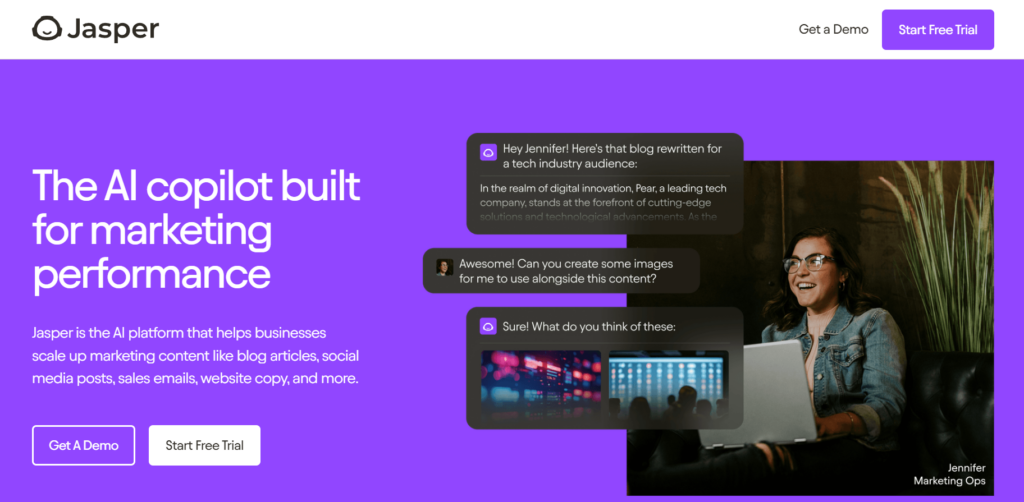
Jasper is known for marketing content, but the real reason I include it here is voice control. If you’re writing nonfiction in a consistent “brand voice” across a book plus companion content (emails, social, landing pages), Jasper can help you keep everything aligned.
This is less “write my novel” and more “keep my nonfiction book and platform consistent.”
Nonfiction authors usually do not stop at the manuscript. They ship a book and then ship the marketing machine around it. Jasper’s strength is helping you maintain a consistent voice across all of that, especially if you’re building a recognizable author brand.
Pros
Cons
LEARN MORE ABOUT JASPER: Check out Jasper on their website.
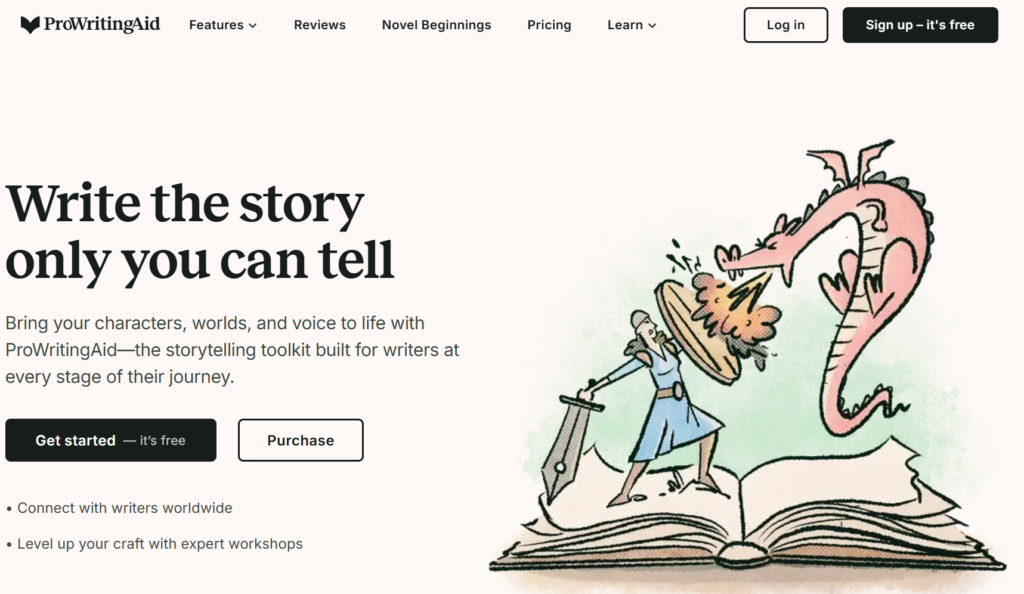
ProWritingAid is not a “generate chapters for me” tool. It’s an editing tool that helps you tighten prose, spot repeated phrasing, and clean up readability issues that sneak into long manuscripts.
If you already have words on the page, ProWritingAid helps you make them better.
Most authors do not need more text. They need cleaner text. ProWritingAid shines when you’re revising, because it helps you see patterns you stop noticing after the tenth reread.
Pros
Cons
LEARN MORE ABOUT PROWRITINGAID: Check out ProWritingAid on their website.

Writesonic is handy when you want to expand a concept quickly. It can help you generate plot summaries, character descriptions, or alternative angles when your draft feels flat.
It’s a fast tool, and that’s the point.
When I’m stuck, I don’t need a perfect paragraph. I need five decent directions so I can choose one and keep writing. Writesonic is good at that “give me options now” moment.
Pros
Cons
LEARN MORE ABOUT WRITESONIC: Check out Writesonic on their website.
Rytr is a budget-friendly writing assistant that helps you generate rough drafts, outlines, and variations. It’s not the most sophisticated tool here, but it’s accessible and fast.
For early-stage drafting, it gets the job done.
Not everyone wants another $50 to $100 monthly subscription. Rytr is a practical choice when you want a lightweight writing assistant without committing to a premium stack.
Pros
Cons
LEARN MORE ABOUT RYTR: Check out Rytr on their website.
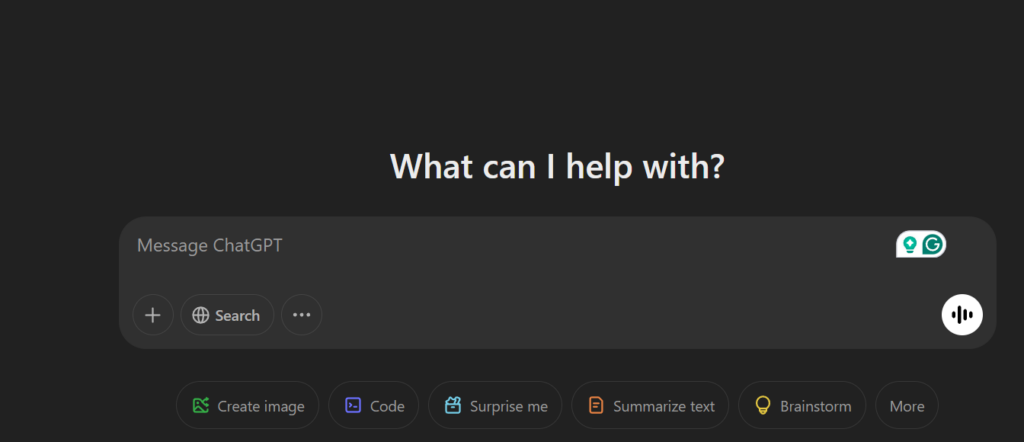
ChatGPT is the most flexible “conversational writing assistant” on this list. It’s not a book tool by default, but it becomes one if you treat it like a writing partner: brainstorming, outlining, punching up scenes, and doing interactive edits.
This is the tool I use when I want to talk my way into a better draft.
Sometimes the fastest way to solve a writing problem is to explain it out loud. ChatGPT is good at that conversational loop, where you refine talking points, ask for alternative versions, and tighten a paragraph without losing momentum.
Pros
Cons
LEARN MORE ABOUT CHATGPT: Check out ChatGPT on their website.
Copy.ai is another tool that started in marketing, but it’s useful for nonfiction authors who want to repurpose chapters into blog posts, emails, social content, or course modules. If your book is part of a bigger content engine, this tool helps you multiply output.
It’s not where I’d draft a novel, but it’s great after the book exists.
Most nonfiction authors win by distribution, not just writing. Copy.ai is built for turning one core idea into ten assets, which is exactly what you want once your manuscript is done.
Pros
Cons
LEARN MORE ABOUT COPY.AI: Check out Copy.ai on their website.
Sudowrite is one of the most fiction-friendly tools here, especially for rewriting and creative expansion. It helps you explore alternate phrasing, deepen sensory detail, and rework scenes without starting from scratch.
If you write fiction, this one is worth testing.
Fiction tools need taste, not just fluency. Sudowrite is built around the reality that writers rewrite constantly, and it supports that loop well without forcing you into a rigid structure.
Pros
Cons
LEARN MORE ABOUT SUDOWRITE: Check out Sudowrite on their website.
Sassbook is useful when you want quick variations, rewrites, or idea nudges. It’s not as deep as some of the bigger platforms, but it’s functional for generating options you can shape into your own voice.
Think of it as “give me a few angles” support.
I like tools that reduce blank-page anxiety. Sassbook is lightweight, and that makes it easy to use when you only need a quick spark or a rewrite pass.
Pros
Cons
LEARN MORE ABOUT SASSBOOK: Check out Sassbook on their website.
AI Dungeon is basically improvisational storytelling with an AI. It’s less “write my manuscript” and more “help me explore a world, character, or plotline” by interacting with it.
If you do worldbuilding, this can be surprisingly productive.
Worldbuilding is hard because it’s abstract until it’s lived. AI Dungeon makes it interactive, which helps you discover details you would not think to outline on a blank doc.
Pros
Cons
LEARN MORE ABOUT AI DUNGEON: Check out AI Dungeon on their website.
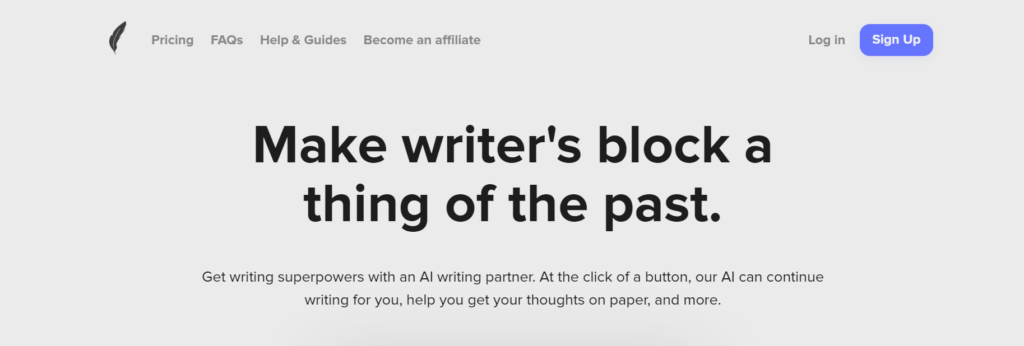
ShortlyAI is a minimal, focused drafting tool that helps you keep writing. It’s designed for momentum: you write, it continues, you steer, it continues.
For authors who hate clutter, it’s a good match.
Some writers do better with fewer knobs. ShortlyAI feels like a clean drafting partner that stays out of your way, which can be exactly what you need during a heavy writing sprint.
Pros
Cons
LEARN MORE ABOUT SHORTLYAI: Check out ShortlyAI on their website.
These aren’t all “book writer” tools in the traditional sense, but they’re where I’m seeing the most interesting innovation right now, especially around AI-guided writing, better planning workflows, and smarter feedback loops. If you like testing what’s next (or you want a tool that feels like it’s actively coaching you), this is the section to bookmark.
If you’re trying to stay ahead of the curve, the big trend I’d watch is this: tools are shifting from “generate text” to “guide the process.” AI-guided writing, smarter planning, real-time scoring, and better feedback loops are where the next big jump will come from.
Here’s my criteria for choosing AI book writer tools:
A good tool is not the one that produces a pretty paragraph once. It’s the one that still behaves when you ask for three rewrites, a tighter voice, and a different pacing, without collapsing into repetitive filler.
Books punish inconsistency. I look for tools that can keep characters, terms, and tone stable across many chapters, or at least make it easy for me to enforce that consistency.
Fiction authors need scene-level support, worldbuilding, and prose variation. Nonfiction authors need structure, outlining, and research integration, plus a clean way to repurpose content after the manuscript is done.
I heavily value “chatbot style” tools because they let me brainstorm interactively. That back-and-forth is where ideas get sharper, especially when I’m trying to unblock a chapter or refine talking points.
The best tools reduce friction. If the writing interface is clunky or distracting, you will stop using it, even if the model is strong.
Word limits and tiering matter more than most people admit. A tool that is cheap but constantly throttles you in the middle of a draft is not actually cheap.
Also, here are tips for picking the best AI book writer tool for you:
If you struggle with blank pages, pick a conversational assistant like ChatGPT or a fiction helper like Sudowrite. If you struggle with polishing, go with ProWritingAid first.
Drafting and editing are different jobs. I often draft with one tool and revise with another, because no single tool is best at everything.
If you want chapters, scenes, and story elements managed in one place, pick a tool designed for books. If you are fine managing structure yourself, a general writing assistant can work.
If your nonfiction book depends on accuracy, choose a workflow that includes research support, and assume you’ll still do verification. AI is great at sounding confident, which is not the same thing as being right.
Do not judge a tool by a homepage demo. Paste in a real chapter, rewrite it three ways, and see if the tool stays helpful after the honeymoon phase.
AI book writer tools make writing faster and more manageable without losing your creative voice. These tools assist with outlining, drafting, and refining, helping you stay productive and consistent.
The right tool depends on your project. Whether you’re writing fiction, nonfiction, or brainstorming ideas, there’s an option to fit your needs. Pairing these tools with your creativity ensures the final work stays authentic.
By using the tools in this guide, you can overcome challenges like writer’s block and produce quality content efficiently. Treat AI as a helpful partner to support your writing process.
Here I answer the most frequently asked questions about AI book writer tools.
A chatbot is great for brainstorming, editing, and interactive assistance, but it usually does not manage book structure. A book writer tool typically adds project workflows like chapters, scenes, and element tracking so you can stay organized across a full manuscript.
If you write fiction, prioritize tools that support scene-level writing, prose variation, and worldbuilding. Sudowrite and AI Dungeon are strong for creative exploration, and a structured platform like Squibler helps once you need consistency across chapters.
Nonfiction authors usually win with outlining, structure, and repurposing. Simplified can help when research is part of your drafting workflow, and tools like Jasper or Copy.ai are useful when you want to turn chapters into platform content after the book is finished.
It can, if you accept first drafts as final drafts. My rule is simple: use AI to generate options, then rewrite in your voice. The authors who get the best results treat AI like a junior collaborator, not a replacement for taste.
Plagiarism risk is usually a process problem, not a tool problem. If you’re generating text and publishing it without revision, you’re taking a risk. The safer approach is to use AI for ideation and drafts, then revise deeply, and avoid copying distinctive passages or copyrighted material.
Start with a low-cost drafting assistant (Rytr) or a general conversational tool (ChatGPT), then add an editing layer like ProWritingAid when you have a draft worth polishing. You’ll get farther with a simple two-tool stack than by paying for one expensive tool you barely use.
Get the weekly newsletter keeping 23,000+ technical writers in the loop.
Learn AI prompting and advance your career.
Please check your email for a confirmation message shortly.





















Get our #1 industry rated weekly technical writing reads newsletter.
Your syllabus has been sent to your email