Our reviewers evaluate writing services independently. Learn how we stay transparent, our methodology, and tell us about anything we missed.

Our reviewers evaluate writing services independently. Learn how we stay transparent, our methodology, and tell us about anything we missed.
I’ve written a ridiculous number of business assets over the years: proposals, landing pages, executive-style docs, and the kind of “this needs to sound confident” copy you only write when a deal is on the line. And I learned something the hard way. Business writing is not just good grammar, it’s clarity, persuasion, and making the reader’s next step feel obvious.
When you’re moving quickly, hiring a business writing service can be the difference between “we’ll ship it later” and “this goes live this week.” But not all providers are built for the same job. Some are great for SEO blog posts. Others are better for white papers, business plans, or editorial support that makes your writing look like it came from a seasoned comms team.
Here’s my pick of the 9 best services from the lineup reviewed.
Business writing services are only “worth it” when they match what you’re actually producing. A blog-writing engine is not the same as a white paper team. A marketplace full of freelancers is not the same as a managed service with editors and project managers.
In the reviews below, I’ll keep it practical: what each provider is best for, where it’s weak, and who I’d use it for if I were spending my own money.
Here is my detailed review for each of the writing services:

Textbroker is a classic “content at scale” platform. If you need web pages, business blog posts, product descriptions, or basic business content in high volume, it’s built for that. The big advantage is speed and throughput, especially when you already know what you want written and just need a reliable production engine.
Where Textbroker can fall short is nuanced brand voice or strategy-heavy writing. You can find great writers there, but you’ll want tighter briefs and stronger editorial review if your content needs to sound like a single, consistent storyteller.
If your main goal is steady output for marketing, SEO, or general business content, this is a solid starting point. If you’re writing a high-stakes business proposal or a flagship white paper, I’d be more selective.
I picked Textbroker because sometimes “good and fast” beats “perfect and late.” If you’re supporting a content marketing strategy and you need consistent production without building an in-house team, Textbroker is built for that workflow.
Pros
Cons
LEARN MORE ABOUT Textbroker
Check out Textbroker on their website: Textbroker
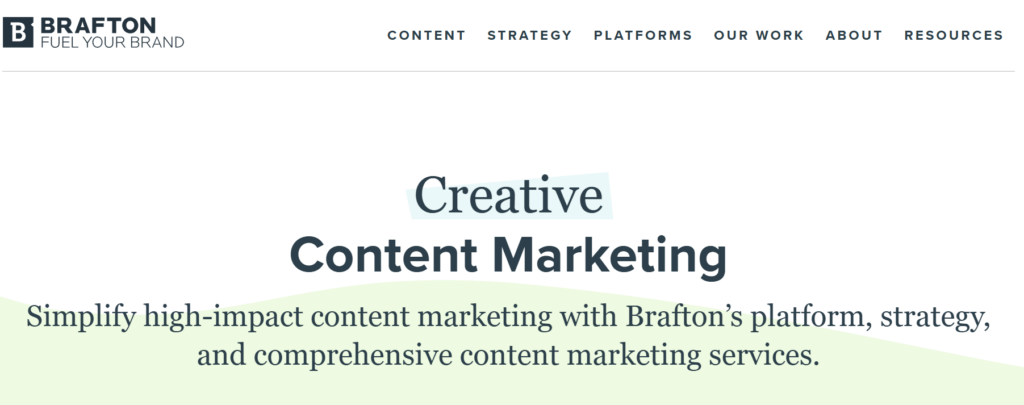
Brafton is more agency than marketplace. Instead of just “here are writers,” you’re getting a content operation that can support strategy, production, and ongoing marketing execution. If you need a partner to produce blog posts, white papers, and other business content while keeping the content aligned with business objectives, this is the kind of provider that can handle it.
This is a strong fit when you want more than words. Brafton tends to work best when you have a content marketing goal, a target audience, and a broader digital marketing plan. You’re not buying one-off writing, you’re buying a system.
The tradeoff is cost and process. Agencies tend to be pricier and more structured. That’s not a bad thing, but it’s worth knowing before you dive in.
I picked Brafton because a lot of businesses don’t need “a writer.” They need a content engine that understands SEO, messaging, and consistency across channels. When that’s the requirement, an agency model can be the cleanest solution.
Pros
Cons
LEARN MORE ABOUT Brafton
Check out Brafton on their website: Brafton

Upwork is a hiring marketplace, not a managed writing service. That’s why it’s useful. If you want to find a writer with industry experience, build a relationship, and keep working with them month after month, Upwork is one of the easiest places to do it.
The quality range is huge, which means the outcome depends on your screening. When Upwork works, it works because you found a great person and built a repeatable workflow. When it fails, it’s usually because the brief was vague or the vetting was rushed.
For business writing, I like Upwork for recurring work like business blog posts, web content, case studies, and internal memos. It’s also solid for editing services and proofreading if you already have drafts.
I picked Upwork because it’s the closest thing to building your own “bench” of writers without hiring employees. If you want someone who learns your business strategy and voice over time, a marketplace relationship can beat a one-off service every day.
Pros
Cons
LEARN MORE ABOUT Upwork
Check out Upwork on their website: Upwork

Scripted is a managed platform that connects you with freelance writers, but it also leans into brand consistency and editorial quality. If you want business writing support plus editing services that help polish tone and structure, this is one of the more “hands-on” platforms in the lineup.
It’s a good fit for teams producing newsletters, blogs, and business content that needs to sound on-brand. Scripted tends to work best when you already know your voice and goals, and you want a service that can match writers accordingly.
If you’re running content at scale but you still care about quality control, Scripted can be a nice middle ground between pure marketplaces and full agencies.
I picked Scripted because editing support is often the hidden value. Lots of services can produce drafts. Fewer can consistently ship polished work that sounds like your brand and not “a random freelancer wrote this.”
Pros
Cons
LEARN MORE ABOUT Scripted
Check out Scripted on their website: Scripted
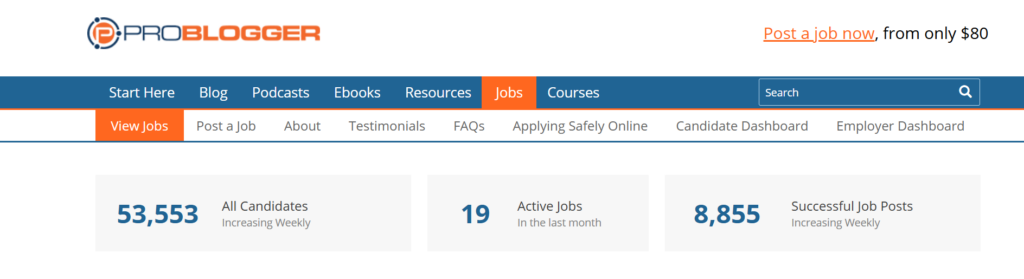
The ProBlogger Job Board is straightforward: you post a job, writers apply, and you hire directly. If you want a business writer with a particular niche background and you’d rather avoid platform fees or complicated tooling, it’s a clean option.
This works especially well when you have a clear assignment type: business blog posts, thought leadership, industry explainers, or someone who can produce content to a specific word count and style. It’s less “managed service” and more “recruiting channel.”
The downside is you are responsible for vetting, onboarding, and process. If you’re comfortable running hiring and editorial workflows, it’s a great place to find talent.
I picked ProBlogger because sometimes the simplest solution is hiring a great writer directly. If you’re tired of platforms and just want a professional you can build a relationship with, job boards can be the fastest path.
Pros
Cons
LEARN MORE ABOUT ProBlogger Job Board
Check out ProBlogger on their website: ProBlogger Job Board

Contently is built for organizations that treat content like a serious operation. It’s designed around sourcing, managing, and scaling high-quality work with support structures like project management and optimization workflows.
This tends to be a fit for enterprise teams producing a lot of content across multiple formats, including long-form articles, campaigns, and even things like presentation-style assets. If your content needs governance and consistency at scale, Contently is designed for that.
The tradeoff is that it’s not a lightweight solution. If you just need a few blog posts, it’s probably overkill. If you’re running a content machine, it’s worth considering.
I picked Contently because execution breaks at scale. When a team has multiple stakeholders, deadlines, formats, and approvals, a more managed platform can prevent chaos and keep quality consistent.
Pros
Cons
LEARN MORE ABOUT Contently
Check out Contently on their website: Contently

WriterAccess is built around a network of writers, editors, and content strategists. That “strategist” piece matters if you’re trying to align writing with content marketing goals, SEO, and a broader business strategy.
It’s a good fit for teams that need different roles, not just writers. For example, you might want a writer for blog posts, an editor for consistency, and someone who can help with structure and tone across landing pages and ebooks.
If you’re producing for a global audience, translation services can also be a differentiator. Not every provider offers that as part of the same ecosystem.
I picked WriterAccess because a lot of teams get stuck at “we can produce content” but struggle with “this content actually supports our value proposition.” Strategy support and editorial layers can be the difference.
Pros
Cons
LEARN MORE ABOUT WriterAccess
Check out WriterAccess on their website: WriterAccess

Compose.ly leans hard into vetting and account management. If you want business writing from writers who have been screened, plus an experience that feels more guided than an open marketplace, this is a good option.
This can be especially useful for teams that want quality without running a full recruiting process. If your internal team is lean, having someone help manage the relationship and delivery can save time.
It’s also a decent fit for specialized writing like business plans, web content, and niche business topics, because the vetting makes specialization easier to trust.
I picked Compose.ly because vetting is the pain point for most teams. If you don’t have time to sort through 40 applicants and review portfolios, paying for a stronger filter is often worth it.
Pros
Cons
LEARN MORE ABOUT Compose.ly
Check out Compose.ly on their website: Compose.ly

Verblio has a strong SEO angle, which makes it useful for teams producing business content meant to rank. If your goal is visibility, traffic, and content that supports digital marketing, Verblio is one of the more direct fits.
Like other platforms, the output depends on how well you brief and how consistent your editorial standards are. But if you’re trying to produce business blog posts, web content, and SEO-friendly writing at scale, this can be a good tool in the stack.
It’s especially useful if you want a provider that thinks about optimization, not just writing. That said, I’d still keep a human editor in the loop for brand voice.
I picked Verblio because SEO content is a different game. If your business objectives include organic growth, you want writers who understand structure, search intent, and what “useful content” looks like to readers and search engines.
Pros
Cons
LEARN MORE ABOUT Verblio
Check out Verblio on their website: Verblio
If none of the options above match your exact use case, here are a few adjacent directions I’d consider.
If your writing needs are more specific than “business writing,” these guides can help you narrow down faster: proposal writing services, SOP writing services, and technical writing services.
Most “business writing services” fall into a few buckets, and knowing the bucket helps you choose the right provider.
If you want the broader landscape, I also break this down in my guide to what business writing is and the types of business writing that matter.
If you’re building a full business communication system, these will help:
Below, you will find my criteria in choosing business writing services:
If you need a business plan, you want someone who’s done business plans. Same with white papers, case studies, or investor content. Generalists can write, but specialists understand what the reader expects and what proof points matter.
I’m not hiring for fun. I’m hiring it to achieve something: more leads, better conversions, stronger stakeholder buy-in, clearer internal communication. A good service understands your target audience and can shape the message around a clear value proposition.
I look for real editing support, not just “we’ll fix typos.” The best services either provide editors or have a clear revision policy so the final result actually ships.
If you’re producing at scale, the process matters as much as the writing. Can you manage multiple pieces? Can you handle approvals? Is turnaround time predictable? This is where managed services and enterprise platforms can shine.
Some services price per word, others per project, others via subscription packages. I like models that match how you work. If you need one-off assets, per-project pricing can be cleaner. If you publish weekly, subscriptions can be cheaper.
Here is how to choose the business writing service that fits your needs:
Before you shop, define what you need: business blog posts, landing pages, a business proposal, a case study, or editing services. You’ll pick faster and you’ll avoid paying for the wrong kind of help.
If you want to hire one great writer and build a long-term relationship, marketplaces like Upwork or direct hiring via job boards are usually best. If you want a team that runs the process, look at agencies or managed platforms.
Do not accept generic samples. Ask for work similar to your format and industry. If you’re buying white papers, request white papers. If you’re buying SEO posts, request SEO posts.
I almost always start with one paid piece. It tells you how communication works, whether they take feedback well, and whether turnaround time is real. After that, scale up.
Agree on voice, length, revision policy, and success criteria. For example, “SEO-friendly blog post” means something very different to different writers. Clear expectations reduce rewrites and frustration.
Business writing is about more than clear sentences. It’s about delivering persuasive, on-brand content that achieves your goals. Whether you need SEO-friendly articles, polished proposals, or detailed white papers, the right business writing service can save you time and ensure quality.
Choosing the best service depends on your specific needs. Freelance marketplaces work well for flexibility and niche expertise, while managed platforms and agencies offer structure, strategy, and long-term support. By aligning your goals with the right provider, you can produce content that resonates with your audience and supports your business objectives.
Use this guide to find a service that fits your requirements, and invest in writing that drives results for your business.
Here I answer the most frequently asked questions about business writing services.
Most providers help you create or polish business content like blog posts, web pages, business proposals, case studies, and white papers. Some also offer editing and proofreading services, plus strategy support for messaging and SEO.
Ask for samples in your niche and request a short outline before writing begins. A good writer will reflect industry terminology naturally and won’t need you to teach them the basics of your space.
Many do, but the revision policy varies. Before you buy, confirm how many revision rounds are included, what counts as a revision versus a new scope, and how fast revisions are turned around.
It depends on the deliverable. Blog posts can often be turned around in days. White papers and business plans usually take longer because they require research, structure, and stakeholder review. The best move is to run a small pilot and measure actual delivery speed.
If you want long-term consistency and a writer who learns your voice, hiring a freelancer can be better value. If you want a system that includes editing, project management, and predictable output, managed services are usually smoother.
They are when the writing directly supports your business objectives. A strong landing page can improve conversions. A sharp proposal can win deals. A clear case study can shorten sales cycles. The ROI comes from outcomes, not word count.
Yes, some are built specifically for SEO-friendly content. Just make sure you clarify whether they handle keyword research, search intent, and on-page structure, or whether they simply “write content that includes keywords.”
If you’re sharing sensitive information, use a confidentiality agreement and limit access to only what the writer needs. Many professional providers are used to NDAs, especially for business plans, investor materials, and internal documents.
Get the weekly newsletter keeping 23,000+ technical writers in the loop.
Learn technical writing and advance your career.
Please check your email for a confirmation message shortly.





















Get our #1 industry rated weekly technical writing reads newsletter.
Your syllabus has been sent to your email