
The first time I saw a grant proposal get rejected, it wasn’t because the program was bad. It was because the proposal was unclear, the budget didn’t match the narrative, and the team didn’t look ready to deliver.
That moment stuck with me because it reminded me of technical writing. You can have the best product in the world, but if the documentation is confusing, users still churn. Grant writing is the same. You can have an incredible mission, but if the proposal is fuzzy, funders still say no.
A lot of grant writing advice online is either too “academic” or too “template-driven.” This guide is different. I’m going to walk you through what funders actually look for, where proposals commonly break, and the habits I’d use to build a grant pipeline that doesn’t rely on luck.
Grant writing is the process of researching funding opportunities, checking eligibility, and submitting a proposal that convinces a funder to invest in a specific project. It’s part writing, part strategy, and part project management, because the best proposal is a plan that looks believable on paper.
In practice, grant writing usually includes a narrative (your story and plan), a budget (your numbers), and attachments (your proof). The “writing” matters, but the alignment matters more.
If you’re looking for real examples while you read, I’d keep this page of successful grant writing examples that win grants open in another tab. It’s the fastest way to calibrate what “good” looks like.
A grant is typically a financial award from a funder to support a defined program, project, or initiative. The key detail is that grants are purpose-driven, meaning the money is tied to goals, outcomes, timelines, and reporting expectations.
Grantmakers come in a few forms, and each one behaves differently. Government entities often have strict rules and standardized application formats, while foundations may prioritize mission alignment and long-term impact, and corporate programs sometimes focus on brand alignment or local community outcomes.
It also helps to know who touches grants inside an organization. Executive directors, development coordinators, board members, and program leads all shape the story, and when those people are not aligned, the proposal usually shows it.
One more foundational point that beginners miss is this: grant writing is not just fundraising. It’s funding plus compliance. You are not only asking for money. You are signing up for reporting, documentation, and follow-through.
If you want a simple learning path, start with fundamentals, then move to process, then move to templates. I’ve laid out a structured approach in the grant writing process in 8 steps and then paired it with grant writing templates that win grants, so you can practice with a repeatable workflow.
Most grant writing becomes easier once you stop treating “a grant” like one thing. Different funding sources have different expectations, different review styles, and different tolerance for ambiguity.
Government grants tend to be compliance-heavy and checklist-driven. They usually have formal rules, required attachments, and strict submission processes, so your application needs precision and strong document control.
Foundation grants can be just as rigorous, but the evaluation often leans more narrative. Private foundation grants and family foundations typically want a clear statement of need, a credible plan, and a strong reason your organization is the one to execute it.
Corporate giving and corporate grants often care about community visibility, employee engagement, and measurable outcomes that connect to their giving priorities. Community grants can be smaller, but they may be faster to apply for and better for building early momentum.
You’ll also see specialty categories like challenge grants, which are designed to trigger matching donations or broader participation. Volunteer grants and in-kind resources are another angle people forget, especially when companies offer “dollars for doers” programs.
To find opportunities, most teams use some combination of a grant opportunity database and old-fashioned prospect research. For government opportunities in the US, I typically start with the official Grants.gov funding search because it’s the cleanest way to avoid outdated listings.
The goal is not to apply for everything. The goal is to build a short list that matches your mission and your capacity, then write fewer proposals at a higher quality level.
Eligibility is the first filter, and it is brutal. Funding eligibility guidelines can eliminate you before a reviewer reads your narrative, so you want to confirm eligibility criteria early, not after you’ve invested weeks of writing.
Beyond technical eligibility, you also have to assess organizational readiness. In plain language, can you actually administer the grant, deliver the project, and report on it without chaos?
Funders often look for signals like organizational credibility, budget and financials, evaluation capacity, and key program staff bios. Even when the application doesn’t explicitly ask for these, reviewers infer them from what you submit.
Readiness also includes operational capacity. Do you have a plan for staffing, procurement, data tracking, and compliance? If you don’t, the proposal might feel like wishful thinking, even if the mission is strong.
Government grants can add another layer of requirements around financial reporting and compliance standards. For US federal grants specifically, it can be useful to understand the baseline framework behind federal award administration, like the OMB Uniform Guidance in 2 CFR 200, because it influences reporting expectations and cost rules.
A practical way to assess readiness is to run a quick “proof packet” checklist. Can you quickly produce your organizational documents, relevant policies, staff bios, audit or financial statements (if applicable), and program descriptions without scrambling? If not, your first win might be building your internal grant infrastructure before chasing bigger awards.
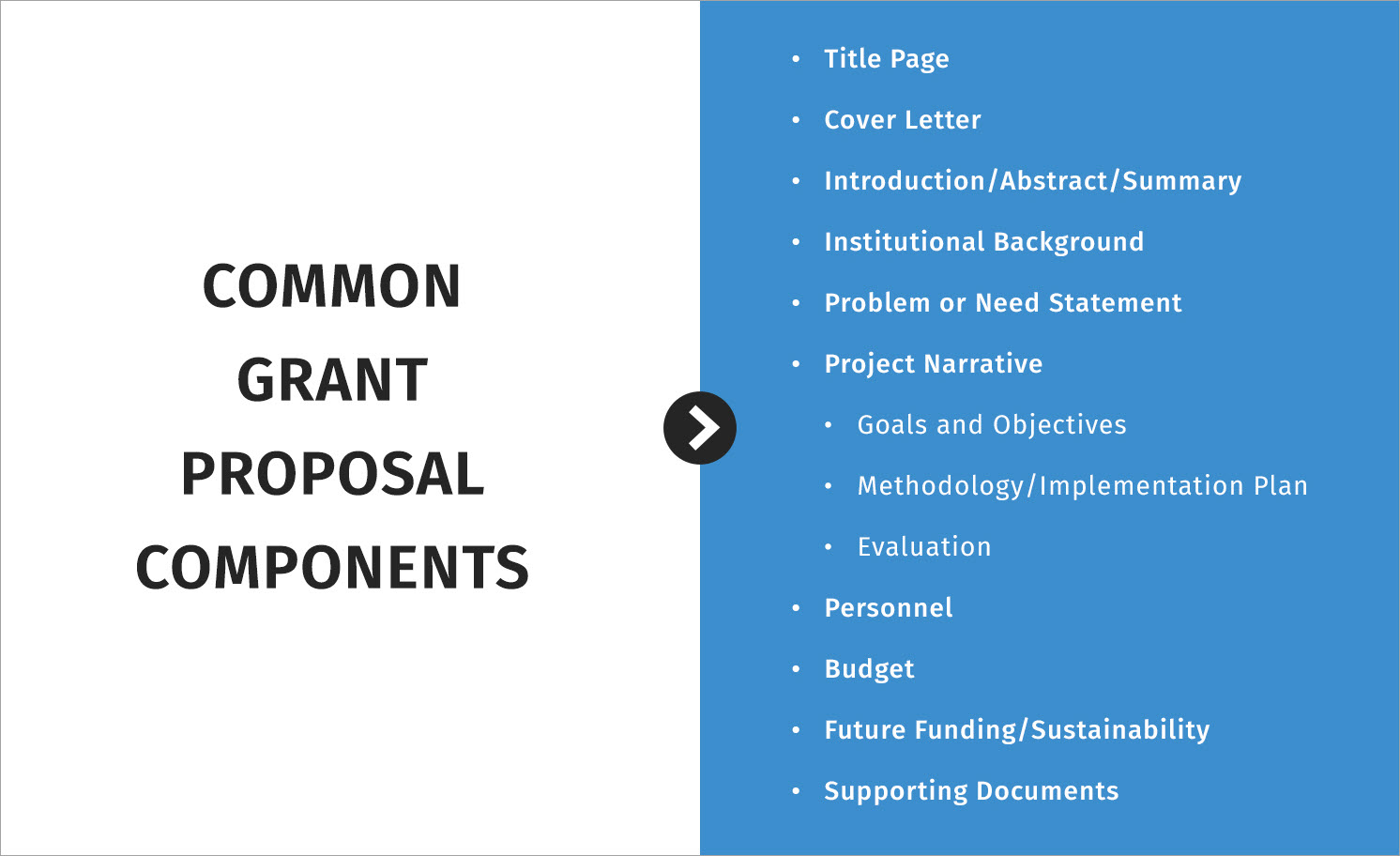
Grant proposals vary by funder, but most include the same core building blocks. When I’m planning a proposal, I think in three layers: the story, the plan, and the proof.
The story is your statement of need and your case for why this matters now. This is where you explain the problem, the community impact, and why your organization is positioned to make a difference.
The plan is your program narrative. It covers your program goals and objectives, what you will do, who you will serve, and how you will measure success. This is also where reviewers look for realism, because vague programs rarely win.
The proof is everything that makes the plan believable: budget, evaluation plan, timelines, milestones, and supporting attachments. This is where you show you can execute, not just dream.
Here are the components I see most often, and the role each one plays.
If you want help making budgets feel less mysterious, I’ve included practical guidance and examples in a grant proposal budget template you can reuse. Budget alignment is one of the easiest ways to stand out because many applicants rush it.
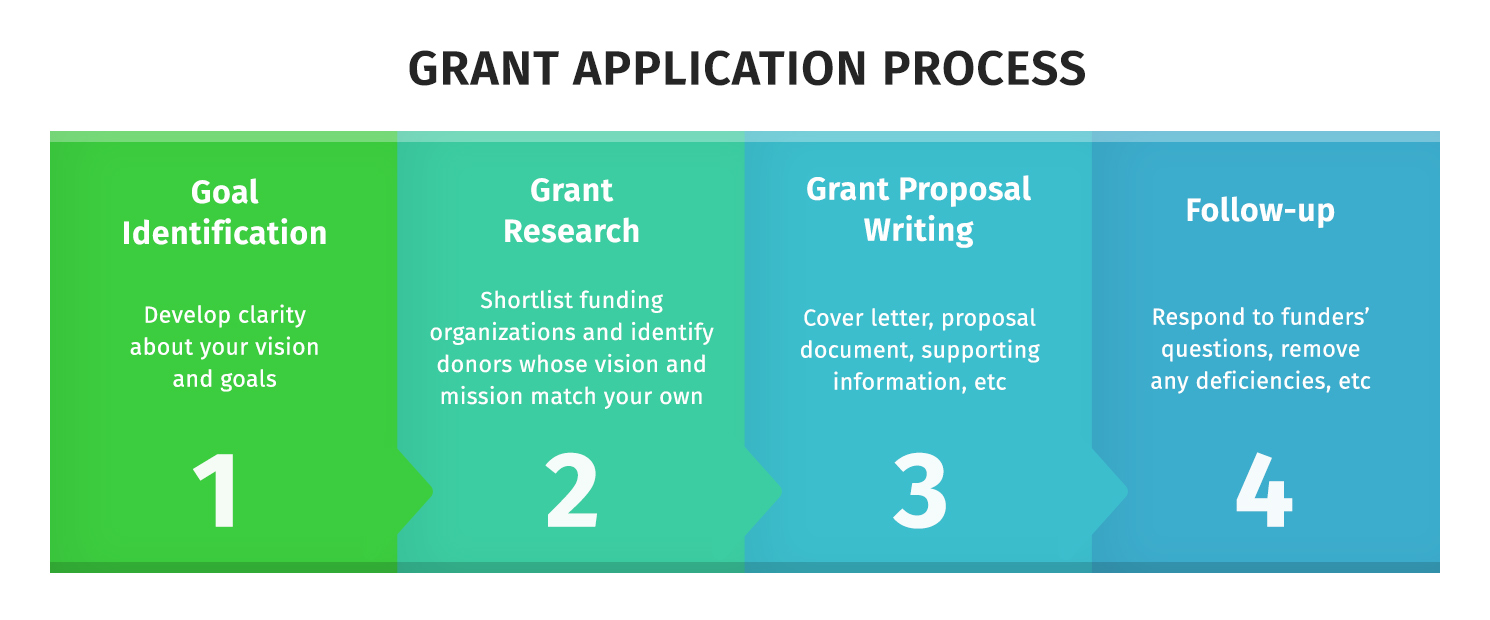
Most successful grant teams don’t “write grants.” They run a process. The writing is only one phase, and it goes much smoother when the upstream work is solid.
I like to break the workflow into eight repeatable phases: prospecting, qualification, planning, drafting, reviewing, packaging, submission, and post-submission follow-up. If you want the compact version, I walk through it in the grant writing process in 8 steps.
The process starts with research. You identify the funder, confirm mission match, and read the funder’s guidelines as if your funding depends on it, because it does.
Then you qualify the opportunity. Is it the right size, the right cause area, and the right effort-to-reward ratio? This is where a grant-seeking strategy matters, because writing everything is how teams burn out.
Next comes planning. You collect stakeholder feedback, gather data, define the program approach, confirm the budget development assumptions, and draft a simple outline, so you’re not discovering the story while writing it.
Drafting is where most people start, and it’s why they struggle. Drafting should feel like filling in a plan, not inventing one.
Review and revision are where winning proposals are made. This is where you test clarity, cut gaps, check compliance, and make sure the narrative, budget, and attachments agree with each other.
Packaging and submission is the final mile, and it’s where a lot of strong proposals die. Application format requirements, required attachments, and submission process rules are often unforgiving, especially when the application deadline is tight.
For certain government workflows, you may run into portals and registration steps that take time. If you’re working on US federal opportunities, you’ll often need to understand tools like SAM.gov registration and application workflows tied to Grants.gov, because those operational steps can block submission if you leave them too late.
If you want a practical starting point for your own workflow, I’d combine grant writing templates you can adapt with a checklist-style process doc. That combination gives you speed without sacrificing quality.
Grant writing overlaps with fundraising, but they are not the same job. Fundraising is the umbrella, and grant writing is one channel inside it with its own rules.
Individual donors and cash donations often rely on relationship-building, emotion, and repeated touchpoints. Grants rely on structured proposals, measurable outcomes, and compliance, even when the funder relationship is warm.
Sponsorships and corporate sponsorships can look like grants, but they often behave more like marketing partnerships. You might be selling visibility, activation, and alignment, not just program impact.
Another difference is timelines. Grants often have set funding periods and review cycles that you cannot control, which changes how you plan staffing and cash flow.
The skill overlap is real, though. You still need storytelling, clarity, persuasion, and a compelling case for impact. You just need to package those elements inside a funder’s rules and scoring criteria.
If you come from proposal writing, grant writing will feel familiar. If you want to compare the two, you might like the structure of how to write a grant proposal in 8 steps, because it forces the same discipline: clear ask, clear plan, clear proof.
Partnerships can make a proposal stronger, but only when they are real. Reviewers can tell the difference between “we partnered with X” and an actual collaborative partnership with defined roles.
The strongest partnership sections explain who the lead and partner organizations are, what each partner contributes, and how the collaboration improves project implementation. This is where cross-sector partnerships and community partnerships often shine, especially when the project touches multiple systems.
Clear communication matters here more than style. If the partner relationship is fuzzy, the whole proposal can feel risky.
Letters of support and MOUs are common proof mechanisms. A letter of support can validate credibility, but a memorandum of understanding often signals seriousness because it spells out responsibilities.
Partnerships also change your project management needs. You’ll likely need regular meetings, shared timelines, and decision rules, because coordination failures show up as delivery failures later.
A simple way to write this section well is to be concrete. Name who does what, how the relationship will be managed, and what happens if assumptions change. That level of specificity builds trust.
Most grant rejections are not mysterious. They come from misalignment, missing requirements, weak clarity, or low confidence that the organization can execute.
One of the biggest mistakes is writing a cold proposal that does not match the funder’s stated priorities. It might be well written, but it’s still the wrong fit, and reviewers can spot that immediately.
Another common failure is application rule violations. Missing attachments, ignoring formatting constraints, or failing to follow application format instructions can disqualify you before anyone scores the content.
Timing is another killer. Teams underestimate how long approvals, signatures, data pulls, and partner coordination take. Then they rush at the end, and rushed proposals usually show it.
I also see a lot of “argument gaps.” The proposal describes activities but does not connect them to outcomes, or it states impact without explaining how it will be measured.
Transitions matter too. Even in structured proposals, reviewers are human, and clunky transitions make your narrative feel disjointed. When the writing feels scattered, reviewers assume the project will be scattered.
Feedback and revisions are your insurance policy. The best way to reduce rejection risk is to build time for review, run a compliance checklist against the RFP or funding guidelines, and get at least one reviewer who was not involved in drafting to read it cold.
If you want to sharpen your proposal presentation, it can also help to write stronger supporting docs. For example, I’ve seen cover letters rescue otherwise boring proposals by framing the ask clearly, which is why I recommend using a template like this grant proposal cover letter guide as a baseline.
Winning a grant is not the finish line. It’s the starting line for implementation, compliance, and reporting.
After the award, you’ll usually confirm fund disbursement terms, finalize timelines, and align internal stakeholders on deliverables. This is where teams either look competent or chaotic, and funders notice.
Implementation requires tracking project deliverables, outputs, and outcomes. Outputs are what you produce, outcomes are what changes, and you typically need both in programmatic reporting.
Reporting compliance often includes financial reporting and narrative reporting. Even when the funder is friendly, reporting is still an accountability system, so your numbers and your story need to match.
Evaluation does not have to be complex, but it has to be honest. Funders prefer a clear evaluation plan with feasible assessment strategies over an ambitious plan that no one can execute.
Sustainability planning matters here too. Many funders want to know what happens after the grant ends, and your post-award plan should include how you will maintain the program, transition it, or scale it responsibly.
Finally, award close-out matters. Close-out is where you finalize reports, confirm spend, document results, and ensure all obligations are met. A clean close-out increases the chance of renewal funding and strengthens your credibility for future grants.

Grant writing can be a real career, not just a side task for nonprofits. I’ve met grant writers who work in-house as part of development teams, and I’ve met freelance grant writers who build strong consultant businesses by specializing in certain funders or program areas.
The skills that matter most are not just writing skills. You need proposal writing, storytelling skills, and the ability to translate messy program ideas into clear narratives.
You also need budget development comfort. You do not have to be a CPA, but you do need to understand how line items connect to activities and how to explain budget logic in a budget narrative.
Project management is another core skill. A grant proposal is a mini-project with deadlines, stakeholders, approvals, and dependencies, and the writers who win consistently are usually strong at keeping the process moving.
You also need research habits. Knowing how to use a grant opportunity database, qualify opportunities, and build a grant-seeking strategy is what turns grant writing into a repeatable pipeline instead of a scramble.
If you’re new, I’d start with structured learning and real practice. A good path is reading examples, practicing with templates, and taking a course that forces feedback loops.
Here are a few resources on TWHQ that can help you build the career side without guessing.
You can start with how to become a grant writer without experience if you want a step-by-step entry plan. If you want role expectations, this guide on what a grant writer does is a solid overview.
If you’re thinking about compensation, I’ve broken down the market in the average grant writer salary, and if you want practice questions for interviews, here are grant writer interview questions.
If you’re building skills systematically, you can use grant writing classes and the curated list of grant writing books as a structured learning path. And if you’re hiring or outsourcing, I’ve also reviewed grant writing services and sites for finding a grant writer for hire, so you can compare options.
Grant writing is one of those careers where competence compounds. Once you’ve shipped a few strong proposals, built a review system, and learned how funders think, you stop feeling like you’re “writing” and start feeling like you’re building a funding engine.
Grant writing is not magic. It’s alignment, clarity, credibility, and follow-through, packaged inside a funder’s format. If you want the simplest mindset shift, it’s this: write like a reviewer is looking for reasons to feel safe. The more you reduce uncertainty with specifics, structure, and proof, the more likely you are to win.
Here, I answer the most frequently asked questions about grant writing.
Grant writing is the process of applying for funding by submitting a proposal that explains a need, a plan, a budget, and the proof you can deliver. It usually includes a narrative, financial information, and required attachments.
Most rejections come from misalignment with the funder’s priorities, missing requirements, unclear plans, or low confidence that the organization can execute. Rushed submissions and inconsistent budgets also hurt a lot.
Most proposals include an executive summary, statement of need, project narrative, goals and objectives, timeline, budget and budget narrative, evaluation plan, sustainability plan, and supporting attachments like letters of support.
No. What you need is strong writing, research, organization, and the ability to turn program ideas into credible plans with budgets and measurable outcomes. A degree can help, but a portfolio of funded proposals helps more.
It depends on complexity and how ready your organization is. A small foundation application might take days, while a large government application can take weeks or longer because of compliance, attachments, and approvals.
The biggest skills are clarity, structured storytelling, budget development, attention to detail, project management, and the ability to follow guidelines exactly. Strong reviewers also get good at revision and building repeatable processes.
Learn grant writing and advance your career.
Your syllabus has been sent to your email