Our reviewers evaluate career opinion pieces independently. Learn how we stay transparent, our methodology, and tell us about anything we missed.

Our reviewers evaluate career opinion pieces independently. Learn how we stay transparent, our methodology, and tell us about anything we missed.
I like talking about grant writing skills as a system. Writing matters, but the skills that actually win grants are the ones that keep you aligned to funder guidelines, organized under deadlines, and credible with numbers.
If you’re new to this career, start with my full overview of what a grant writer does and then come back here to map the skills to the day-to-day work.
If you’re interested in learning about them, then watch below. Otherwise, skip ahead to keep reading.
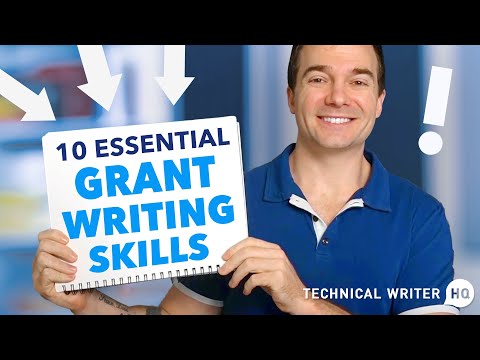
The video will run you through the most essential grant writing skills. But in the article, I’d like to follow on the your mindset and how you approach your skills.
Grant writing is the process of applying for funding from a grant-making institution, usually a foundation, corporation, or government agency. You’re not just asking for money. You’re proving that a specific project is eligible, measurable, and realistic, and that your organization is capable of delivering it.
In the nonprofit world, grants are often restricted funding, meaning the money has rules attached. Some funders allow flexible use. Many funders do not. Either way, the requirements shape what you can promise and what you can budget.
Eligibility is also a real gate. Many funding sources require an organization to be a 501(c) nonprofit organization or have a fiscal sponsor. If you want to understand the “who qualifies” side quickly, the IRS overview for charitable organizations and 501(c)(3) status is a solid starting point.
If you’re building your application materials alongside this, you’ll probably also want the practical pieces, like the grant writing process and examples of what good looks like in the wild.
Grant writing is part of fundraising, but it’s not the same thing as fundraising.
Fundraising is the entire system of bringing money into an organization. That can include individual donors, sponsorships, events, annual giving, corporate partnerships, and earned revenue streams. Grant writing is one specific method of soliciting financial support, and it comes with its own constraints.
The easiest way to separate them is this: fundraising is relationship and revenue strategy, while grant writing is structured persuasion inside funding guidelines.
A major difference is the evaluation mechanism. In individual giving, the message is often emotional and relationship-driven. In grant writing, you’re writing for a reviewer with a rubric. You’re making a case that should score.
They overlap in real life, though. A strong development team uses grant writing to support operating revenue and program growth, and your ability to coordinate with the broader nonprofit fundraising program can raise your success rate.
If you’re interviewing for grant roles, this is one of the most common “do they get it?” topics. You’ll see it pop up in questions about collaboration, budget ownership, and how you position programs to different funding sources. My guide on grant writer interview questions is where I’d practice those answers.
Grant writing is much easier when you treat it like a repeatable workflow instead of a heroic sprint.
Most successful cycles follow the same arc: preparation, drafting, review, submission, then follow-up. That includes confirming project goals, defining scope of work, planning the project timeline, aligning on measurable objectives, and mapping every requirement to the proposal narrative and supporting materials.
The part that separates strong grant writers from stressed grant writers is how early they plan. When you do the planning phase well, your drafting feels straightforward. When you skip planning, every section becomes a negotiation.
If you want a step-by-step walkthrough you can follow like a checklist, use this grant writing process guide.
This is the least glamorous part of grant writing, and it’s where most proposals are won or lost.
Planning skills in grant writing look like:
If you’re early in your career, this is also a great place to stand out. A newer writer with strong planning habits often beats a more experienced writer who drafts fast but misses requirements.
Grant proposals vary by funder, but the building blocks are surprisingly consistent.
At a minimum, most grant applications expect a clear statement of need, a project description, a plan for execution, and a budget that matches the plan. Many also require supporting materials like letters of support, resumes, credentials, and sometimes an authorized signature or board approval.
The elements I see most often are:
If you can write an excellent narrative but you cannot coordinate the budget and supporting materials, you will struggle in real grant cycles. That’s why grant writing skills are a blend of writing and operations.
The best grant writers I’ve worked with do a few things consistently.
They treat guidelines like law. They build a narrative skeleton early so stakeholders are reacting to structure, not chaos. They make review easy by giving reviewers specific questions, not vague “any feedback” requests.
They also protect readability. Even when you’re writing about complex programs, you want accessible language and clear structure. Reviewers are skimming. Your job is to make skimming safe.
A small habit that helps: write every section so that the first sentence tells the point. If someone reads only your opening lines, they should still understand the plan.
You can learn grant writing in three main ways: on-the-job training, volunteer work, or structured courses.
If you’re starting from scratch, volunteer work is often the fastest path to real practice. It gives you sample projects, real deadlines, and real stakeholders, which is basically the full skill set in miniature.
Structured training can help too, especially if you need a framework for proposal writing, project management, and budget narratives. If you want a map of options, I put together a list of grant writing classes that can help you build competence faster.
And if you want to turn training into a portfolio and job-ready materials, it helps to align your learning with your job search documents. Your LinkedIn is usually the first place people check. This is my guide to building it: grant writer LinkedIn profile tips.
There are more paths here than people realize.
Some grant writers work in-house for nonprofits. Some work at research institutions or government agencies. Some work as consultants supporting multiple clients. Some treat it as a side hustle, especially if they specialize in one niche and build a grant opportunity pipeline.
As you gain experience, the role often expands beyond writing. You move into grant management, reporting, renewals, or leadership roles like grant writing manager. That’s usually where compensation rises, because you’re owning the full lifecycle.
If you’re trying to break in, your resume needs to prove you can do the work, even if your title hasn’t caught up yet. This guide helps you position that correctly: grant writer resume tips.
Grant writing skills are valuable because they’re portable.
They apply to nonprofits, public agencies, education, healthcare organizations, advocacy groups, arts and cultural institutions, environmental and conservation work, and community development. Anywhere money is distributed through an application and evaluation process, someone needs this skill set.
On a personal level, grant writing is also one of the fastest ways to develop professional credibility. If you can take a messy program idea, shape it into a funder-aligned plan, build a realistic budget, and submit a clean application, you become the person teams trust with high-stakes work.
That trust is what turns “writer” into “strategic partner.”
Here are the most frequently asked questions about grant writing skills.
The biggest ones are research, planning, persuasive writing, budgeting comfort, and compliance discipline. If you can coordinate stakeholders and keep submissions organized under deadlines, you’ll be valuable even before you become an “expert writer.”
Grant writing is part of fundraising, but it’s more structured and guideline-driven than most donor work. Fundraising often focuses on relationships and revenue strategy, while grant writing focuses on eligibility, proposal requirements, and measurable outcomes that match a reviewer’s scoring criteria.
Most proposals include a proposal narrative, a budget plus budget narrative, and supporting materials like letters of support and required documentation. Many funders also require authorized signatures and specific formatting rules, which is why compliance skills matter so much.
Beginners usually learn fastest through volunteer work, mentorship, and structured training. The key is real-world practice with guidelines, deadlines, and stakeholder inputs, because that’s what builds the operational skill set.
They start drafting before they plan. Skipping preparation leads to vague narratives, mismatched budgets, and missed requirements. A strong outline built from funder guidelines prevents most of the pain later.
You don’t need to be a finance person, but you do need budgeting fluency. You should be able to map costs to activities, write a clear budget narrative, and spot mismatches between numbers and the proposed plan.
Get the weekly newsletter keeping 23,000+ technical writers in the loop.
Learn grant writing and advance your career.
Please check your email for a confirmation message shortly.




















Get our #1 industry rated weekly technical writing reads newsletter.
Your syllabus has been sent to your email