Our reviewers evaluate software independently. Learn how we stay transparent, our methodology, and tell us about anything we missed.

Our reviewers evaluate software independently. Learn how we stay transparent, our methodology, and tell us about anything we missed.
The first time I wrote product documentation professionally, I thought the hard part would be “writing clearly.” Nope. The hard part was chasing SMEs, untangling last-minute product changes, and keeping docs accurate after the release train had already left the station. If you’ve ever shipped a feature and realized your docs are now lying to users, you know the feeling.
That’s why I’m picky about product documentation software. I want a tool that makes knowledge sharing effortless, keeps collaboration sane, and gives me confidence that what we publish stays up-to-date.
Below are the tools I’d personally consider, whether you’re building end-user docs, developer docs, API references, or an internal product wiki.
Here’s my pick of the 11 best tools for product documentation.
Product documentation isn’t just “nice to have.” It directly affects user satisfaction, support volume, and how quickly customers can get value from what you’re building.
The best documentation tools make it easy to publish, update, and govern content. They also reduce the operational cost of documentation, which is the part nobody talks about until you’re buried in “can you update this page real quick?” requests.
If you’re choosing a platform now, pick one that fits your workflow today and still holds up once your product and team double.
I picked these tools because they cover the most common documentation needs I see: customer-facing help centers, internal product wikis, developer portals, and docs-as-code workflows.
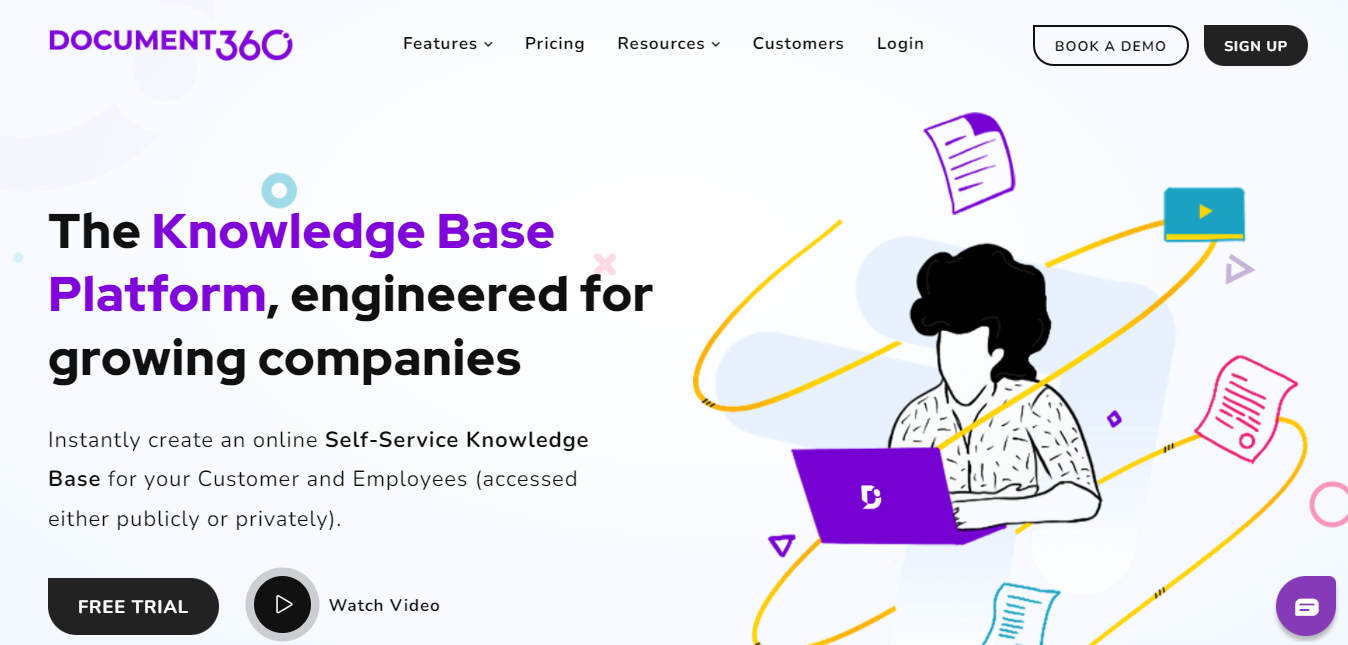
Document360 is a strong choice when you want a professional, customer-facing documentation site without building your own platform. It’s designed for knowledge base articles, product guides, FAQs, and support documentation that looks clean and stays organized.
In practice, teams like it because you can move fast without sacrificing governance. You get structure, version control, and workflows that help writers and SMEs collaborate without overwriting each other’s work or publishing half-finished pages.
It’s also a good fit if you care about reporting and analytics. When you can see what users search for and where they get stuck, you can improve documentation based on real behavior instead of guesses.
I picked Document360 because it balances usability with documentation governance. It feels like it was built for documentation teams who need publishing workflows, not just a place to dump content.
Pros
Cons
LEARN MORE ABOUT DOCUMENT360: Check out Document360 on their website.
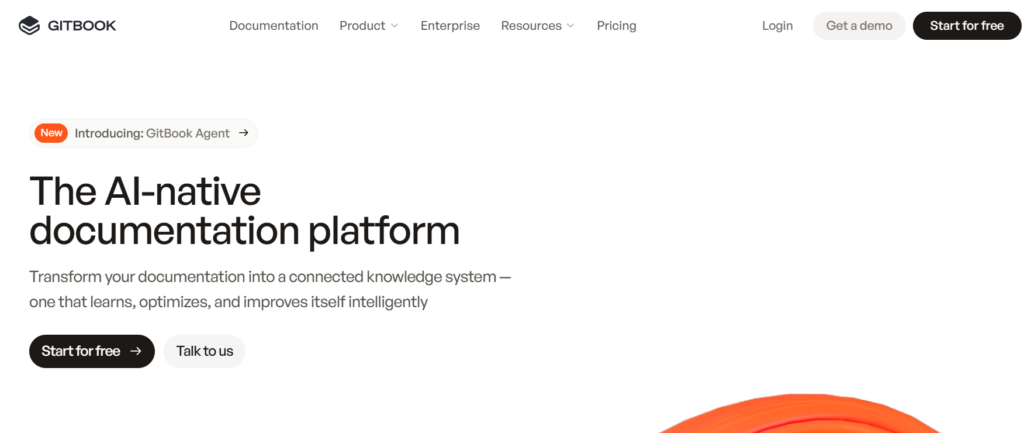
GitBook is a modern documentation platform that works well for product teams and developer-facing documentation. It’s especially popular when you want docs that feel clean, searchable, and fast to publish.
It supports docs-as-code style workflows while still being friendly to non-developers. That matters when your docs require contributions from PMs, support, and engineering, not just technical writers.
GitBook also leans into AI-powered assistance for search and content workflows. When you have lots of docs, that can help users find answers and help your team keep content consistent.
I picked GitBook because it hits a rare sweet spot: modern publishing, strong collaboration, and a workflow that doesn’t punish you for having both technical and non-technical contributors.
Pros
Cons
LEARN MORE ABOUT GITBOOK: Check out GitBook on their website.
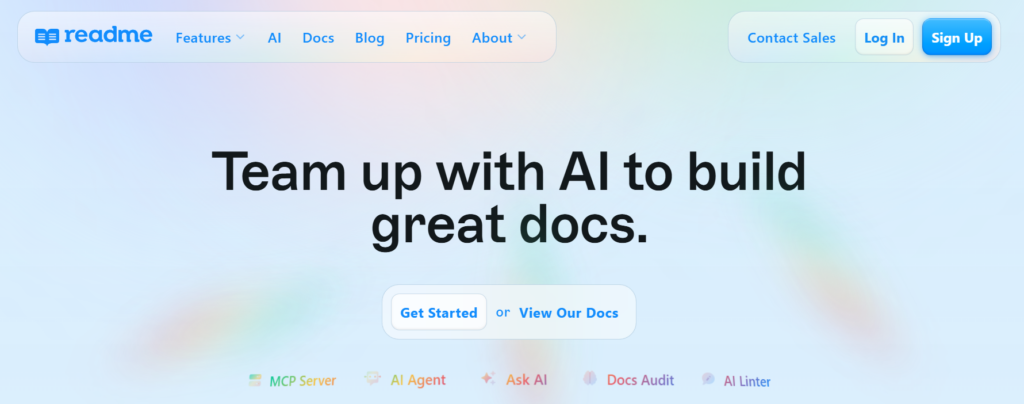
ReadMe is built for developer documentation, especially APIs. If you want interactive API references, onboarding tutorials for developers, and a portal that feels like a real dev hub, this is a strong option.
The interactivity matters because it reduces friction. Developers can test endpoints, understand authentication, and validate requests without jumping between tools. That makes your API docs feel alive instead of static.
It’s also useful for tracking usage and engagement. If you care about usage metrics and which endpoints get the most confusion, ReadMe gives you more visibility than a typical docs site.
I picked ReadMe because it treats API documentation like a product experience. Interactive docs are one of the fastest ways to reduce developer frustration and support requests.
Pros
Cons
LEARN MORE ABOUT README: Check out ReadMe on their website.
ClickHelp is a documentation platform that feels closer to traditional help authoring tools, but delivered as a modern web platform. It’s built for teams that need structured workflows, permissions, and predictable outputs.
This is useful when you have multiple contributors and you care about review cycles. If you’ve ever been burned by someone publishing the wrong version of a page, workflow and review controls start to feel essential.
ClickHelp also supports multi-format publishing workflows, which matters when you need more than a single web help center. Some teams need PDFs, manuals, and knowledge base outputs from the same source.
I picked ClickHelp because it’s one of the more “process-driven” platforms. If your documentation needs governance, review workflows, and structure, it’s a strong fit.
Pros
Cons
LEARN MORE ABOUT CLICKHELP: Check out ClickHelp on their website.

Confluence is a natural choice when your product team already lives inside Jira. It’s great for internal product documentation like specs, release notes, decision logs, and troubleshooting playbooks.
In practice, Confluence becomes your internal source of truth. It can support product docs, engineering notes, and operational knowledge in one place, which is useful when your “documentation” includes more than user-facing help articles.
The downside is that Confluence needs structure. Without information architecture, it becomes a wiki graveyard. If you want help avoiding that, my guide on information architecture vs sitemap is a good starting point.
I picked Confluence because it’s one of the most practical internal documentation hubs for Jira-first teams. It connects product work to documentation in a way that makes updates easier.
Pros
Cons
LEARN MORE ABOUT CONFLUENCE: Check out Confluence on their website.
Notion is the flexible choice for teams who want a product wiki plus structured databases. You can build a documentation hub, onboarding space, and internal knowledge base in one workspace.
It shines when you want to track documentation status alongside the content itself. For example, you can add fields like owner, last reviewed date, and release version. That’s a simple way to make documentation maintenance real.
The tradeoff is consistency. Notion is only as good as the conventions you set. If everyone creates pages differently, the docs stop feeling trustworthy.
I picked Notion because it’s one of the easiest ways to get teams documenting. When the tool is approachable, the documentation habit sticks faster.
Pros
Cons
LEARN MORE ABOUT NOTION: Check out Notion on their website.

Zendesk Guide is the documentation choice that makes sense when your support team is already using Zendesk. It ties your help center directly to ticketing workflows and support operations.
This matters because support teams do not just write docs. They need docs to deflect tickets, standardize answers, and keep responses consistent. When your knowledge base is connected to the support system, it’s easier to keep content aligned with real customer issues.
Zendesk Guide also works well when you need a traditional help center model with categories, article workflows, and localization options for global audiences.
I picked Zendesk Guide because it closes the loop between support and documentation. If your goal is fewer tickets and better self-service, support integration is a major advantage.
Pros
Cons
LEARN MORE ABOUT ZENDESK GUIDE: Check out Zendesk Guide on their website.
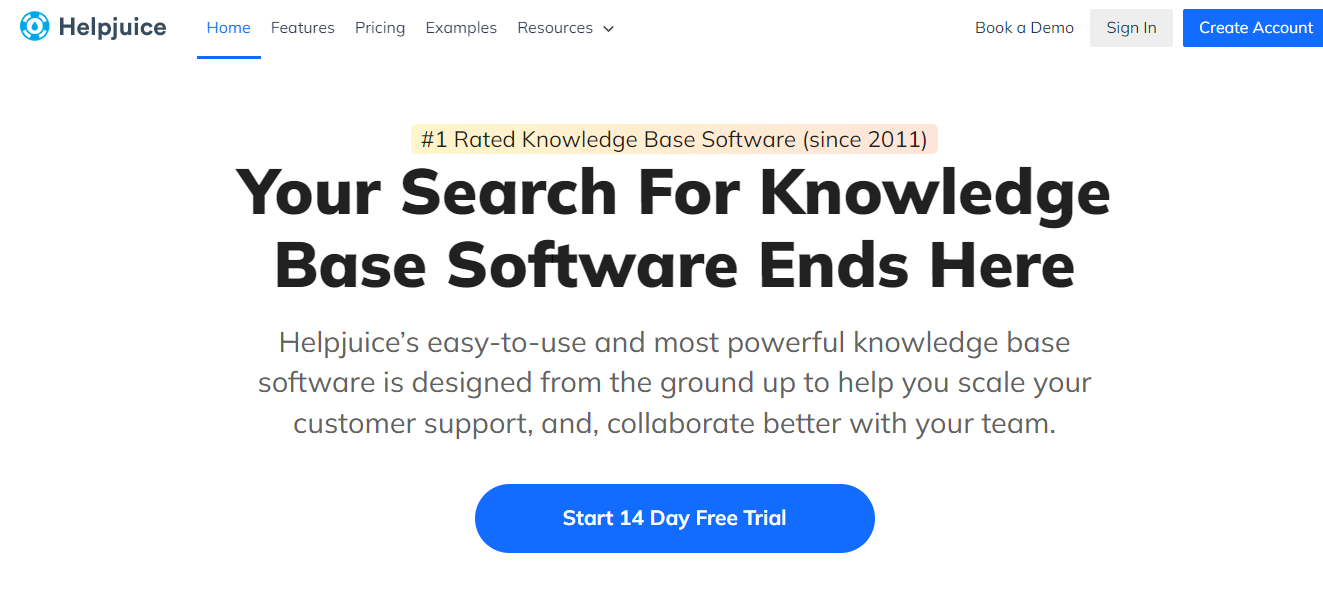
Helpjuice is a knowledge base platform that focuses heavily on making self-service measurable. If you want to build a help center and continuously optimize it based on data, Helpjuice is a strong contender.
I like it when the documentation team is serious about improvement. Search analytics, article performance data, and feedback loops help you spot gaps quickly. That turns documentation into an ongoing product, not a one-time project.
It also supports customization and branding, which matters if your documentation needs to feel like part of your product experience.
I picked Helpjuice because it pushes you toward measurable documentation outcomes. If your docs are meant to reduce support load, analytics and feedback are how you prove it.
Pros
Cons
LEARN MORE ABOUT HELPJUICE: Check out Helpjuice on their website.
Paligo is a component content management system designed for teams managing large, structured documentation sets. If you need single sourcing, content reuse, and multi-channel publishing at enterprise scale, Paligo is built for that world.
This becomes important when you have multiple products, multiple versions, and multiple regions. Rewriting the same content over and over is expensive, and Paligo helps you reuse and manage content systematically.
It’s not the simplest tool on this list, but it’s one of the most powerful if you’re serious about structured authoring and long-term scalability.
I picked Paligo because content reuse is a massive cost saver at scale. If your documentation repeats across products or versions, a CCMS can change your entire workflow.
Pros
Cons
LEARN MORE ABOUT PALIGO: Check out Paligo on their website.

MadCap Flare is a classic choice for professional technical authoring, especially when you need advanced publishing outputs. It’s a strong fit for teams producing manuals, PDFs, web help, and multi-channel documentation from a single source.
Where Flare shines is control. You can build complex outputs, manage large documentation sets, and maintain a consistent publishing process. That’s useful in industries that require formal documentation, like manufacturing, healthcare, and enterprise software.
It’s not the lightest tool, but if your documentation program is mature and your outputs are complex, Flare can be worth it.
I picked Flare because some documentation teams need publishing power more than they need a pretty web editor. If your outputs and content model are complex, Flare is built for that.
Pros
Cons
LEARN MORE ABOUT MADCAP FLARE: Check out MadCap Flare on their website.
Docusaurus is an open-source static site generator built for documentation websites. It’s a great option if your team prefers docs-as-code, Git workflows, and treating documentation like part of the product build pipeline.
It supports versioning, localization, and a fast documentation site experience. For engineering-driven teams, that’s appealing because you can review docs changes like code changes, with pull requests and CI checks.
The tradeoff is that you need engineering support. If your team does not want to maintain a docs site, a hosted platform might be easier.
I picked Docusaurus because it’s one of the most practical docs-as-code options for teams who want control, versioning, and a Git-native workflow.
Pros
Cons
LEARN MORE ABOUT DOCUSAURUS: Check out Docusaurus on their website.
If your needs are niche, these are also worth a look.
If you’re building or improving product documentation, these resources help you do it right.
Good tools do not fix bad documentation habits. They just make good habits easier to scale.
Start with a topic-based authoring structure. Instead of giant pages, break docs into reusable topics like “Install,” “Configure,” and “Troubleshoot.” This makes updates faster and reduces duplicated content.
Build a maintenance loop. Assign ownership, set review dates, and treat docs like a product surface that needs upkeep. If you want one simple metric to watch, track which pages are getting traffic and which searches return no results.
Finally, design for findability. Use clear category management, consistent naming, and strong search. If users cannot find the answer in 10 seconds, they will either open a ticket or churn.
The best product documentation software usually has a core set of capabilities that matter more than flashy extras.
You want role-based access control, version control, and collaboration tools so multiple people can contribute safely. You also want strong search functionality, because documentation success is often just “did the user find the answer?”
Beyond that, look for analytics, feedback tools, integrations with your tech stack, and multi-format publishing if you need PDFs or manuals. If you publish globally, multilingual support and translation management workflows become major differentiators.
If SMEs hate contributing, your docs will be incomplete. I look for editors and workflows that feel simple enough for non-writers to participate.
Customer-facing docs should feel like part of your product. I prioritize responsive design, custom branding, and navigation that can scale as the doc set grows.
The best tool fits your existing workflow. Integrations with code repositories, issue trackers, and collaboration tools reduce context switching and help docs stay in sync with development.
Documentation improves when you can see what users do. Search analytics, content performance tracking, and embedded feedback tools help you prioritize updates that actually matter.
Docs decay fast. Version control, review workflows, and approval gates protect content accuracy and reduce “we shipped the wrong info” moments.
If you need a customer help center, start with Document360, Zendesk Guide, or Helpjuice. If you need developer docs and APIs, lean toward ReadMe, GitBook, or docs-as-code tools.
Internal docs have different needs. Confluence and Notion are great when the primary goal is internal knowledge sharing and team collaboration.
Hosted platforms reduce maintenance but can limit flexibility. Docs-as-code gives you total control but requires engineering support.
I usually recommend hosted platforms for smaller teams or support-led documentation. I recommend docs-as-code when documentation is tightly coupled to product releases and engineering workflows.
Pick a tool that supports real-time updates, ownership, and governance. The best platform is the one you can keep up-to-date, not the one with the longest feature list.
If you want a shortcut, build a small pilot first. Document one workflow, publish it, collect feedback, then scale.
In 2026, documentation platforms are moving toward AI-powered assistance, not just for writing, but for maintenance. The trend is “help me keep docs accurate,” not just “help me draft a paragraph.”
We’re also seeing tighter integration with code repositories, issue trackers, and deployment tools. The goal is up-to-date documentation that moves with releases, not behind them.
Finally, analytics are becoming a core feature instead of a nice add-on. Usage metrics, search success, and content performance are how documentation teams justify investment and prioritize what to improve next.
Here I answer the most frequently asked questions about product documentation software.
A knowledge base can be simple article storage. Product documentation software usually adds stronger workflows, version control, structured spaces, and publishing options for different audiences like users, admins, and developers.
If you’re building serious docs that must stay accurate over time, the governance features matter.
No. Docs-as-code is great when you want Git workflows, CI checks, and engineering ownership. But many teams ship excellent documentation on hosted platforms.
Pick the workflow your team can actually maintain. Consistency beats technical purity.
Tie documentation updates to the release process. Add doc tasks to your issue tracker, assign owners, and run a recurring documentation audit for high-traffic pages.
Tools with analytics and feedback loops help you focus on what’s actually used.
Search, navigation, analytics, and branding are the big ones. If users cannot find answers quickly, they will open tickets.
Also consider multilingual support if you serve global users.
ReadMe is strong for interactive API experiences. Docs-as-code tools can work well for engineering-led APIs, especially when paired with OpenAPI workflows.
If you want a broader view, my guide on API documentation explains what “good” looks like beyond the tool.
Confluence and Notion are great for internal documentation and collaboration. Dedicated platforms are better when the audience is external and the documentation is part of the product experience.
Get the weekly newsletter keeping 23,000+ technical writers in the loop.
Learn documentation engineering and advance your career.
Please check your email for a confirmation message shortly.





















Get our #1 industry rated weekly technical writing reads newsletter.
Your syllabus has been sent to your email