Our reviewers evaluate writing courses independently. Learn how we stay transparent, our methodology, and tell us about anything we missed.

Our reviewers evaluate writing courses independently. Learn how we stay transparent, our methodology, and tell us about anything we missed.
When I was consulting for nonprofits (and later helping teams build repeatable proposal processes), I learned the hard way that great grant writing is a system. You need assessment methodology, funder research, proposal writing techniques, timelines, budgets, and a plan for post-award management.
So if I had to level up fast today, these are the grant writing classes I’d personally start with, using the exact lineup in the current article.
Here’s my pick of the 11 best grant writing classes from the lineup reviewed.
Grant writing classes are not all teaching the same thing. Some focus on proposal writing techniques and needs statements. Others go deeper into budgeting, evaluation, relationship management, and the post-award reality of reporting and compliance.
I’m going to review each option like I would if I were spending my own money: what you learn, who it’s for, what support you get, and how much career leverage the credential gives you.
A good grant writing course should cover the full grant cycle: finding funding opportunities, shaping a project, writing the narrative, building budgets, and understanding the grant review process. Ideally, it also touches post-award management, because winning a grant is only half the job.
I also care about support. Feedback on writing, templates, community, and mentorship often matter more than fancy video production.
Alright, let’s get into the list.
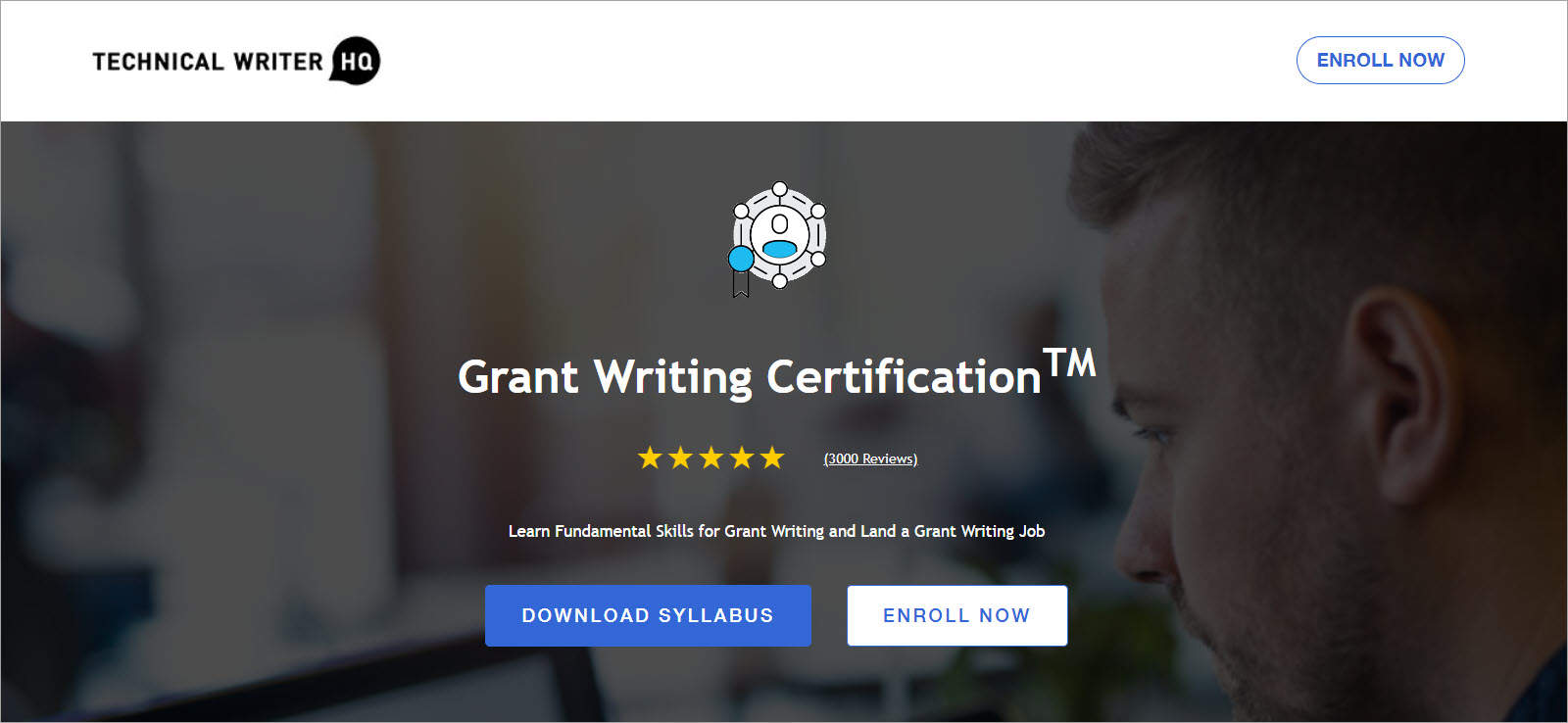
Technical Writer HQ’s Grant Writing Certification is designed to teach the full proposal workflow, not just “how to write nicely.” It walks you through what funders want, how to structure a grant application, and how to present information clearly and persuasively.
Curriculum-wise, this is the kind of program that doesn’t skip the hard parts. You’ll spend time on needs statements, proposal structure, editing, and budgeting concepts, plus the mechanics of writing for reviewers who are scanning fast. It’s built around doing real work, not just learning definitions.
Where it stands out is the feedback loop. You create a grant proposal and get instructor feedback on it, which is exactly how you improve if you want to do this professionally.
I picked this because most grant writing courses leave you alone at the exact moment you need help: when your draft is messy and you’re not sure what to cut, tighten, or prove. Feedback turns “I watched the lessons” into “I can write proposals that win.”
Pros
Cons
LEARN MORE ABOUT Grant Writing Certification – Technical Writer HQ
Check out the program here: Grant Writing Certification
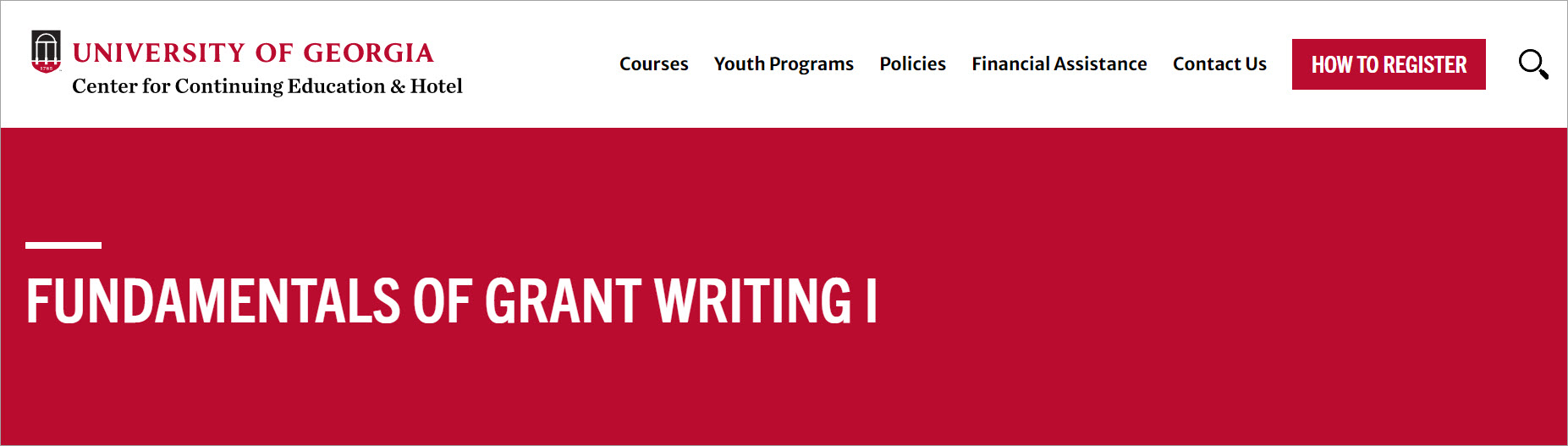
The University of Georgia’s Fundamentals of Grant Writing course is built to cover the core concepts a professional grant writer needs. It includes proposal fundamentals, research, presentations, and networking, which is a nice mix for someone who wants to work with real organizations.
From a curriculum standpoint, it’s aiming beyond “write a proposal.” It emphasizes how to find funding opportunities that match your organization and how to think about fit, which is where a lot of beginners lose months.
You can choose instructor-led or self-study, which matters if you want either structure or flexibility. The course is taught by an experienced grant writer, which means you’ll get practical “this is what reviewers actually do” context.
I picked UGA because it’s a strong middle ground: credible institution, broad fundamentals, and a clear path for both beginners and people already working around grants. If you want a solid baseline you can build a career on, this is a safe bet.
Pros
Cons
LEARN MORE ABOUT Fundamentals of Grant Writing (University of Georgia)
Check it out here: Fundamentals of Grant Writing
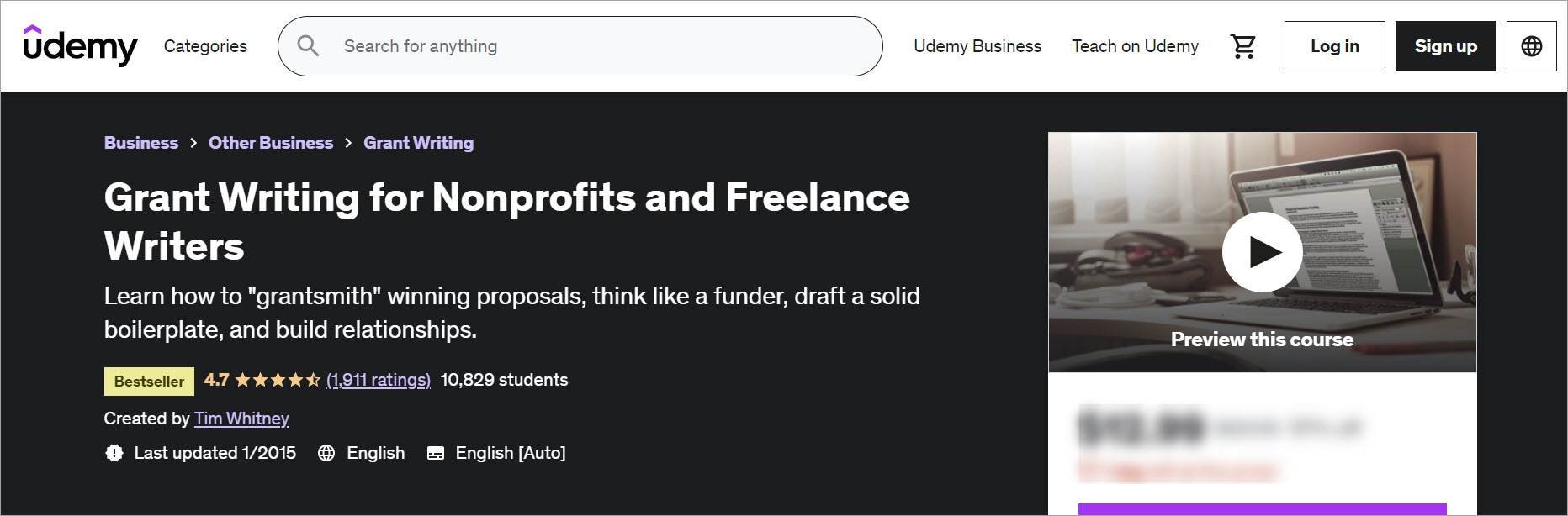
This Udemy course is positioned for beginners who want to enter grant writing as freelancers or within nonprofits. It’s short, so you’re not committing to a semester before you even know if grant writing is for you.
Curriculum-wise, it leans into practical framing: case studies, strategies for successful proposals, and how tone changes depending on the funder. That’s a big deal, because writing to a foundation is not the same as writing to a government agency.
Support and structure are what you’d expect from Udemy: self-paced lessons and lifetime access. You’re not enrolling for hand-holding, but you can use it to get momentum fast.
I picked this because sometimes the best first step is simply getting moving. If you’re stuck in research paralysis, a short course that explains how funders think can get you to your first draft quickly.
Pros
Cons
LEARN MORE ABOUT Grant Writing for Non-profits and Freelance Writers (Udemy)
Check it out here: Udemy course
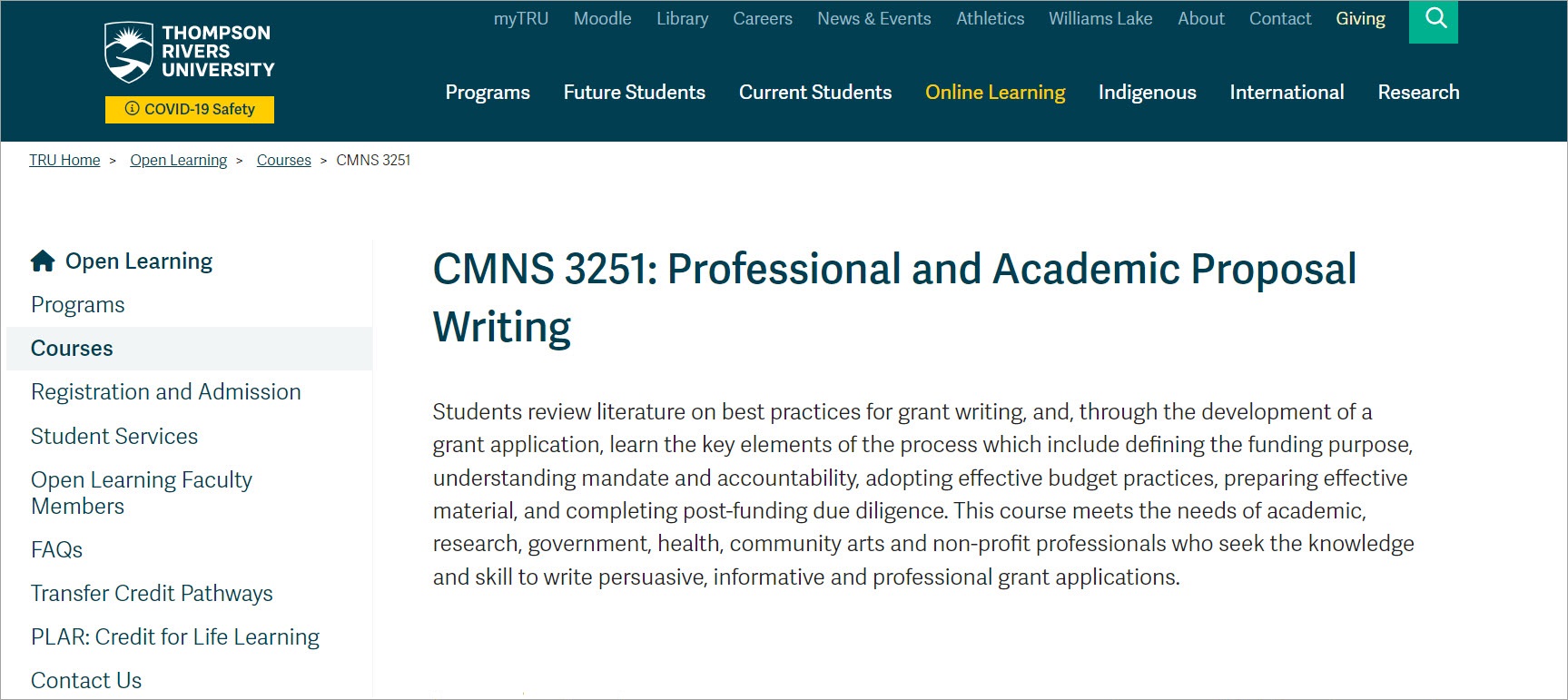
Thompson Rivers University offers a long-form program that spans 30 weeks, which is a different vibe than quick online classes. It’s designed for beginners and intermediate writers who want a complete proposal writing education.
The curriculum covers proposal development, purpose definition, budgeting strategies, and the procedures and guidelines that shape successful submissions. If you want to build grant writing as a serious skill set, longer programs can help because you get more reps over time.
The tradeoff is that long programs can be less flexible. If you thrive with structure and want a program you can treat like professional training, this is worth a look.
I picked this because it’s one of the few options that treats proposal writing like a craft you develop over months. That matters if you want to go beyond templates and actually build a repeatable writing process.
Pros
Cons
LEARN MORE ABOUT Professional and Academic Proposal Writing (Thompson Rivers University)
Learn more here: TRU program
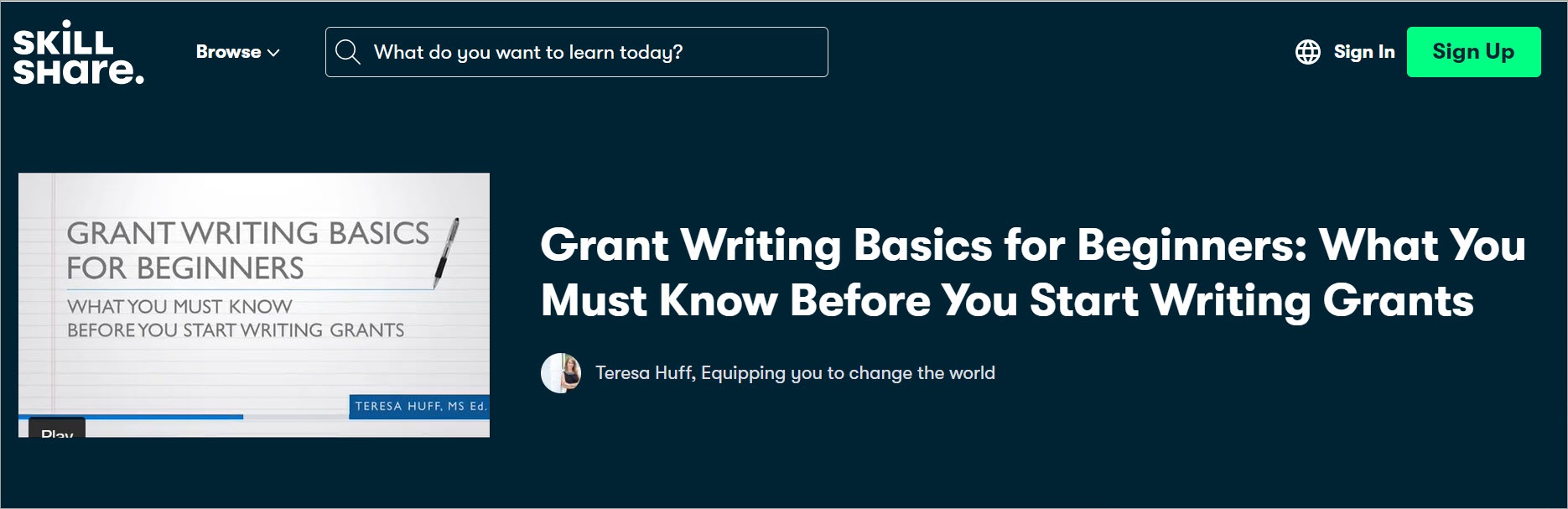
This Skillshare course is a quick starter option for people with zero experience. It’s short, focused, and designed to answer beginner questions and reduce anxiety around “where do I even start?”
Curriculum-wise, it’s more about orientation than deep proposal mechanics. You’ll get guidance on getting started and common industry knowledge, but you may need a second course to really master proposal writing techniques.
Skillshare is subscription-based, so support is mostly platform-style learning rather than instructor coaching. Still, it can be a good first exposure if you learn best through quick, digestible lessons.
I picked it because beginners often need confidence before competence. A short course can help you understand the grant cycle and vocabulary so you can approach deeper training without feeling lost.
Pros
Cons
LEARN MORE ABOUT Grant Writing Basics for Beginners (Skillshare)
Check it out here: Skillshare class
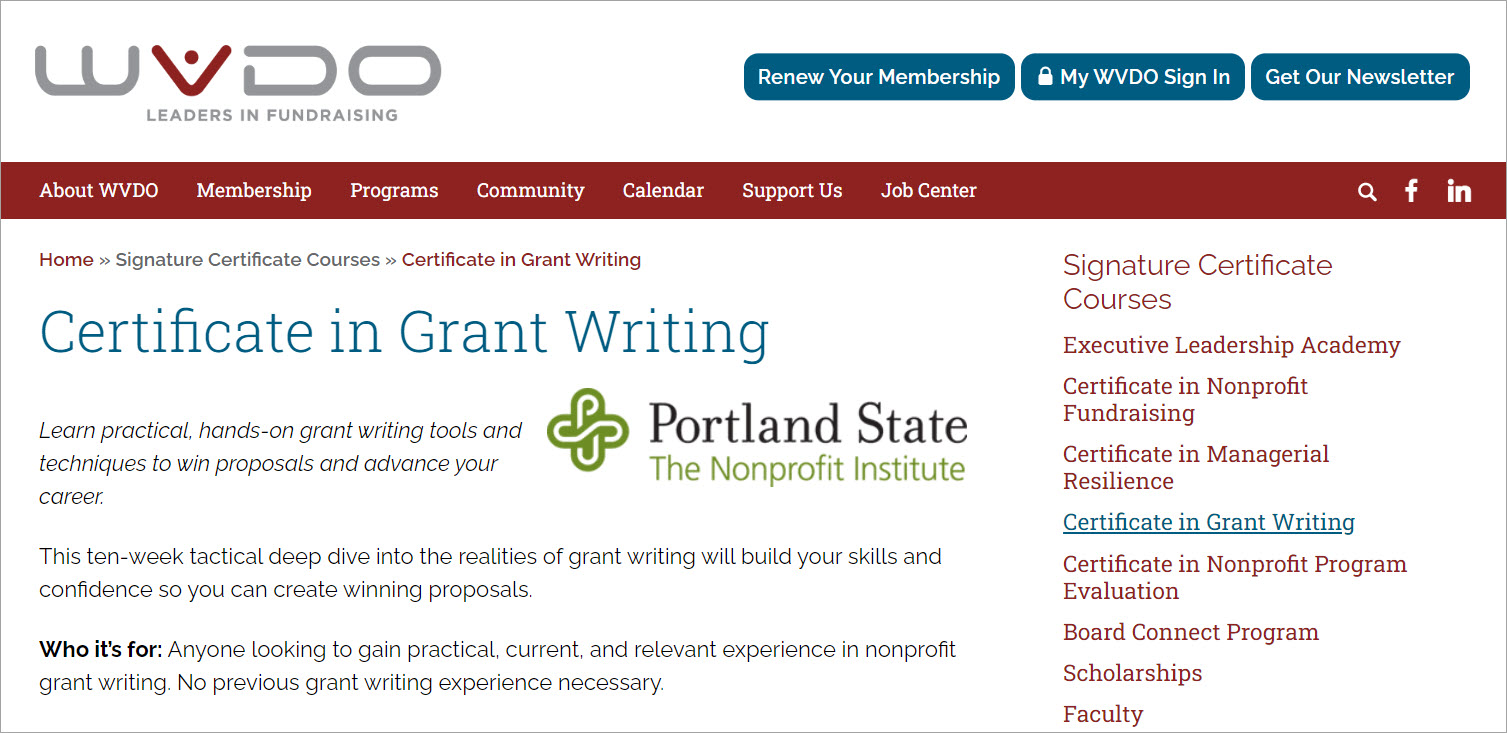
WVDO’s certificate program runs for 9 weeks and is designed to teach practical writing skills for grant proposal applications. It has no prerequisites, which makes it approachable for career changers.
Curriculum focus is on developing effective applications, and the small cohort model is the biggest differentiator. Limited enrollment usually means more individualized instruction, more feedback on writing, and better workshop-style learning.
Enrollment is more selective than typical online platforms. You submit a resume, which signals the program is trying to keep quality and seriousness high.
I picked WVDO because grant writing is one of those skills where feedback and community can make you improve 2 to 3 times faster. If you want hands-on learning with real attention, small cohorts matter.
Pros
Cons
LEARN MORE ABOUT WVDO Certificate in Grant Writing
Learn more here: WVDO Certificate in Grant Writing

SDSU’s program is structured as a two-course certificate, which is a smart design for progression. It starts with grants and funding research, then moves into proposal development.
Curriculum-wise, that split mirrors reality: you first learn to identify funding opportunities and understand fit, then you learn to draft proposals that align with requirements. That is a cleaner learning path than trying to do everything at once.
University programs also tend to be better at scaffolding. You get clear assignments, timelines, and expectations, which helps if you want structured learning.
I picked SDSU because it builds the two skills that beginners most often confuse: research and writing. You need both, but learning them in sequence makes it easier to get competent fast.
Pros
Cons
LEARN MORE ABOUT Professional Certificate in Grant Writing (SDSU)
See details here: SDSU program
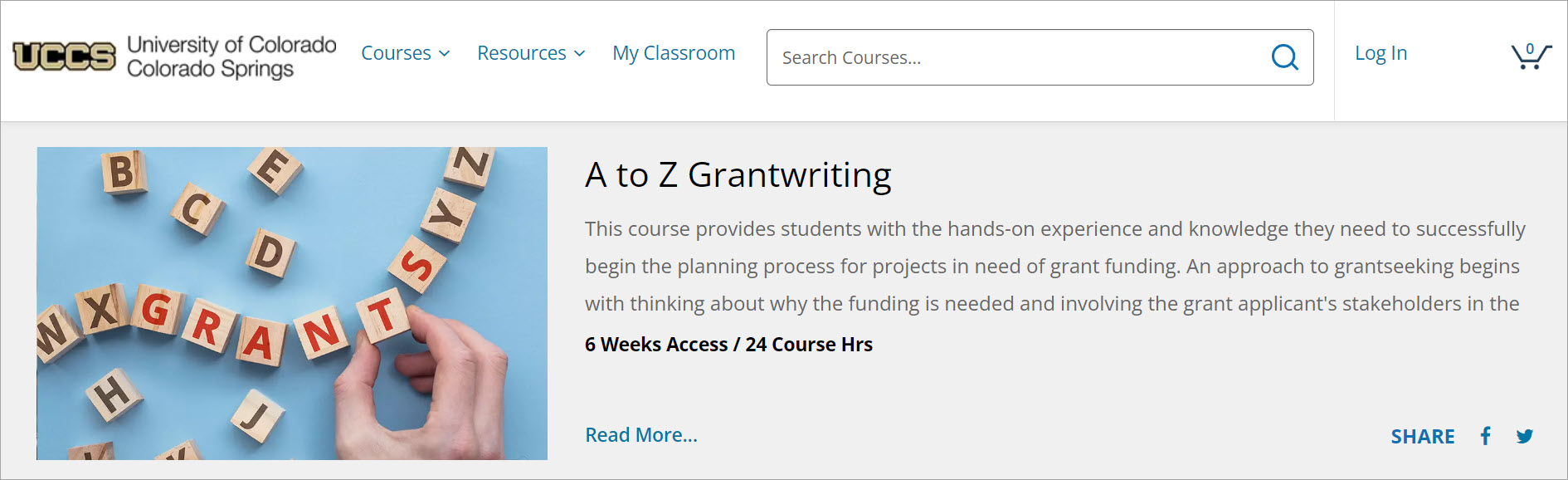
A to Z Grant Writing is offered in two formats: instructor-led or self-paced. That flexibility is helpful if you want structure, but you’re not sure you can commit to fixed schedules.
Curriculum focus is broad and designed to help you write grants that attract funder attention. It also positions itself as sector-flexible, which is useful if you’re writing for education, nonprofits, or religious institutions.
Support depends on the format you choose. Instructor-led typically includes more accountability and interaction, while self-paced favors convenience and speed.
I picked it because learning format matters more than people think. Some of us need deadlines and facilitated discussions. Others need self-paced lessons and mobile access that fits real life.
Pros
Cons
LEARN MORE ABOUT A to Z Grant Writing
Explore it here: A to Z Grant Writing
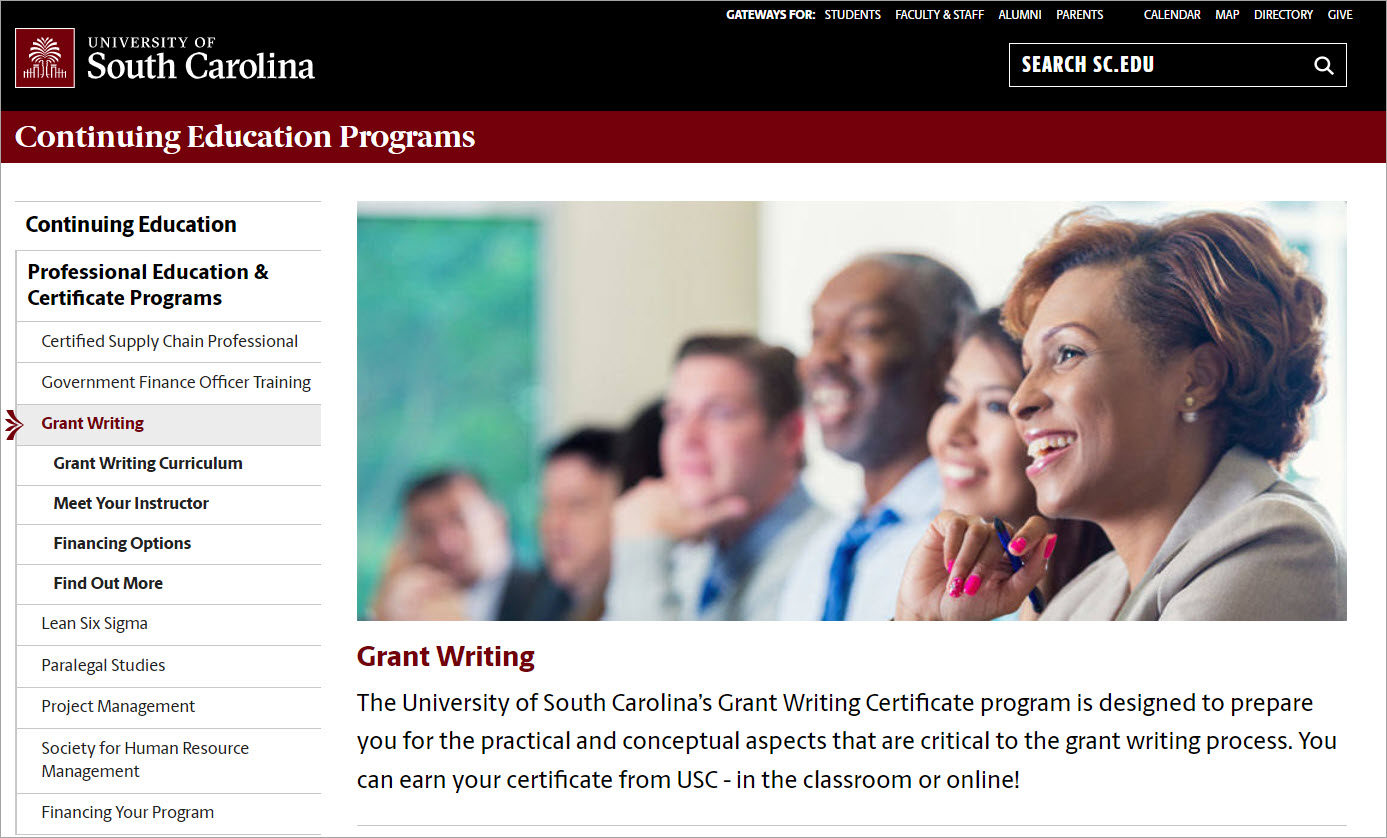
The University of South Carolina offers an intensive program designed to prepare professionals for key aspects of grant writing. It begins with an intro course and needs-based assessment, which is exactly where strong proposals start.
Curriculum emphasis here leans formal and comprehensive. Programs like this typically spend more time on needs assessment methodology, program framing, and aligning a narrative to funder priorities.
Because it’s intensive, the learning experience can feel immersive. If you want momentum and you learn best through focused bursts, that format can work well.
I picked USC because many “grant writing” classes skip needs assessment and jump into writing paragraphs. Strong proposals start earlier, with a clear problem definition and measurable outcomes.
Pros
Cons
LEARN MORE ABOUT University of South Carolina
Learn more here: USC program
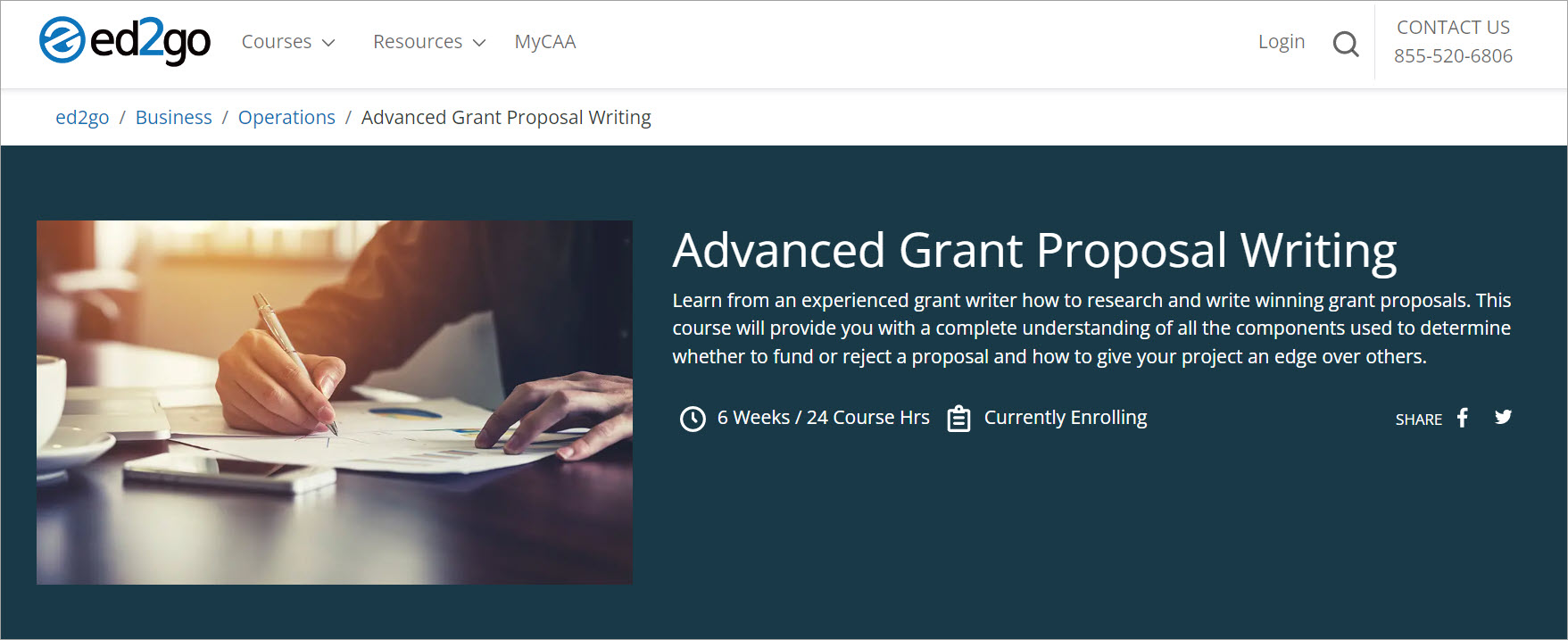
This course is explicitly for more experienced writers. It dives deeper into structure and formatting, and it also teaches what happens after you secure funding, including grant management concepts.
Curriculum focus is practical: improve proposal architecture, tighten writing, and understand next steps post-award. If you’ve already written proposals but feel like your structure is inconsistent, advanced modules like this can help.
Format options include instructor-led or self-paced, which is helpful. Advanced learners often want to move fast, but still benefit from accountability.
I picked it because grant writers who want higher pay usually need to expand beyond writing. Understanding grant management training and post-award realities makes you more valuable and easier to trust.
Pros
Cons
LEARN MORE ABOUT Advanced Grant Proposal Writing (ed2go)
See it here: Advanced Grant Proposal Writing
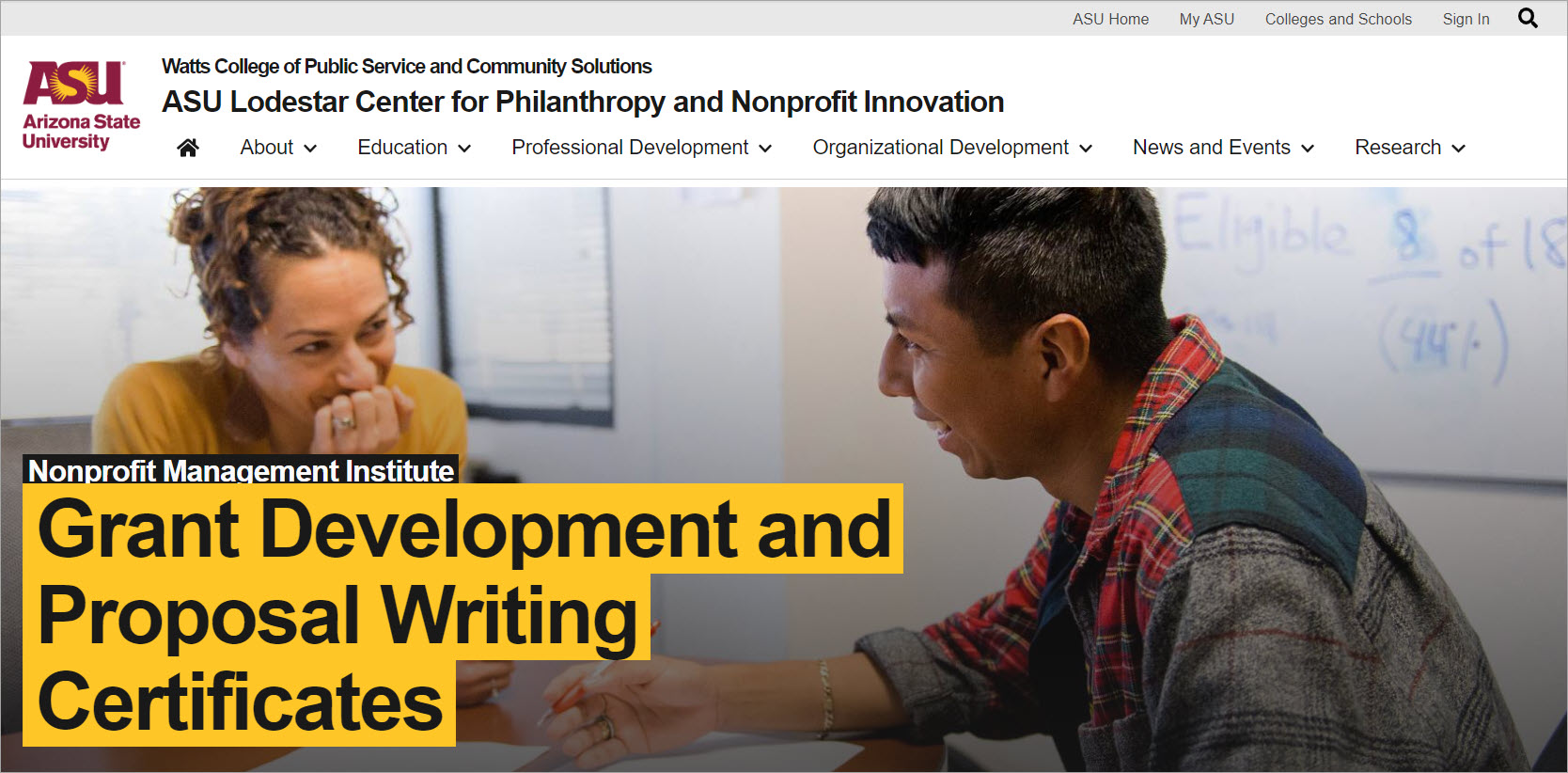
Arizona State University offers two programs: one focused on state and foundation proposals, and a more advanced one focused on federal proposals. That sequencing is valuable because federal grant readiness is a different beast.
Curriculum in the first program covers strategic planning and fundamentals for proposal development. The second program adds federal focus and includes smaller group work and proposal review support, which is exactly what you want before submitting.
This is one of the better “pathway” setups on the list. If you want to grow from beginner to advanced without stitching together random courses, ASU’s structure is appealing.
I picked ASU because it acknowledges the reality: state and foundation proposals build your baseline, and federal proposals demand more compliance, clearer logic models, and stronger evidence building. A staged path can save you a ton of frustration.
Pros
Cons
LEARN MORE ABOUT Arizona State University
Explore the programs here: ASU Lodestar grant courses
If you want more options beyond the reviewed lineup, here are a few additional directions I’d explore.
If you’re serious about grant writing, these resources will help you round out the skill set and build career leverage:
When I compare grant writing training, I’m not asking “is this course popular?” I’m asking “will this course make me better at winning grants?” That means curriculum depth, feedback, and career ROI.
I prefer courses that cover more than proposal writing techniques. The best training also includes funder research, needs assessment methodology, budget preparation, program development, and evaluation planning.
If a course never talks about the grant review process, it’s leaving out the game you’re actually playing. Reviewers decide fast, and your proposal needs structure, evidence, and measurable outcomes.
Grant writing is learned through reps. I look for assignments, course projects, and opportunities to get detailed feedback on drafts.
Peer reviews can help, but instructor feedback is often the fastest path to improvement. Especially early on, you need someone to tell you what’s unclear, what’s unsupported, and what a funder will question.
Grant writing can be isolating if you’re learning alone. Programs with community, mentorship, workshops, or facilitated discussions tend to produce better outcomes.
This is also where networking shows up. Communities often lead to job referrals, collaborative partnerships on complex proposals, and insider knowledge about funding trends.
A beginner-friendly course can be perfect, unless you’re aiming for federal grant applications or a grant manager role. In that case, you’ll want training that touches federal grant readiness, compliance, post-award management, and reporting.
I also consider whether you want to be in-house, freelance, or a consultant. Freelancers need portfolio building and relationship management skills, not just writing mechanics.
Not every course needs a credential, but some situations benefit from one. If you’re applying to roles that mention certifications in job postings, a recognized certificate can reduce perceived risk for hiring managers.
If you’re pursuing credentials like GPC or specialized certifications, I’d treat those as a separate strategic track. Training should support the credential, not distract from skill-building.
Picking the right course is about alignment: your experience level, your target sector, and how you learn best. Here’s the path I’d follow.
If you’re brand new, prioritize fundamentals: needs statements, proposal structure, budget basics, and understanding funders. If you’re intermediate, look for advanced structure, evaluation techniques, and post-award management.
If you’re already writing proposals professionally, you’ll get the most value from specialization. Think federal grant readiness, advanced budgeting, grant management training, or sector-specific programs.
Foundation grants and federal grants are not interchangeable. Federal proposals often require more compliance, stricter formatting, stronger evaluation logic, and clearer project timelines and budgets.
If your goal is government funding, pick a course that explicitly trains for it. If you’re working with local foundations, focus on relationship management and narrative clarity.
Self-paced courses are great if you need flexibility. They work well when you can commit consistent weekly time and you want lifetime access to materials.
Instructor-led courses work when you need accountability, workshops, live sessions, and real feedback. If you know you procrastinate, choose structure on purpose.
Before you pay, check what support exists.
Look for discussion forums, facilitated discussions, office hours, feedback on writing, templates, sample grant proposals, and community access. Support is often the difference between “I completed the course” and “I can write a winning proposal.”
If you want to get hired or win clients, choose training that helps you produce artifacts. A strong course project can become a portfolio sample, especially if you rewrite it based on feedback.
I also recommend building a simple portfolio system while you learn. Save drafts, keep final versions, and document what you improved.
Grant writing involves more than crafting proposals; it requires understanding funders, aligning with their priorities, and managing the grant process. The right training helps you build the skills needed to secure funding and succeed in this field.
Selecting the best grant writing class depends on your goals and experience. Whether you are a beginner or preparing for advanced grants, focus on programs that offer practical experience and feedback.
With the right training and consistent practice, you can create strong proposals that stand out. Use this guide to choose a course that matches your needs and start building your grant writing expertise.
Here I answer the most frequently asked questions about grant writing classes.
It varies a lot. Some are short, under a few hours, while others run for weeks or months with structured assignments and workshops.
If you’re trying to build career-level skills, I’d plan on a multi-week program that forces you to draft and revise. The reps matter more than the calendar length.
Some are, especially university-backed certificates and well-known training providers. Employers mostly care about proof you can write proposals, manage budgets, and follow guidelines consistently.
If you’re applying for roles, a certificate helps, but a portfolio helps more. A strong sample proposal and a clear process story will usually outperform a badge alone.
Many beginner courses have no prerequisites, which is great for career changers. The real prerequisite is willingness to do structured writing and revision.
For advanced programs, you may need prior grant experience, especially if the course focuses on federal grant readiness or complex proposals.
A solid class should teach funder research, needs statements, proposal writing techniques, budgets, and the grant review process. Better classes also include program development and evaluation, timelines, and post-award management.
If a course never touches budgets or evaluation, it’s incomplete. Those pieces are where proposals often collapse.
If you plan to write grants regularly, yes. One funded proposal can repay the cost many times over, and the training saves you months of trial and error.
To increase ROI, pick a course that outputs a real course project. Then revise it into a portfolio sample you can reuse.
Treat the course like a portfolio-building sprint. Save your drafts, document improvements, and leave with at least one polished sample proposal you can show.
Get the weekly newsletter keeping 23,000+ technical writers in the loop.
Learn grant writing and advance your career.
Please check your email for a confirmation message shortly.


















Get our #1 industry rated weekly technical writing reads newsletter.
Your syllabus has been sent to your email