Our reviewers evaluate career pieces independently. Learn how we stay transparent, our methodology, and tell us about anything we missed.

Our reviewers evaluate career pieces independently. Learn how we stay transparent, our methodology, and tell us about anything we missed.
A knowledge manager turns “tribal knowledge” into something searchable, trusted, and reusable.
The catch is that a lot of job descriptions for this role are vague. They say things like “maintain the knowledge base” or “improve documentation,” which can mean almost anything. And when the scope is fuzzy, you either hire too junior for the work or you hire a senior person who burns out doing firefighting.
If you want a fuller view of the role beyond just the hiring template, I’d start with my guide on what a knowledge manager does day to day in this knowledge manager career overview. It makes it easier to write a job description that matches reality. And if you’re a knowledge manager looking for a job, it will be easier to know what to focus on in your resume.
Let’s begin.
The simplest way to describe a knowledge manager is this: they make sure the organization can find and use what it already knows.
That includes explicit knowledge (articles, SOPs, policies, how-to docs) and tacit knowledge (the “how we really do it” context that usually lives in people’s heads). In practice, the job sits at the intersection of content, systems, and change management.
A good knowledge manager does not just publish pages. They build a knowledge management framework that answers: where knowledge lives, how it is structured, who owns it, how it is reviewed, and how people are expected to use it. They also make sure the system is adopted, because a beautiful knowledge base that nobody trusts is just a shelf of stale docs.
This is why the best candidates tend to talk about governance and adoption as much as writing. They can explain how they reduced time-to-answer, improved search success, or shortened onboarding by making knowledge easier to discover.
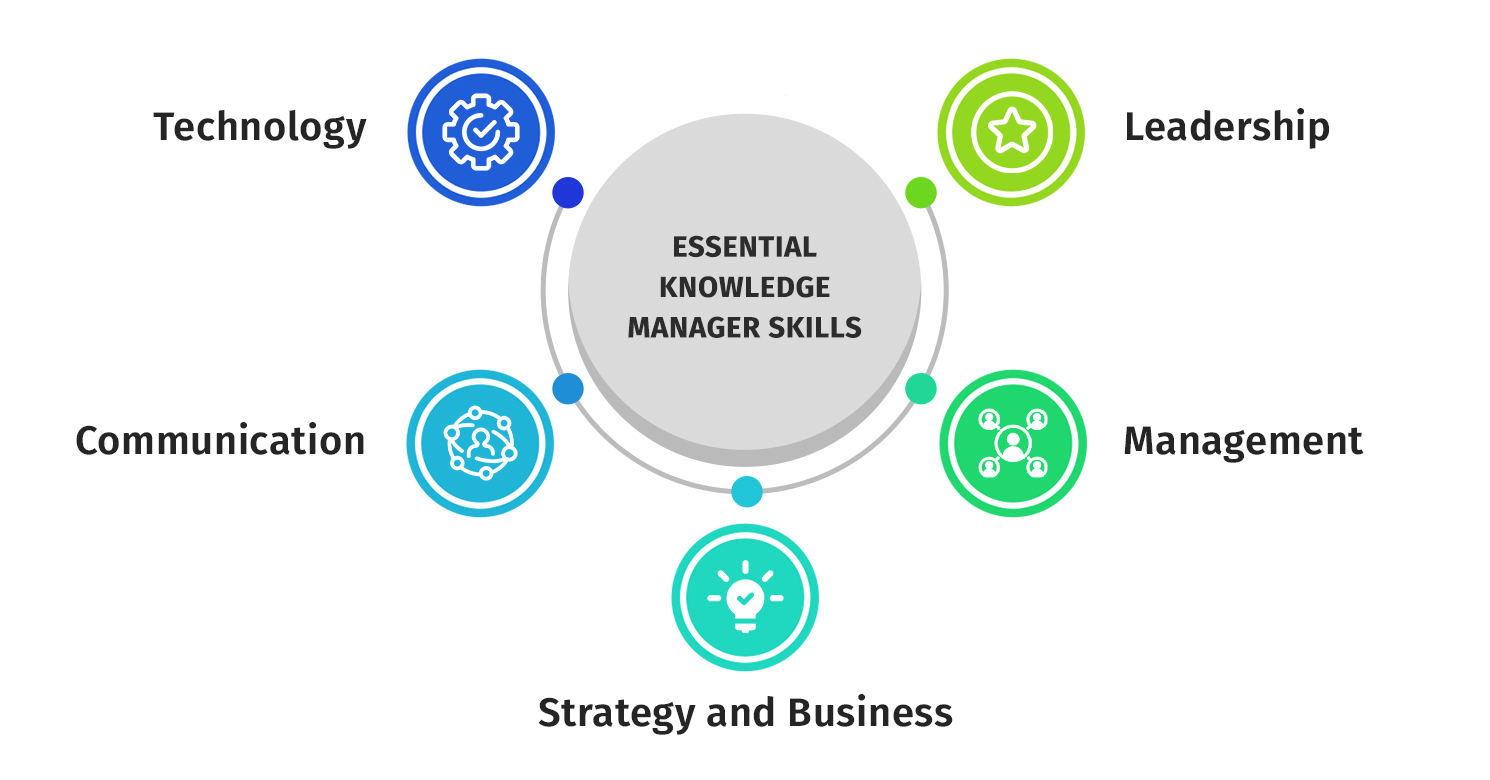
If you want to align your job description with the skill profile you actually need, pull from these essential knowledge manager skills and mirror that language in your responsibilities and qualifications.
When writing a knowledge manager job description, describe responsibilities in “outcomes and levers,” not vague tasks.
For example, “manage the knowledge base” is a task. “Improve knowledge discoverability and reuse across teams” is an outcome. Then you list the levers: taxonomy, governance, templates, SME workflows, analytics, and tooling improvements.
Most roles include some combination of:
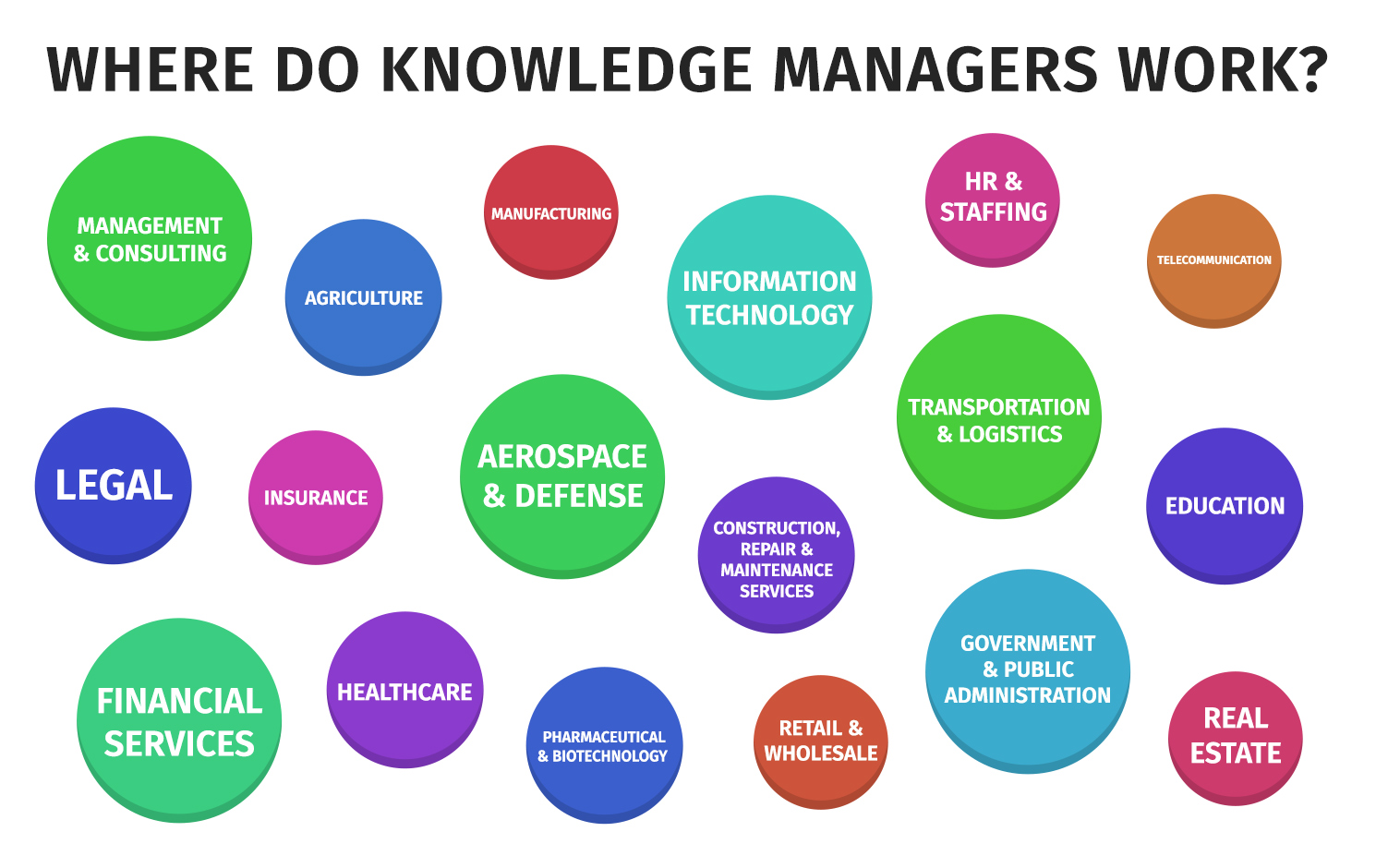
Another thing I recommend is being honest about where the role lives. Is this role in Customer Support? Product? IT? Operations? HR? The answer changes the day-to-day priorities. A support org might care most about deflection and resolution speed. A product org might care more about internal enablement, launch readiness, and consistency. An IT org might care about process documentation, risk reduction, and knowledge retention.
If you want candidates who can hit the ground running, make your description specific about stakeholders. Spell out whether they’ll work with engineers, support leads, trainers, program managers, or cross-functional SMEs.
This is where job descriptions often get too fluffy. “Must be familiar with knowledge management systems” does not tell candidates what you actually use or what problems you need solved.
At minimum, I like to name the categories of tools the role will touch: a knowledge base platform, a collaboration hub (Slack/Teams), a ticketing or intake system (if relevant), and analytics or feedback mechanisms. If enterprise search is part of the stack, say that, because it changes the skill set you need.
It also helps to ground the job in a credible framework or standard, especially for senior roles. For example, ISO 30401 describes requirements and guidance for a knowledge management system (KMS), and it is often used as a reference point for KM programs that need governance and continuous improvement. You can point candidates to the standard overview on the ISO 30401 knowledge management systems page.
You do not need to require ISO experience. But mentioning it signals you care about KM as a discipline, not just “writing wiki pages.”
Use this as a baseline. I wrote it to be easy to customize without losing clarity.
Job Title: Knowledge Manager
Location: [Remote/Hybrid/On-site]
Department: [Support/Product/IT/Operations/HR]
Reports to: [Role]
As a Knowledge Manager, you will own the strategy, governance, and adoption of our knowledge ecosystem. Your goal is to make knowledge easy to find, easy to trust, and easy to reuse across teams. You will partner with subject matter experts and stakeholders to capture critical knowledge, improve content quality and structure, and drive measurable improvements in productivity and consistency.
What you’ll do:
What we’re looking for:
If you want to help candidates understand how to present themselves for this role, you can point them to this knowledge manager resume guide and this knowledge manager LinkedIn profile guide. Those two links tend to reduce “generic applicants” and increase the number of people who actually understand the job.
Below are examples you can adapt. I’m keeping them realistic, because candidates can smell a generic template from a mile away.
In an IT environment, knowledge management is often about reducing operational risk, speeding up incident response, and capturing lessons learned.
This Knowledge Manager will own the structure, governance, and continuous improvement of IT operational knowledge, including runbooks, SOPs, and internal support documentation. The role will partner with IT SMEs to capture tacit knowledge, improve knowledge reuse, and ensure teams can reliably find the right answers during time-sensitive work.
Key focus areas include creating a scalable taxonomy, improving search and discoverability, establishing review cadences and ownership, and driving adoption through enablement and workflows that fit how IT teams work.
Success looks like fewer repeated questions, faster onboarding for new team members, improved consistency in incident handling, and measurable reductions in time spent searching for critical information.
In support orgs, knowledge is a performance lever. Good knowledge reduces handle time, improves quality, and increases self-service.
This Knowledge Manager will own the support knowledge base strategy and execution, including content standards, governance, and adoption. The role will partner with support leaders and product stakeholders to ensure help content reflects current product behavior, common customer pain points, and consistent troubleshooting paths.
Responsibilities include content audits, reducing duplication, improving IA and navigation, partnering with SMEs on rapid updates during releases, and building feedback loops that turn tickets into knowledge improvements. The Knowledge Manager will also track performance using usage, search queries, article helpfulness signals, and knowledge reuse across support workflows.
Success looks like faster time-to-answer, fewer escalations, better consistency across agents, and a noticeable reduction in repeat tickets for known issues.
In product and engineering, knowledge management often turns into launch readiness and internal alignment. Everyone moves fast, and context disappears quickly.
This Knowledge Manager will partner with product managers, engineers, and cross-functional stakeholders to capture and organize product knowledge that supports internal teams. The role will own the knowledge framework, content lifecycle, and discoverability improvements so teams can find accurate guidance on systems, processes, and decisions.
Responsibilities include designing content templates and standards, maintaining governance, improving enterprise search signals, and creating lightweight workflows for capturing “why we decided this” context. The Knowledge Manager will also drive adoption through enablement and training, ensuring the knowledge system becomes a default habit, not an afterthought.
Success looks like smoother cross-team handoffs, faster onboarding, fewer duplicated efforts, and fewer “where is the doc?” moments during launches.
The fastest way to make your job description better is to clarify the scope. Candidates will self-select more accurately, and you will spend less time screening people who do not match.
I recommend customizing four areas:
Also, be careful with “years of experience” requirements. For KM, the ability to design systems, influence behavior, and prove impact matters more than a specific number.
Here are the most frequently asked questions about knowledge manager job descriptions.
It should clearly define scope across strategy, governance, content lifecycle, tooling, and adoption. Strong job descriptions also specify stakeholders, where knowledge lives, and how success will be measured.
Typical responsibilities include content organization, knowledge base governance, knowledge capture from SMEs, improving discoverability and search, enabling adoption through training and workflows, and tracking KPIs tied to reuse and productivity.
The most common skill set blends information architecture, clear writing, stakeholder management, project management, and change management. Data literacy helps too, because strong KM programs use analytics and feedback to prioritize improvements.
Most work with a knowledge base platform plus collaboration tools, and often an intake or ticketing workflow. Many roles also involve enterprise search and content analytics to understand what people are looking for and what is not working.
Common measures include adoption rate, search success, knowledge reuse, time saved, and content quality signals like SME approvals or user ratings. The strongest programs connect those metrics to outcomes like faster onboarding or fewer escalations.
Technical writers typically focus on producing documentation for a product or process. Knowledge managers focus on the system that makes knowledge discoverable, governed, and reusable across the organization, often with more emphasis on adoption and measurement.
Get the weekly newsletter keeping 23,000+ technical writers in the loop.
Learn knowledge management and advance your career.
Please check your email for a confirmation message shortly.





















Get our #1 industry rated weekly technical writing reads newsletter.
Your syllabus has been sent to your email