
Our reviewers evaluate career opinion pieces independently. Learn how we stay transparent, our methodology, and tell us about anything we missed.

Our reviewers evaluate career opinion pieces independently. Learn how we stay transparent, our methodology, and tell us about anything we missed.
If you plan on achieving top results in SERPs (Search Engine Result Pages) for targeted keywords, you need a viable content strategy in place.
According to Content Marketing Institute, 60% of the best B2B marketers have a content strategy. But it doesn’t mean you shouldn’t have one if you’re a B2C business.
Content Strategy (also known as a content marketing strategy) is a marketing plan that places emphasis on the content you generate in the form of audio, video, podcasts, ebooks, whitepapers, and blog posts to achieve your business objectives.
But it’s more than writing content. Your strategy should have the following characteristics to make an impact:
Creating content is worthless unless there is a successful content strategy in place. Do not write content for the sake of it. Write for your target audience, and search engines will give you preference over your competitors.
For example, one of your business goals is increasing brand awareness. You can achieve it by incorporating a content strategy as a part of your SEO plan. This, in turn, will drive targeted website traffic.
Many business owners do not realize the importance of a well-thought-out content strategy. If you have a content strategy in place or are considering developing one, then this step by step guide is for you.
Content strategy is important as it helps you in planning the type of content you need to publish. Without content marketing efforts, you can’t achieve your business goals and metrics.
Random content marketing effort is not helpful because creating blog posts, writing Quora answers, making social media videos, and working on outreach campaigns take time and effort.
However, with the right content strategy, you can align content marketing efforts with your business objectives.
If you don’t invest the time and financial resources in creating a viable content strategy, you will have a hard time getting the right results for your website.
Your content strategy should define the following:
There are 5 stages of the content lifecycle, and these are:
You need to conduct an in-depth audit of your website and competitor’s content to analyze what’s missing on your site and how you can improve in providing the right type of content.
This includes conducting stakeholder interviews and objective analysis. Once your audit is complete, you can then make a strategy
Determine the topics and workflow for content production, voice, and brand definition.
How do you intend on content production? How many days each week you will publish a new blog post? A new Podcast? A new Medium post? A helpful video? Create a content calendar to get a bird’s eye view of execution.
Done with planning? Let’s move on to content production. Include all internal and external stakeholders and assign responsibilities for written and visual content.
Once a content strategy is all set, you can always go back to it and make changes if you are unable to achieve your business objectives. Review the plan and audit from time to time. Come up with new ideas and implement them to ensure you continue meeting your goals.
Here is what you’ll find in a content strategy framework:
These are the important elements in creating a content marketing strategy. Let’s study them in more detail.
Why are you developing a content marketing plan in the first place? Why do you need a documented content strategy?
There are different reasons why brands create content:
You can create relevant content to boost brand awareness, improve search engine rankings, and convert leads into paying customers. To produce content that delivers consistent results, you must publish in different content formats.
If you are writing content to improve organic traffic and attract potential customers, then creating blog posts is great for conversions. However, if you are creating content for customers at the end of the sales funnel, product demos and live webinars work great.
According to Hubspot, there are 3 types of customers in the buyer’s journey, that will help you in determining the type of content you need to produce for them:
Once you understand the funnel of your customer journey, you can now create relevant content for them.
Here are some SMART (Specific, Measurable, Achievable, Realistic, and Time-constrained) goals that you consider for your business objectives:
For a small business with the right content team, achieving these SMART goals is not a difficult task.
Creating valuable content isn’t enough if you have targeted the right audience. You will end up wasting your investment on time and money. That’s why you need to channel your content marketing efforts to the right people, with the right content to get results.
Let’s say you are in the financial services industry. Here are some types of intended audiences that you can target:
Once you decide on your target audience, you can then come up with content that resonates with them. Here are some of your audience’s demographics and characteristics that you can get from powerful and free online tools such as Google Analytics:
You also need to gain relevant audience insights. This data is helpful for you in steering your content strategy in the right direction. You can get this data from multiple sources, such as:
It is a representation of your ideal customer based on common audience attributes. What type of customers do you think will buy from you? If you are a high-street fashion brand, college students may not fit the definition of your buyer personas, but High Net Worth individuals with over $150K annual income can.
You need to answer the following questions about your buyer personas:
You can generate content ideas by analyzing the types of sites your potential customers are visiting, and what social media platforms they use to share the content.
Use Google Analytics, Search Console, and other free tools to find out the type of content your target audience engages with.
Facebook reach is near dead. But long-form videos and Reels are working great on the platform. Youtube Shorts are also showing tremendous results.
Once you have a complete understanding of your audience, you can plan and publish content that is helpful, stands out, and leads to higher rankings.
You need to settle on a content management system (CMS) that is fast and allows you to publish content without many hiccups. If you are a corporate website that focuses on lead generation and information, then a WordPress website with a blog should suffice for you.
If you are an e-commerce store, then Wix and Squarespace are better alternatives. Magento is also a popular option for customized eCommerce stores.
The choice of your CMS will vary depending upon your needs and budget.
Not choosing the right CMS will lead to problems down the road. You may face issues such as high page loading time, unindexed content, and lack of customization.
If you want to increase organic traffic, you need to target keywords that your audience is searching for and publish quality content so that they keep coming back to you.
But how do you do all this?
Through content audit.
A content audit is an assessment of existing content, including landing pages, blog posts, white papers, ebooks, FAQs, videos, presentations, infographics, and more. A content audit will provide you with clarity on the best-performing and lowest-performing content of your website.
Once you have this information, you can then decide on the type of multiple content formats that will give you the best results in meeting your marketing goals.
Content audit is an ongoing process that you need to conduct every few months to determine the direction of your content marketing strategy.
Run a competitor analysis to determine what you is missing and brainstorm content ideas to create compelling content that helps you in reaching your target audience. In short, here’s why content audits are helpful:
Take the help of the following tools to see the type of content people are searching for and if your competition is working to gain your customers’ attention:
Once you have the relevant information, you can take the following actions:
When updating old content, you should add relevant material that is fact-checked and accurate. Also, ensure that your content aligns with the users’ search intent.
For example, a blog on “10 Best SEO on-page SEO tips” should not discuss off-page SEO tips or anything about social media platforms. Give users what they expect, and you will get what you deserve!
A year ago, a 500-word blog post was sufficient. Today, you may need to update it to 1,000+ words alongside a Youtube/Facebook video.
A well-documented strategy focuses on the right keywords alongside satisfying users’ search intent.
Now that you have defined your CMS and buyer personas, it is time to map your customer journey.
You need to answer the following questions about your audience so that you can create content mapping their content needs:
You need to create content that satisfies your audience’s needs through their journey in the conversion funnel.
Here is how you can progress throughout the buyer’s journey:
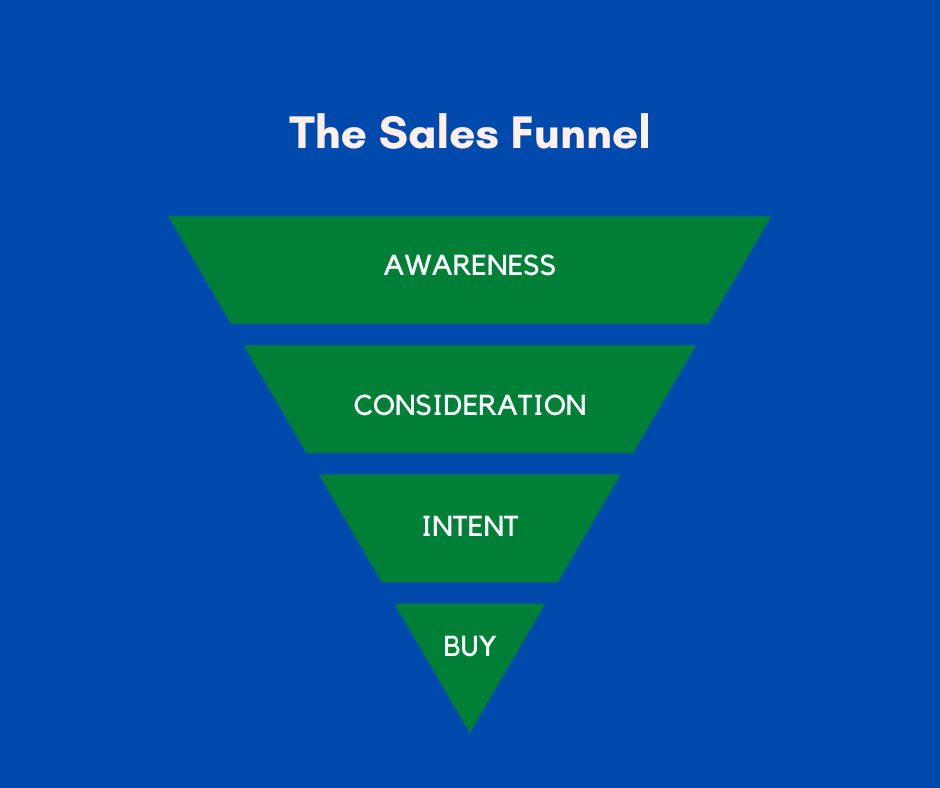
From educating the visitor to converting them into leads, and then a customer, this is how you map content along the sales funnel.
A combination of great content and no keywords or poor content and the right keywords, won’t help you in achieving your goals.
Writing great content alone isn’t enough. You need to conduct in-depth keyword research to find out the more targeted keywords that your audience searches on search engines.
Before writing any content, you need to decide the keywords that you need to write on. That’s why keyword research lays a solid foundation for your content strategy and helps you in writing quality content. This translates to more organic traffic, conversions, leads, and sales.
Here are some keyword tools you can begin using:
Focus on the primary and the long-tail keywords that people search. Don’t forget to take into account the search intent. For example, if you are providing a paid service, then writing and optimizing for content on “free tools” may not bring you any results.
Find out what people ask and answer those questions with the right content marketing strategy.
Writing quality content has become an essential component of a successful SEO strategy. And as search engines continue updating their algorithms, instead of writing as much content as possible, now the focus is to have as much relevant and helpful content as you can publish.
Delete underperforming pages. It is better to have a few pages with the right content that satisfies user intent, instead of 100+ blog posts that don’t serve any purpose.
If you are a website that sells car detailing services in Denver, your primary market is the residents of your city. Do not expect anyone to come all the way from New York City to get a clear car bra. It doesn’t work like this.
You also need to remain relevant by publishing content on car detailing services.
This brings us to topic clusters or SEO clusters.
A content cluster, or topic cluster, is a way of organizing content into topically related ‘clusters.’
In the case of car detailing services, you need to create a few pillar pages on the primary keywords and then publish additional blog posts and pages that relate to your primary service. You need to have strong internal linking for the pillar page and cluster pages. Here you can take the help of an editorial calendar to guide you in writing more relevant content for your target audience.
The purpose of cluster pages is to publish content for your audience in any journey of their sales funnel. Some may come looking for answers to their problems, whereas others show interest in buying your services.
You need to publish content in the form of videos, ebooks, and blog posts to serve customers in every part of the sales funnel.
A content calendar is more than an Excel/Google Sheet with topics and dates. It is a complete schedule that aligns your content marketing strategy and keeps you focused on achieving your goals.
You can prioritize tasks according to your needs and measure results connecting to the SMART goals. Here is what needs to go in your content calendar.
Make it in Google Sheets and accessible for your internal team. You need your marketing department in sync with the content creation efforts.
Writing a long-form blog post, publishing a video, or creating amazing infographics is the beginning of your content strategy.
Publishing is the first post.
So, what comes next?
Remain proactive in sharing your content multiple times across all social media platforms.
Reach out to different bloggers and relevant websites with high authority in your niche. Offer to write for them to get your content and message out to the right audience.
If budget allows, go ahead and promote your content on Google and social media platforms.
Netflix distributes films, movies, and documentaries to members from 190+ countries worldwide.
How? They do this through their own platform and by posting small segments across all social media platforms.
But you aren’t Netflix. Now what?
Don’t worry. You can go with whatever you have available at the moment. You need to continue promoting your content to start getting eyeballs on your content.
Content promotion and distribution often compound results through your marketing efforts. .
The following are the different types of tools you can use for content marketing, with each one serving its unique purpose:
This is an in-depth blog post that you’re reading on our website. It is by far one of the most common and popular types of content marketing assets for promoting valuable, helpful, and relevant content.
Blog posts are informal that address readers in a second language. It is as if you’re talking to a friend.
There is no magic formula to determine the exact words you need to write your blog posts, however, something along 1,000+ words is a common practice.
Again, the best way to rank your content is to test different kinds of lengths and determine what your audience prefers reading. If you can answer a question without exaggeration within 500 words, then you need not write a 1,000+ word blog post.
However, according to research, long-form blog posts like the one you are reading, perform better in search engine rankings than short-form content. That’s because you can cover multiple keywords in-depth and provide answers in great detail.
However, if you are covering a topic with the intention of a guide, similar to this blog post, then you may need to go over 2,000 words.
An ebook is a lead generation tool that you either sell or provide after getting your lead’s contact information. You can consider them as a longer, in-depth version of a blog post.
Ebooks are excellent lead-capturing tools that you can use from the awareness to the intent stage in your sales funnel. Once leads download your ebook, they can make sound decisions to purchase your products/services.
Comparison guides are helpful to convert your lead into a prospective customer. Ebooks are the next step after blog posts. Once people read your blog posts, they can download your ebook for detailed information.
Define the problem, propose a solution, and show the results. That’s the entire point of a case study that cements your authority as a reliable business. Case studies are like short/long stories about your clients and how you delivered the best value while working with them.
Case studies are great for SEO because they are unique, provide valuable information, and give a reason for your website visitors to inquire about your services.
Case studies can become an integral part of your content strategy to increase rankings and conversions.
You can write a 2,000-word blog or a 5,000-word ebook, but what if you can add a visual element to it? This is where Infographics come in.
One infographic can sum up the entire blog post or an ebook with a strong visual appeal.
Plus, you can get good organic traffic through infographics once people start sharing your content.
Videos convert like hot pancakes. If you can write a good blog post or an ebook, you can make a video and get even better traffic and conversions. It is a day and age of visual communication.
Don’t get us wrong though. Avid readers still prefer reading online to watching a video. But a video is also helpful for your content strategy.
Do note that video production requires time, effort, and money. However, you will get a better ROI on it than other mediums.
Podcasts are a great way to connect with your audience on issues and challenges they face in the industry. Podcasts are a super helpful indirect promotional method. People can find your brand and listen to your helpful advice on their way to work. Instead of reading, your customers may prefer listening to the article.
Podcast listeners are an audience that shows interest and develops loyalty to a brand. If you have industry experts at your side, consider podcasting as a way to create quality content and promote your business.
Your website is your digital asset. And, a top priority for content publication. But once you have developed a content calendar for your website, it is time to start paying attention to social media platforms.
Other than sharing your content, you can create new posts, videos, and targeted ads to reach your customer base. Here are the most popular social media platforms for content marketing:
Make sure to adjust your content according to the social media platform where you’re publishing.
Instagram is all about aesthetics. TikTok is all about edutainment. YouTube is all about helpful videos and SEO.
Do a competitor analysis to see how well your competitors use these platforms to promote their content.
Meaningful content helps your website to rank in organic search. A successful content marketing strategy provides clear guidelines on the best content strategies to develop clear, meaningful, and accessible content.
Here are the best practices of content creation that will help you in understanding your key performance indicators:
Coming up with new content ideas, and developing the right content marketing strategy, all take time, effort, and a lot of patience.
While this may seem too much, follow this guide step by step. Get a strong hold over your website content, and then move to one social media platform. Cement your authority on that channel and then move on to the next one, and so forth.
It’s now time to go ahead and create your content marketing strategy using this guide.
Get the weekly newsletter keeping 23,000+ technical writers in the loop.
Get certified in technical writing skills.
Please check your email for a confirmation message shortly.





















Get our #1 industry rated weekly technical writing reads newsletter.
Your syllabus has been sent to your email