
Our reviewers evaluate career opinion pieces independently. Learn how we stay transparent, our methodology, and tell us about anything we missed.

Our reviewers evaluate career opinion pieces independently. Learn how we stay transparent, our methodology, and tell us about anything we missed.
Your medical writer resume should do two things at once: prove you can write under constraints and make it effortless for a recruiter (and ATS) to see you’re a match.
You can already be a great writer and still get ignored if your resume reads like a generic template. Medical writing hiring is picky for a reason. It’s a trust job.
If you want to learn how to become a medical writer from scratch, I’d start with the medical writing career path, but in this guide, I’m focusing on the resume and how to win interviews with it.
Here’s what a hiring manager is really trying to answer in 15–30 seconds:
So instead of writing a resume that says, “I’m detail-oriented,” I’d build a resume that shows it:
This is also why I like to prep the resume and interview answers together. Your resume should tee up the same stories you’ll tell verbally. If you’re also interviewing soon, use the medical writer interview questions guide as your “answer bank” and make sure your resume supports those answers.
There are three widely used resume formats. Each one sends a signal, whether you realize it or not.
This is the default format for most medical writers.
It works best when:
How I’d structure it:
This format focuses on skills instead of work history.
It can work when:
But here’s the catch: functional resumes often perform worse in ATS systems and can feel suspicious to recruiters who want to see timeline + context.
If you use functional, I’d still include a slim “Experience” section with dates and roles so it doesn’t look like you’re hiding something.
This is my favorite for career changers and freelancers.
It lets you:
If you’ve done freelance or contract medical writing work, hybrid is the easiest way to make it look coherent.
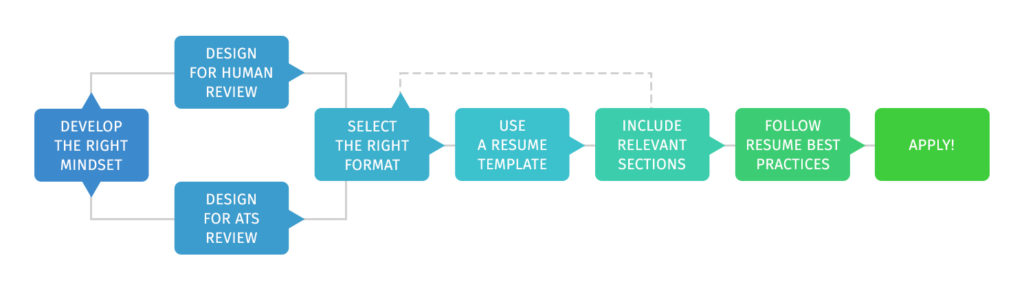
Most big companies use Applicant Tracking Systems (ATS) to scan resumes for relevance before a human ever sees them. If you want a quick overview of ATS adoption and resume parsing realities, this ATS statistics overview is a useful sanity check.
My rule: don’t build a resume that’s “pretty.” Build one that’s readable by both humans and machines.
Here’s what I consider “core” sections for medical writers:
Now I’ll walk through each one the way I’d write it.
Your header isn’t the place to get creative. It’s the place to remove friction.
Include:
What I’d avoid:
JANE DOE
Medical Writer | Regulatory & Clinical Documents
City, State | email@domain.com | (555) 555-5555
LinkedIn: linkedin.com/in/janedoe | Portfolio: janedoewriting.com
That’s it. Clean. Skimmable.
Some advice says “don’t include a summary.” I disagree, if you can keep it short and specific, include one.
A good medical writer summary gives a recruiter a reason to keep reading.
Medical Writer with 6+ years of experience drafting and editing clinical and regulatory documents, including protocols, CSRs, and patient narratives. Strong record of supporting cross-functional review cycles, improving document consistency, and meeting submission deadlines in fast-paced environments. Expert in template-driven writing, tracked changes workflows, and translating complex clinical data into clear, audit-ready documentation.
Medical Writer transitioning from clinical research coordination with hands-on experience supporting study documentation, summarizing source materials, and collaborating with clinical teams. Skilled in structured writing, review workflows, and producing clear, accurate content from complex inputs. Building a portfolio focused on patient education and clinical trial documentation.
The goal is not to “sound impressive.” The goal is to give the reader a fast mental model of you.
This is the section that gets you hired.
Most resumes fail here because they list duties instead of outcomes.
Action + deliverable + impact
Instead of: “Worked on clinical study reports.”
Write: Drafted and edited clinical study report sections using sponsor templates, reducing revision cycles by improving narrative consistency and alignment with source tables.
Instead of: “Created patient education materials.”
Write: Developed patient education leaflets and FAQs in plain language, improving comprehension and reducing follow-up clarification requests from clinical staff.
For each job:
If you’re earlier in your career, don’t apologize for being junior. Just show you can execute reliably.
Senior roles are about ownership, complexity, and review leadership.
Principal roles should read like leadership + stakeholder trust.
Lead roles are about standards, oversight, and consistent quality at scale.
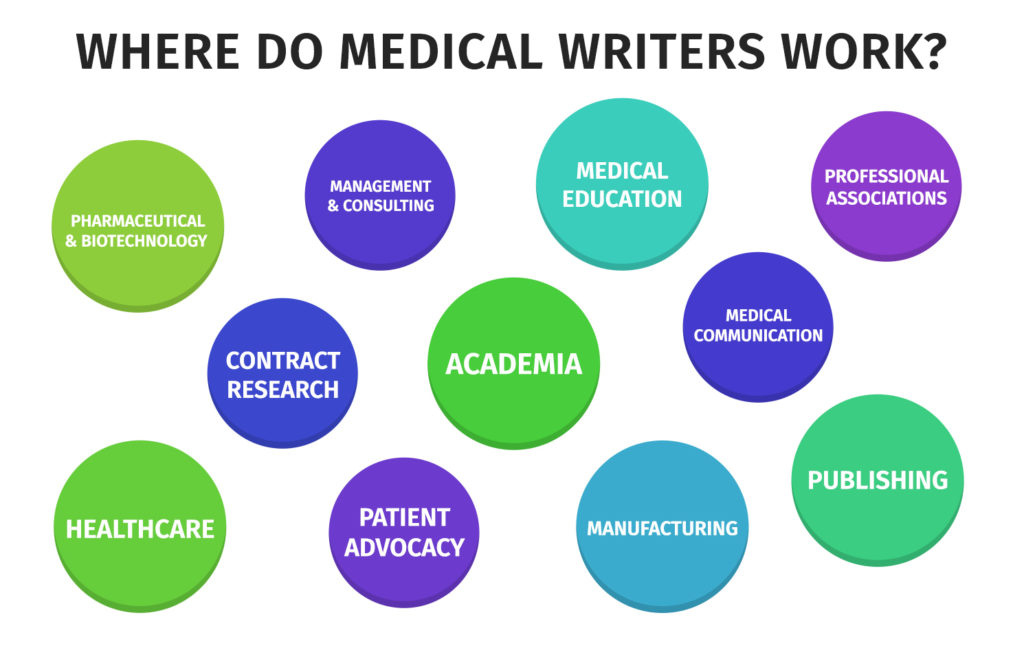
[IMAGE: Where do medical writers work]
Clinical research writing is often a blend of writing + coordination + reporting.
Medical writing skills can become a dumping ground fast. I’d keep it curated and aligned to the job description.
Writing & document skills
Research & content integrity
Collaboration
Operational
What I’d avoid:
Education placement depends on where you are in your career:
I’d include:
If you have advanced degrees (PhD/Master’s), list highest first.
Certifications can help when:
But I’d only include certifications that:
This is where you separate yourself.
Bad achievement bullets (too vague):
Better achievement bullets (specific + measurable):
If you don’t have big numbers, that’s fine. Use measurable scope instead:
If you’re entry-level, a small interests section can add personality. If you’re experienced, it rarely helps.
English is typically assumed for US roles. I’d list other languages only if:
This is the part I wish more writers took seriously, because it’s the “quiet stuff” that determines whether you look professional.
If you’re also optimizing your resume around compensation goals, it helps to know what the market looks like by seniority and lane. This medical writer salary guide can help you anchor expectations realistically.
No header here: If you take nothing else from this guide, take this, your resume isn’t a biography. It’s a selection tool. Keep it clean, align it to the lane you want, and show proof that you can write under review and deadline pressure. That’s what gets interviews.
Certifications can set you apart in the competitive field of medical writing. They demonstrate your commitment to mastering skills and medical terminology. Employers often prioritize candidates with relevant certifications or courses, increasing your chances of landing a job.
Here are some prominent medical writing certifications to include:
Here are the most frequently asked questions about creating a medical writer resume.
A medical writer resume should emphasize accuracy, clarity, and regulated-document discipline. Strong resumes highlight relevant document types, collaboration with cross-functional reviewers, ability to follow templates and standards, and measurable outcomes (quality, turnaround time, compliance, or publication success).
The most valuable experience is the experience that matches the target role. For regulatory roles, include structured clinical and regulatory deliverables and review workflows. For medical communications or publications, include manuscripts, abstracts, slide decks, congress materials, and editorial processes.
Projects should be described with clear scope and context: document type, therapeutic area (if appropriate), audience, role/contribution, tools/processes used, and results. Bullet points should communicate responsibility and impact without revealing confidential or patient-identifying information.
Common high-value skills include scientific writing and editing, literature review, data interpretation, version control and quality checks, compliance awareness, stakeholder management, and proficiency with core tools (e.g., Word, reference management tools, collaborative review workflows). Skills should be aligned to the job description.
Yes, when feasible. Useful metrics include volume of documents delivered, turnaround time, acceptance rates (publications), audit-readiness indicators, reduction in review cycles, or improvements to consistency and template adherence. Metrics should be credible and contextual.
I treat this like a matching exercise. Your resume should make it obvious that your work history maps to the document types and constraints in the job posting. Start with a tight introductory statement that names your lane, your strongest writing abilities, and the kinds of deliverables you can own. Then, in your experience section, get specific about what you produced and for whom. Instead of saying “worked on clinical documents,” call out clinical trial protocols, patient education materials, or regulatory submissions, and note the trial phases or therapeutic areas when it strengthens your credibility.
I also make “collaboration” concrete. Medical writing is rarely solo work, so mention collaboration with multidisciplinary teams in a way that shows how you operate: cross-functional reviews, comment resolution, and aligning with clinical, safety, stats, regulatory, and SMEs. Finally, I pull key achievements forward using metrics when possible. That could be volume, cycle-time improvements, fewer review rounds, number of documents shipped, or scope across multiple therapeutic areas.
If you are early-career or pivoting, your portfolio becomes the proof. Link to 3 to 5 samples that match the role’s deliverables and frame each one by audience, purpose, and what you owned.
If you are new to medical writing and are looking to break in, we recommend taking our Medical Writing Certification Course, where you will learn the fundamentals of being a medical writer, how to dominate medical writer interviews, and how to stand out as a medical writing candidate.
Get the weekly newsletter keeping 23,000+ technical writers in the loop.
Learn medical writing and advance your career.
Please check your email for a confirmation message shortly.




















Get our #1 industry rated weekly technical writing reads newsletter.
Your syllabus has been sent to your email