
Our reviewers evaluate salary independently. Learn how we stay transparent, our salary methodology, and tell us about anything we missed.

Our reviewers evaluate salary independently. Learn how we stay transparent, our salary methodology, and tell us about anything we missed.
Medical writing is one of those careers where the same title can mean wildly different work.
One person with “Medical Writer” on their LinkedIn might be writing clinical study reports and managing compliance-heavy review cycles. Another might be writing patient education, CME publications, or scientific communication pieces for a medical communications agency. The pay reflects that scope.
If you’re still deciding which lane you’re aiming for, start with my breakdown of how to become a medical writer. Choosing the right specialty is one of the biggest salary levers you control.

Here’s the first thing I want you to know: you’ll see different “average salaries” depending on the site, because each one pulls from different data sources (self-reported salaries vs employer bands vs job postings) and some show base pay vs total pay.
So instead of pretending there’s one “true” number, I use a practical three-source approach:
If you want a job-market-facing estimate, Indeed’s Medical Writer salary page shows an average of about $118,024/year in the U.S.
If you want a compensation-band estimate (often useful for negotiation), Salary.com’s Medical Writer salary page lists an average of $133,563 (as of January 1, 2026).
If you want self-reported salary data (often a more conservative baseline), PayScale’s Medical Writer salary page reports an average of $87,261 (2026).
Those three numbers don’t “conflict” as much as they reflect the reality of medical writing: the title covers a lot of different scopes and industries.
Below I’ll run you through how to deduce a fitting salary for each step of your medical writing career by using the above pages.
Early-career pay tends to depend on how quickly you can produce accurate drafts, work with SMEs, and survive review cycles without missing details. Agencies and CROs can be common entry points because they hire at scale and train writers on process.
To ground your expectations, I’d use the lower-to-mid parts of the ranges you see on Salary.com and compare that with what’s showing on Indeed. In my experience, entry-level roles often land in the high five figures to low six figures, depending on company type, location, and how technical/regulatory the writing is.
Mid-level compensation jumps once you can own documents end-to-end and keep the work coherent after four or five rounds of stakeholder feedback.
This is the level where specialization starts paying off. It’s also where a lot of people realize “medical writer” isn’t a salary by itself, it’s a bucket. A writer doing submission-adjacent regulatory work can land in a very different band than someone writing general education content, even if the title looks similar.
I suggest comparing how wide the market ranges are on Salary.com versus the average you’ll see on Indeed. That spread is your signal that scope matters more than the label.
Senior roles pay more because you’re often doing strategy, mentoring, and risk management. At that level, you’re protecting defensibility, timelines, and quality.
One of the most useful ways to understand the ceiling is to look at posted ranges on real listings. For example, you can find senior medical writing leadership roles with posted salary ranges well above typical “medical writer” averages when browsing Indeed job listings for senior medical writing roles (ranges vary a lot by company, scope, and geography).
If you want a quick way to visualize the ceiling by level, compare the trajectories in senior medical writer salary and then map that to your next skill step.
Medical writing titles can be inconsistent across employers, but the progression is usually something like:
What changes as you move up is ownership. Junior roles get paid to execute. Senior roles get paid to make the system work: document strategy, SME alignment, timeline management, QC expectations, and team management when the work gets complex.
If you’re trying to plan the ladder intentionally, it helps to understand how employers define scope.
Industry matters because budgets, risk profiles, and organizational focus influence compensation. Medical writers working in high-stakes environments, such as pharma or biotech, often see higher salaries due to the critical nature of their work. On the other hand, roles in mission-driven organizations or academic settings may prioritize stability and impact over top-tier pay.
Pharma and biotech often pay more for compliance-heavy writing. If you want an industry-specific anchor, the AMWA Compensation Survey highlights report mean income figures for full-time employed medical communicators in pharma/biotech around $166,457 (based on 2023 data).
CROs and agencies can be great for fast learning because you get exposure to multiple clients and document types. Compensation can be competitive, especially once you’re consistently producing and can handle client-facing cycles. The same AMWA Compensation Survey highlights show differences by employer type, which helps understand how much “industry” influences pay.
These environments can be more variable. Some roles are mission-driven and stable, but may pay less than commercial pharma roles. Others can pay well when the work is specialized, high-volume, or tied to grant and research output.
These roles can be more variable. Some are stable and mission-driven but may pay less than commercial pharma roles. Again, the employer-type breakdown in AMWA’s highlights is useful context for how these settings compare.
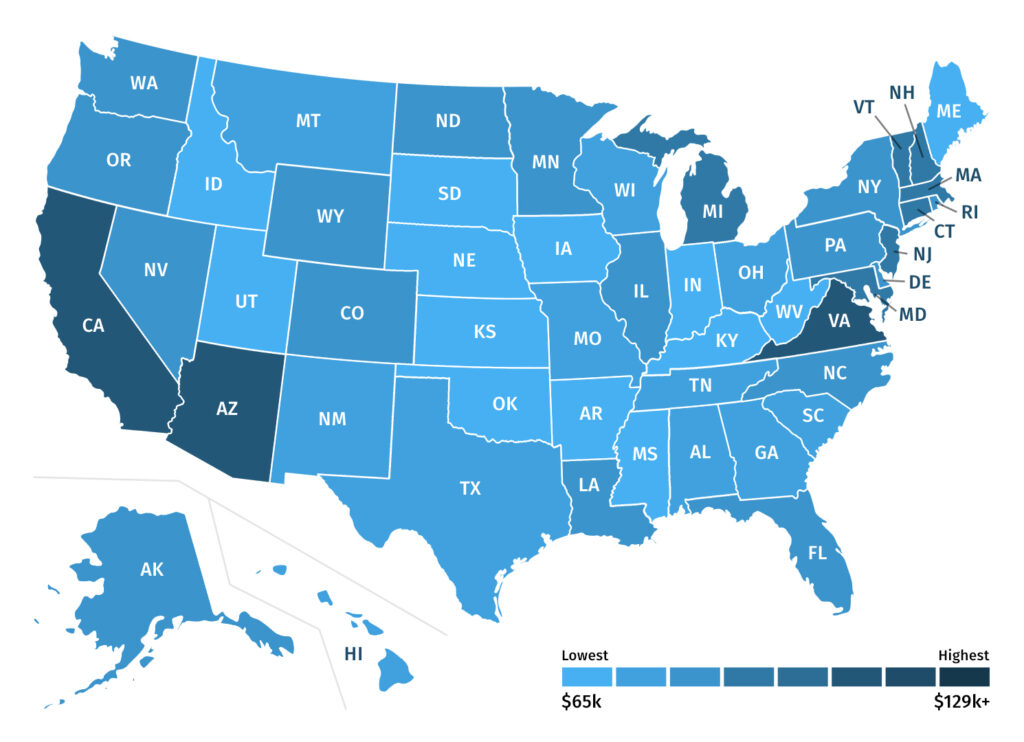
Geographic location still matters, even with remote work.
High cost-of-living markets often have higher salary bands, and some employers adjust pay based on where you live. Remote medical writer roles can reduce location pressure, but they don’t erase it. Location still matters, even with remote work, because many employers use location-based pay bands.
If you’re trying to compare cities quickly, Indeed’s Medical Writer salary page includes “highest paying cities,” which can be useful for directional comparisons (just don’t treat it like an absolute promise for every employer).
If you’re considering a move, it’s worth comparing pay ranges to living costs and not just chasing the biggest number.
One thing I always tell people: optimize for the experience that increases your future earning power. A slightly lower salary in a role that gives you regulatory writing exposure or leadership scope can be a better long-term deal.
This is where people get tripped up because freelance numbers can look bigger at first glance.
Employed roles typically include benefits like health insurance, paid time off, and predictable workloads. Compensation often includes bonuses and profit sharing, depending on the company and role. These positions offer stability and growth, making them ideal for early-career writers who want structured mentorship and training to sharpen their skills.
Employed roles are straightforward: stable base pay, benefits, and usually a clearer growth ladder. For a quick baseline, I’d compare Indeed’s salary estimate with the negotiation-friendly Salary.com band and the self-reported PayScale benchmark.
Freelance can earn more, but it’s not automatically “more profitable.” You need to factor in downtime, admin time, taxes, benefits, and pricing power.
If you want marketplace-rate reality, Upwork’s Medical Writer rate guide shows a median hourly rate around $36/hr, with many rates in the $23–$50/hr band.
If you want a separate hourly benchmark, PayScale’s Freelance Medical Writer hourly data reports an average around $25.86/hr, with a wide spread depending on experience and niche.
Freelancers can earn more, but it’s important to factor in expenses like health benefits, downtime, software costs, and business development. Freelance rewards specialization, generalists often compete on price, while specialists can focus on delivering high-value outcomes.
If you’re weighing the freelance path, check our guide on freelance medical writing for a detailed look at the real economics.
Remote medical writing expands job options by removing location limits, but it doesn’t guarantee higher pay. Compensation depends on the complexity of your work, your level of ownership, and your niche. Writers handling specialized or high-stakes content typically see better pay, whether remote or not.
Choosing between freelance and employed roles depends on your priorities. Employed roles suit those seeking stability, while freelancing offers flexibility for those comfortable managing their own business. Both paths can lead to success when aligned with your career goals.
If you want to increase your income, the fastest path is usually scope plus credibility.
Developing deep expertise in a clinical area is one of the most effective ways to boost your salary. It enhances your speed, accuracy, and trustworthiness, while also making you harder to replace. Employers value writers who can navigate specialized content, as it reduces risk and improves efficiency.
Shifting into high-stakes document types like regulatory publications, submission-related writing, or advanced scientific publications often leads to higher pay. These roles involve greater risk and require tighter process control, which is reflected in the compensation. Writers who succeed in these areas are adept at balancing precision with compliance.
Professional development and networking can unlock higher-paying roles by connecting you to opportunities and referrals. Conferences, peer networks, and associations like the American Medical Writers Association provide access to training and compensation resources. Actively participating in these communities helps you stay competitive and visible to potential employers.
To reach principal or director-level compensation, leadership responsibilities become essential. This often includes mentoring, managing document strategy, improving workflows, or overseeing timelines across programs. Ask yourself: am I just completing tasks, or am I improving the entire process for my team? Writers who elevate the broader workflow are often rewarded with higher pay and leadership opportunities
Salary matters, but it’s not the whole compensation story.
Employed medical writing roles often come with strong health benefits, and that can be a big deal if you’re comparing offers that look close in base pay. Benefits also influence how risky the job feels, especially if you’re moving into a new specialty or a new employer type.
Medical writing can be calm or chaotic, depending on the team’s process. When timelines are realistic and reviews are managed well, the work is steady and satisfying. However, when everything is last-minute and approvals are messy, it can quickly become stressful. Job satisfaction often depends on two factors: the level of control you have over your workflow and how reasonable the review culture is.
A lot of writers stay in this field because the work feels connected to real outcomes: patient education, public health programs, innovation in medicine, or bringing products to market responsibly. Even in promotional writing, the best teams care about accuracy and ethical boundaries. That matters for satisfaction. It’s hard to feel good about work you don’t trust.
Depending on the employer, perks can include remote work flexibility, learning stipends, conference budgets, and formal training programs. These perks matter more than people admit because they affect how quickly you can grow into higher-paying roles.
Medical writing offers diverse opportunities, with salaries and career growth shaped by specialization, experience, and the value you bring to your role. Whether you pursue employed positions for stability and mentorship or freelancing for flexibility and higher earning potential, success depends on building expertise, managing scope, and staying connected to the professional community.
By aligning your skills with high-impact areas and continuously investing in your development, you can navigate the field and position yourself for long-term success. Medical writing isn’t just a career, it’s a chance to contribute to meaningful outcomes while growing both professionally and personally.
Here I answer the most frequently asked questions about a medical writer’s salary.
Most medical writer salaries fall into broad ranges that depend on level, specialization, and employer type. Entry-level roles typically sit noticeably lower than senior and principal roles, and regulatory or specialized scientific writing often pays more than generalist work.
Often, yes, especially when regulatory work is tied to submission timelines and compliance-heavy documentation. Publication writing can still pay very well, particularly in medical communication agencies and pharma publication teams, but the highest pay usually follows scope and risk.
It can be, but only if you stay booked, specialize, and price correctly. Freelancers also need to account for taxes, expenses, unpaid admin time, and the cost of benefits. For many writers, freelance becomes more attractive after they’ve built a niche and a network.
Bring evidence. Strong writing samples, measurable outcomes (speed, accuracy, fewer review cycles), and a clear specialty give you leverage. It also helps to frame your value in terms of risk reduction and workflow reliability, not just writing quality.
They can, especially in scientific publications and specialized therapeutic areas. But they’re not a guarantee. A strong portfolio, credible medical knowledge, and consistent performance often matter more than the letters after your name.
Many full-time roles include health benefits, paid time off, and sometimes bonuses or profit sharing depending on the employer. Some roles also include learning budgets or conference support, which can be valuable for long-term career growth.
Get the weekly newsletter keeping 23,000+ technical writers in the loop.
Learn medical writing and advance your career.
Please check your email for a confirmation message shortly.





















Get our #1 industry rated weekly technical writing reads newsletter.
Your syllabus has been sent to your email