Our reviewers evaluate career opinion pieces independently. Learn how we stay transparent, our methodology, and tell us about anything we missed.

Our reviewers evaluate career opinion pieces independently. Learn how we stay transparent, our methodology, and tell us about anything we missed.
When I landed my first technical writing job, I didn’t feel like I had some magic credential that made me “ready.” I was learning on the fly at a video-editing software company, translating messy SME brain dumps into usable docs, and trying not to slow down engineering.
That’s still how a lot of technical writing careers start: you learn fast, you document what matters, and you build credibility by doing the work.
I know it can feel awkward to say “trust me, I’ve seen this a lot,” but I’ve hired, trained, and worked with technical writers across different industries, and the pattern is pretty consistent. The people who grow fastest usually stop obsessing over the exact degree requirements and start building a repeatable skill set plus a portfolio that makes hiring managers relax.
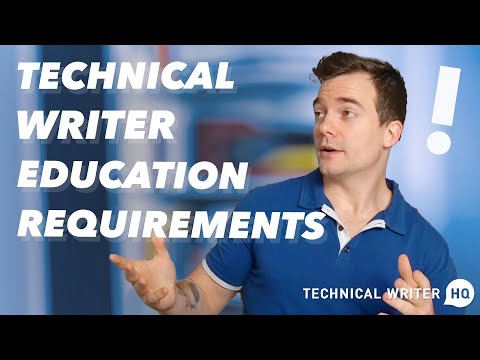
If you want, you can also check my video on technical writers’ education.
Let’s start with what employers expect, because that’s what shows up in job descriptions and scares people off.
Most technical writer roles list a bachelor’s degree as “preferred” (sometimes “required”), but the reality is that hiring teams are using that as a quick filter, not as a perfect predictor of performance. If you can communicate clearly, learn a technical subject, and collaborate well, you can win interviews with a non-traditional background.
If you want a mainstream benchmark for how employers frame the role, the BLS occupational overview for technical writers is a solid reference point (and it tends to mirror the language recruiters use).
If you already have a bachelor’s degree, you’re fine. The major matters less than you think, and I’ve seen great writers come from everything from English to engineering.
That said, some degrees naturally align with certain types of technical writing.
If you’re coming from English, communications, or journalism, you’ll have stronger writing fundamentals out of the gate. You’ll be comfortable with structure, tone, editing, and turning chaos into something readable.
If you’re coming from computer science, IT, or engineering, you often have an easier time with technical documentation, especially anything that looks like API documentation, developer guides, or tooling-heavy doc environments.
And if your background is in science or healthcare, you can have a real advantage in regulated industries where domain-specific knowledge and precision matter a lot.
This is the part where I want you to relax.
If your degree is unrelated, you’re not “behind.” You just need to translate your background into proof that you can (1) write clearly and (2) handle technical subject matter.
In practice, that translation happens through a technical writing portfolio and a couple of strong writing samples that demonstrate your understanding of a product, process, or technical workflow.
If you’re unsure what to include, I’d look at these technical writer portfolio examples and use them as a target for what “hireable” looks like.
Certifications are optional in most technical writing roles, but are useful if you use them the right way.
The wrong way is collecting badges like Pokémon and hoping that fixes a weak portfolio.
The right way is to use training to create work samples, tighten your workflow, and fill specific gaps (like tools, document design, or technical editing).
If you want a recognized credential in the technical communication world, you’ll keep running into TWHQ and STC. It’s not required, but it can be a clean signal, if you’re switching careers and need something “official” to back up your story.
I also like professional organizations for a different reason: they push you into continuous learning.
Again, not to brag, but TWHQ has a strong community where you can check how other writers do documents. You also start to see how other teams run doc reviews, how people structure information architecture, and which tools are common in the wild.
A good certificate program does one thing really well: it forces you to produce real outputs.
If the program ends with “you passed a quiz,” that’s not very helpful. If it ends with “here are two polished documentation samples you can publish,” now we’re talking.
Workshops can be effective too, especially when you pair them with on-the-job training. A lot of technical writers learn the most in their first 90 days simply by being embedded with product teams, sitting in on standups, and getting used to how real documentation moves from draft to review to release.
If you want training that maps directly to employability, focus on things that show you can operate inside a modern documentation workflow. Stuff like content management systems, version control basics, doc review processes, and editing standards tends to matter more than another generic writing course.
If you want a broader view of what skills hiring managers actually screen for, this breakdown of essential technical writing skills lines up well with what shows up in interview tests.
This is where technical writing becomes less about credentials and more about day-to-day reality.
Most technical writers aren’t paid for “being good at writing.” They’re paid for being good at understanding technical information, organizing it, and shipping something useful with minimal drama.
You need to write clearly, but you also need to edit. Technical writing is rewriting, in a way: tightening language, removing ambiguity, and ensuring the doc matches how the product works.
The writers who stand out are the ones who can make a confusing feature feel obvious without oversimplifying it.
A lot of the job is figuring things out when nobody has time to explain them.
That might mean reading existing docs, scanning tickets, watching a product demo recording, or asking SMEs a few high-quality questions that save everyone time. Strong research skills plus critical thinking let you move without being babysat, and that’s a big deal on fast teams.
Technical writers live in the middle of everything. You’re working with engineers, product managers, support, QA, design, and sometimes legal or compliance.
If you can collaborate without turning the doc process into a bottleneck, you’ll be seen as a multiplier. If you can’t, you’ll feel like you’re chasing people and losing.
You don’t need to be a developer to be a technical writer, but you do need to be comfortable around technical systems. Even basic confidence with documentation tooling, structured writing, and feedback cycles makes your life easier.
And if you’re leaning toward developer docs, being able to work in API documentation workflows becomes a serious advantage. This guide on how to write API documentation is a good example of the kind of structure and thinking developer-focused teams expect.
If education is the baseline, your portfolio is the proof.
When I’m evaluating a technical writer, I’m not asking, “Where did you go to school?” as much as I’m asking, “Can you produce clear documentation in the style and format we need, and can you do it with real constraints?”
The easiest way to get unstuck is to stop treating experience like a binary thing you either have or don’t have.
Internships count. Freelance work counts. Volunteer documentation for open-source projects counts. Even writing internal docs at your current job counts, as long as you can show what you produced and explain the context.
If you want a step-by-step approach to getting your first role, this guide on how to become a technical writer without experience lays out a practical path that doesn’t rely on waiting for someone to “give you a chance.”
I’m going to keep this conversational rather than turn it into a checklist, but here’s the vibe: I want variety that matches real work.
One strong “how-to” guide that teaches a task. Something that feels like help documentation. A small set of release notes. Maybe one sample that includes visuals (diagrams, screenshots, or a simple workflow graphic). If you’re aiming at software, a lightweight API doc sample can be a huge differentiator.
And I care about the decisions you made. Why did you structure it that way? How did you handle assumptions? How did you confirm accuracy? That’s what tells me you can work with SMEs and ship with confidence.
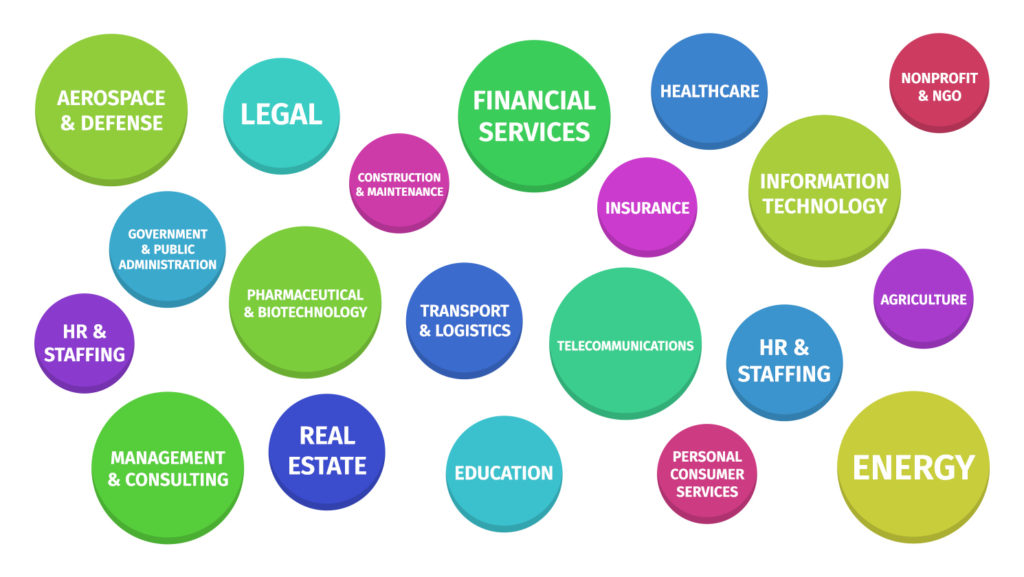
One reason technical writing is such a flexible career is that it shows up almost everywhere. The core job stays the same: you take complex information and make it usable. The subject matter is what changes.
Software is where many writers end up, partly because documentation is tied to product adoption. You might write user guides, onboarding docs, release notes, and internal process docs. Depending on the team, you may also touch UX writing, content strategy, and documentation systems.
These environments can be more formal and more compliance-heavy. Documentation often supports safety, operations, maintenance, and regulatory requirements. If you like precision and structured processes, this kind of work can be a strong fit.
If you’re in science or healthcare, accuracy is everything, and domain knowledge matters more than it does in a lot of software roles. Writers often support reports, research documentation, and regulated content where the smallest mistake is a big deal.
Some writers start in agencies because it exposes you to a lot of projects fast. Freelance work can also be a great path if you’re good at managing clients and building repeatable processes.
In both cases, your portfolio becomes your sales engine. The clearer your niche and samples are, the easier it is to get consistent work.
This is where the “education requirements” conversation misses the point.
The real career accelerators in technical writing are specialization and continuous learning. Not in a vague motivational way, but in a practical “I can solve more expensive problems now” way.
When you specialize, you stop being “a writer” and start being “the writer who can handle that kind of work.”
If you go deep into API documentation, you become more valuable to developer-focused teams. If you lean into UX writing, you start influencing product experiences, not just documenting them. If you build strength in compliance-heavy documentation, you can become indispensable in regulated industries. If you have domain-specific knowledge in healthcare communication, you can walk into teams where learning the subject matter from scratch would take someone else a year.
Specialization also makes networking easier, because you start hanging out in tighter communities where people recognize the niche you’re in.
Career advancement in technical writing often looks like taking on more ownership.
You start leading documentation projects end-to-end. You create templates and standards. You build or improve doc systems. You mentor people. You become the person who trains junior staff and reduces chaos across teams.
Eventually, that can lead toward senior writer roles, doc lead roles, documentation management, content strategy, or knowledge management. If you want to see how those ladders break down, this overview of the technical writer career path maps out the progression pretty well.
And just so it’s said out loud: project management skills help a lot. Even lightweight project management, like running review cycles and keeping stakeholders aligned, can make you stand out quickly.
At the end of the day, the writers who advance fastest aren’t always the ones with the most formal education. They’re the ones who keep learning, keep publishing proof of work, and pick a niche where they can become useful.
Technical writers come from all kinds of backgrounds. If you build strong fundamentals, get real experience, and start specializing in a technical subject that interests you, you’ll be in a great position to grow in this career. And if you’re feeling behind right now, that’s normal. Most of us started there, too.
Here I answer the most frequently asked questions about technical writer education requirements.
Not always, but many job postings still prefer it. In my experience, a strong portfolio and clear proof you can write and collaborate well can outweigh an unrelated degree, or even no degree, depending on the company and role.
If you want the most direct paths, English/communications/journalism are great for writing fundamentals, and computer science/IT/engineering are great for technical roles like developer documentation. Science and healthcare backgrounds can be a big advantage for regulated industries.
They can be, especially if you’re switching careers or trying to move into a niche like healthcare communication or compliance-heavy documentation. I’d prioritize certifications or training that produce portfolio-ready work and help you learn real tools and workflows.
Clear writing, strong editing, research ability, attention to detail, and collaboration skills are the big ones. On top of that, tool proficiency matters more every year, especially if your team uses content management systems or docs-as-code workflows.
Start by creating realistic samples: a how-to guide, a short help article, a set of release notes, and one piece that includes visuals like screenshots or diagrams. Then look for opportunities to make it real through volunteer work, internships, freelance projects, or internal docs at your current job.
Specialization plus ownership is the fastest path. Pick a lane like API documentation, UX writing, compliance, or healthcare communication, keep learning, and take on bigger responsibilities like leading doc projects, improving documentation systems, and mentoring junior writers.
If you are new to technical writing and are looking to break in, we recommend taking our Technical Writing Certification Course, where you will learn the fundamentals of being a technical writer, how to dominate technical writer interviews, and how to stand out as a technical writing candidate.
Get the weekly newsletter keeping 23,000+ technical writers in the loop.
Learn technical writing and advance your career.
Please check your email for a confirmation message shortly.





















Get our #1 industry rated weekly technical writing reads newsletter.
Your syllabus has been sent to your email