Our reviewers evaluate software independently. Learn how we stay transparent, our methodology, and tell us about anything we missed.

Our reviewers evaluate software independently. Learn how we stay transparent, our methodology, and tell us about anything we missed.
A document management system (DMS) makes documents searchable, governable, and easy to collaborate on without turning your process into red tape. The best platforms also bring automation into the mix, so routine tasks like approvals, retention, and indexing no longer become manual chores.
In this article, I’ll provide reviews on the top document management tools you can find right now.
Here’s a quick shortlist of the tools I’ll cover.
Each tool review below starts with a three-paragraph intro, then the “why I chose” section, features, pros, cons, and a link.
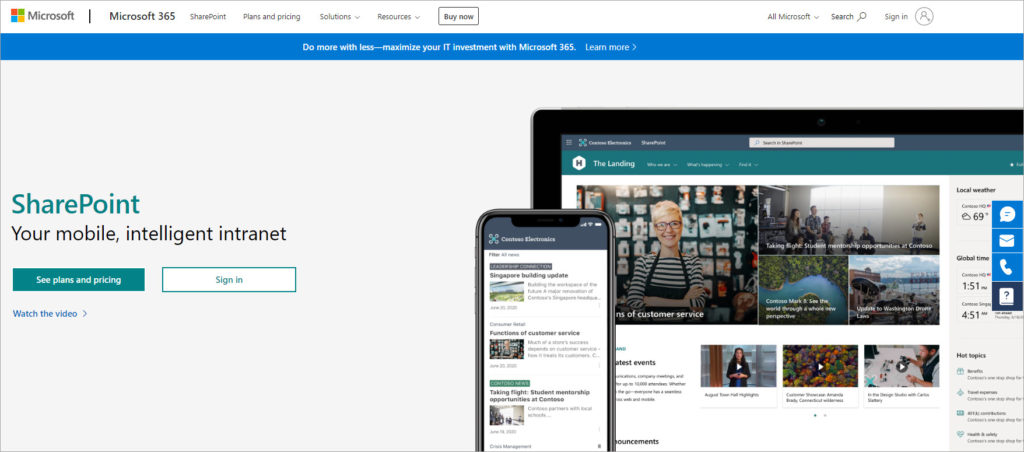
SharePoint Online is the most common default DMS I see in large organizations when Microsoft 365 is already the standard. It’s built for content management, internal collaboration, and structured storage inside team sites.
Where SharePoint shines is how it supports everyday collaboration without forcing a specialized tool. You can keep documents close to the teams and workflows that use them, while still applying permissions and version control.
It’s also strong when your DMS needs to do more than manage files. SharePoint can function as an intranet layer, a knowledge hub, and a collaboration space, depending on how you implement it.
I chose SharePoint Online because it’s the best fit for organizations that already live inside Microsoft. The integration with Microsoft Office reduces friction, and the platform can scale from small teams to enterprise-level structures.
It’s also one of the better options when governance matters, but adoption still needs to be easy. People are already familiar with Office, so you spend less time fighting the tool and more time improving the process.
Learn more: Check out Microsoft SharePoint Online on their website.

GitHub is a software development platform, but it’s also one of the most effective document management systems for technical teams. If your documentation is code-adjacent, GitHub gives you versioning, review, history, and publishing workflows in one place.
The key difference is mindset. GitHub is not “store files in folders.” It’s “manage change intentionally.” If your team uses pull requests, code reviews, and CI, GitHub can make documentation management feel natural instead of bolted on.
I chose GitHub because it makes version control and collaboration non-negotiable. You can improve documentation with the same rigor as code, and you always have a record of what changed and why.
It’s also strong when publishing matters. Tools like GitHub Pages can turn documentation repositories into accessible websites without reinventing a toolchain.
Learn more: Check out GitHub on their website.
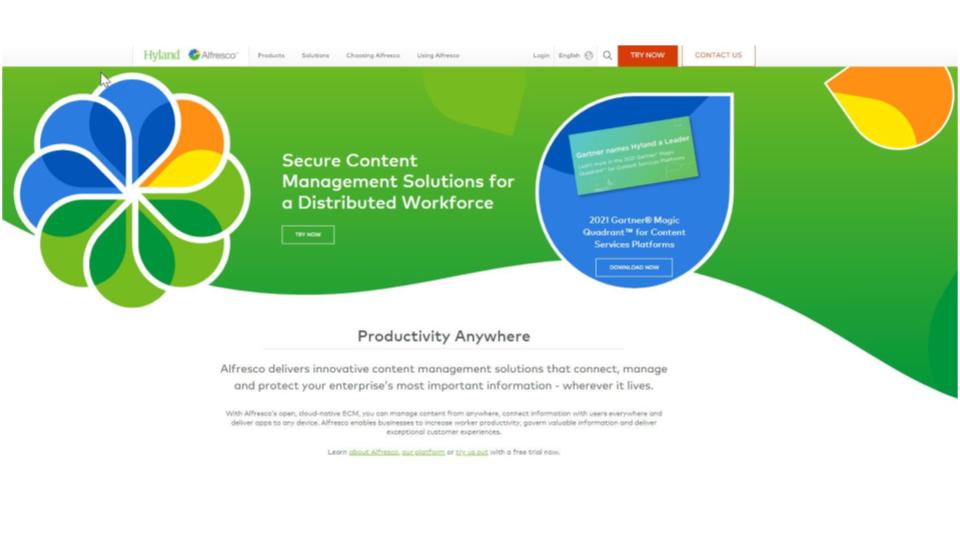
Alfresco is positioned as an enterprise, cloud-native platform that supports complex document environments. In healthcare, that complexity shows up fast: patient records, imaging, compliance requirements, and secure access controls across departments.
This is a category where “good enough” storage is not good enough. You need secure repositories, reliable permissions, and a system that meets regulatory requirements and enables fast retrieval when the stakes are high.
Alfresco also emphasizes integration with existing systems, which matters in healthcare, where document ecosystems are rarely clean or centralized.
I chose Alfresco because healthcare document management is a specialized problem. You need security, compliance support, and the ability to consolidate information without making clinicians fight the tool.
It’s also a practical option when you’re trying to reduce dependence on paper while keeping access controlled. That balance is hard to strike, and platforms that take compliance seriously tend to perform better.
Learn more: Check out Alfresco on their website.
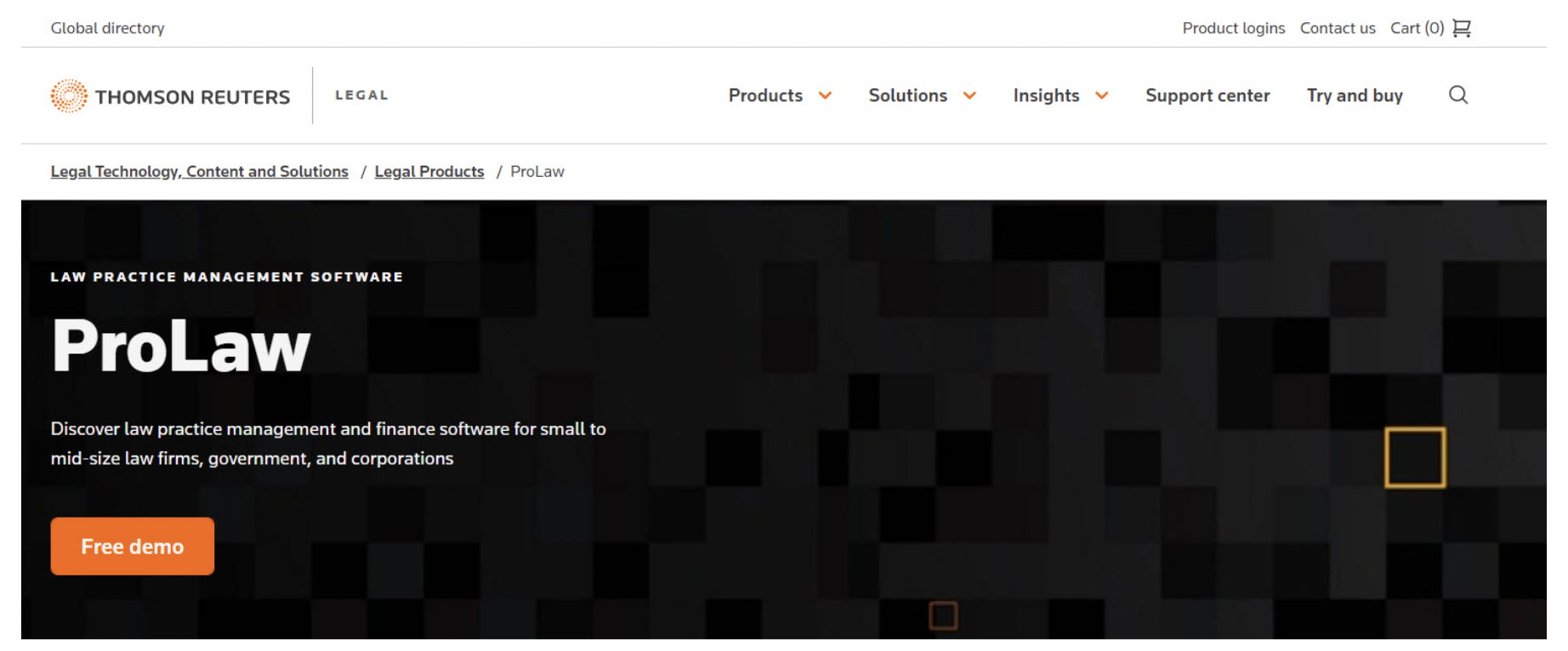
Elite is a law practice management suite that includes document management capabilities tailored to legal work. Legal document workflows are context-driven, with matters, case records, and strict confidentiality expectations.
The key advantage is that document management is connected to the practice workflow. That means retrieval, organization, and collaboration can align with how legal teams already operate, rather than forcing a generic folder system.
If you’re in a legal environment, this kind of domain fit often beats more general tools, because generic tends to break down under legal-specific needs.
I chose Elite because legal teams need document management integrated with matter management. A document system that ignores context forces people into workarounds, creating risk and wasted time.
It’s also a good example of a tool where integrations matter, since legal work often involves Outlook, Word, and PDF.
Learn more: Check out Elite on their website.
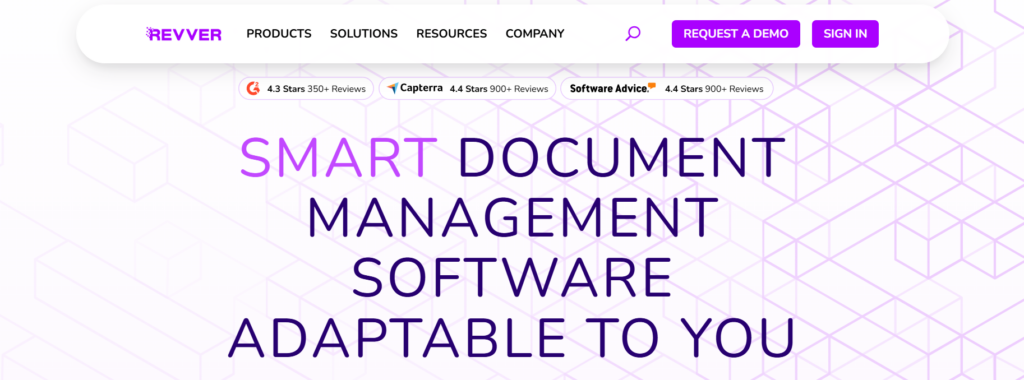
Revver is a cloud-based document management platform positioned for government-style needs. In those environments, the pain is volume, digitization, and the need for reliable access to records and approvals.
Revver supports workflow automation and version control, which are critical when multiple stakeholders handle permits, agendas, maps, and operational documents. It’s also built to reduce reliance on paper, which remains a common bottleneck in public-sector workflows.
It’s a practical option when you want structure without building an entire custom system. You can start with core document controls, then layer automation as processes mature.
I chose Revver because it blends everyday usability with governance. Government workflows require controlled versions, approvals, and secure sharing, but they also need a system that staff will use.
The workflow automation and eSignature support are also a strong pairing for forms-and-approvals operations.
Learn more: Check out Revver on their website.

UKG is a cloud-based HR platform focused on employee document workflows and onboarding. HR document management is unique because it includes sensitive files, strict access controls, and lifecycle rules like expiration and retention.
The platform supports centralized employee file folders and role-based access controls, which help reduce the chaos of storing HR documents in shared drives or email. It also emphasizes process automation, which matters when HR has repetitive workflows across onboarding and employee changes.
If you’re choosing between a general DMS and an HR-specific system, UKG represents the domain-fit argument. Sometimes the best DMS is the one built for your function.
I chose UKG because HR needs secure handling and predictable access rules. A generic DMS can work, but HR teams often benefit from workflows that already understand HR lifecycles, such as document expiration and retention schedules.
The analytics angle is also useful for managers who need visibility into missing docs and deadlines, not just storage.
Learn more: Check out UKG on their website.
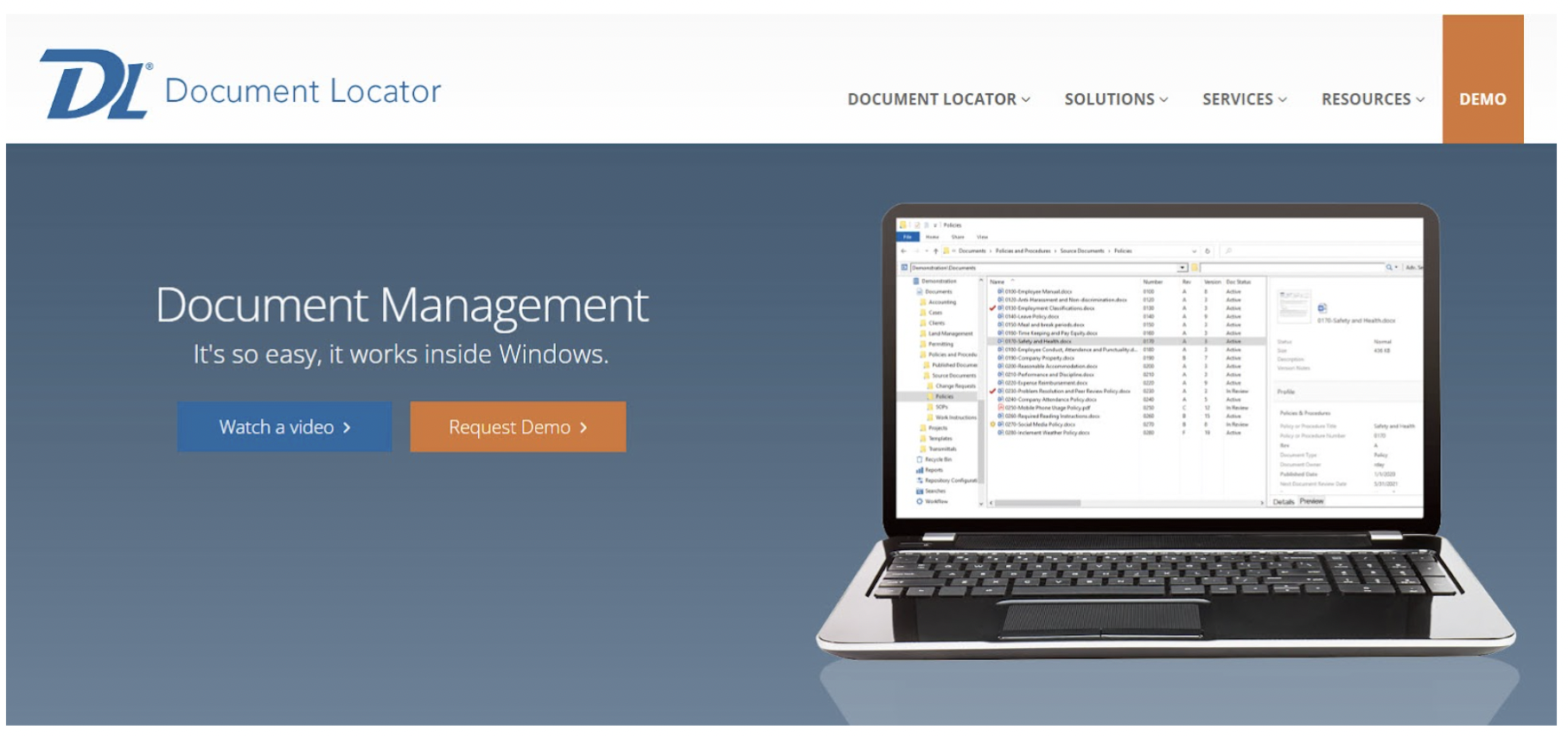
Document Locator can be deployed on-premises or hosted in the cloud, and it’s positioned for security-heavy environments. Financial services teams care about centralized repositories, audit logging, workflow controls, and records management because regulatory pressure is constant.
It’s a control-and-evidence tool, which is a good thing when your document program is tied to compliance.
It also supports workflows and logging, which is crucial when approvals and controlled distribution need to be provable.
I chose Document Locator because financial services workflows require security and auditability. You want a system that makes it easy to control access, track activity, and route documents through approval processes that stand up to scrutiny.
It’s also helpful that it supports both on-prem and cloud, since not every regulated org is comfortable going cloud-first.
Learn more: Check out Document Locator on their website.
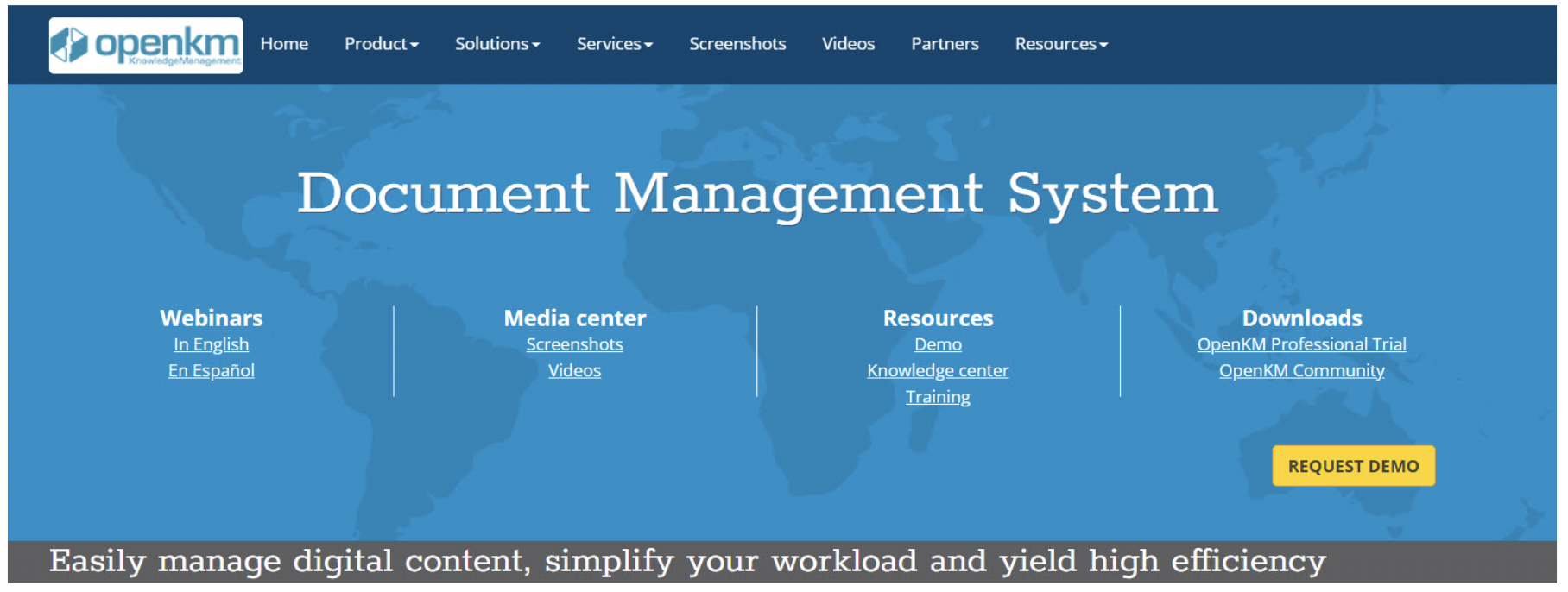
OpenKM is a document management solution available on-premises or in the cloud, with a free community edition. Free is appealing, but it comes with a trade-off: open-source DMS tools require more technical ownership for deployment, upgrades, and governance configuration.
If you have a technical team and you want control without licensing costs, OpenKM can be a strong entry point. If you need fast time-to-value with minimal maintenance, a paid SaaS tool may be a better fit.
I like OpenKM as a “learn what you need” option. It provides enough structure to help you understand your metadata model and retention needs before you sign a multi-year enterprise contract.
I chose OpenKM because free is a legitimate buying constraint for many teams, early-stage orgs, and public institutions. The community edition gives you a functional foundation, including versioning and audit trail concepts, if you’re willing to own the setup.
It’s also a useful way to learn what you need before committing to an enterprise platform.
Learn more: Check out OpenKM on their website.
Document management software helps you store, organize, search for, and govern documents throughout their lifecycle. Instead of relying on folders and tribal knowledge, you use indexing, metadata, permissions, and workflow rules to keep content clean and findable.
Most modern DMS platforms also support version control, audit trails, and automated approval workflows. That makes them useful not only for file storage, but also for compliance management and controlled document handling across distributed teams.
A DMS earns its keep when it reduces friction for everyday work while raising the floor on governance.
Document indexing, metadata extraction, and strong search reduce time spent hunting for the right file. When you combine that with AI-powered categorization or document classification, teams spend less time organizing and more time doing actual work.
This shows up fast in real life. A customer success rep finds the latest onboarding checklist in seconds, and an auditor gets the “approved policy version” without having to email five people.
Real-time collaboration and content collaboration features reduce duplicate drafts and conflicting edits. Version control becomes the safety net, and workflow automation replaces “can you review this” email loops.
In my experience, collaboration improves most when the tool makes it obvious what’s “in progress” versus “approved.” That one distinction prevents a ton of accidental sharing.
Audit trails and compliance tracking make it easier to prove what changed, who approved it, and when it went into effect. If your industry has retention requirements, secure archiving plus automated approval workflows can be the difference between “audit day panic” and “pull the report and move on.”
If you care about compliance, you’ll also want to look at my companion guide on document control software, since document control is DMS with stricter governance.
Here are scenarios where a DMS tends to pay off quickly:
When I evaluate document management systems, I’m looking for features that keep the system usable as it scales, and integrations that reduce duplication across tools.
AI-powered search is most valuable when your org has inconsistent naming and high volume. It helps users find the “right” document even when they don’t remember the exact title, file path, or version.
AI-powered categorization and metadata extraction are even more practical. If the system can suggest tags, document types, and owners during upload, you reduce the most common failure mode: people skipping metadata because it feels like extra work.
Metadata is the backbone of a DMS. Folder structure alone rarely survives scale, because departments create their own logic and then nobody agrees on what “final” means.
A good DMS supports metadata models you can standardize across the org. That includes document type, owner, status, sensitivity level, retention category, and “effective date” for policies.
Granular access controls matter in two ways. First, you need role-based access control so sensitive documents are not visible to the wrong teams. Second, you need permission management that is maintainable, so you don’t end up with a thousand one-off exceptions.
If a tool makes permissions painful, people route around it. That’s how you end up with sensitive documents in personal drives or Slack threads.
Audit trails should record key events: view, download, edit, approval, and sharing. Compliance tracking should make it easy to show evidence for regulatory requirements and industry standards.
This is important in finance, healthcare, government, and any ISO-driven environment where “prove it” is a daily expectation.
Version control is not just a version number. You want a clear history, comparison options when possible, and an obvious “current approved” indicator.
For teams that live in docs-as-code, GitHub is unbeatable here. For non-technical teams, SharePoint and other DMS options handle the “approved vs draft” workflow more naturally.
Workflow automation is where DMS tools move from storage to productivity. Automated approval workflows can route documents to the correct approvers, send reminders, and ensure that only approved content gets published.
I’m a fan of starting small here. A simple “draft → review → approve → publish” flow beats a complex workflow that nobody understands.
Real-time collaboration is table stakes for remote teams, but it’s only useful when it’s paired with governance. The most useful collaboration features include comments, @mentions, controlled sharing, and approval states.
Collaboration is also where integrations matter. If your team drafts in Microsoft Office, you want that experience to be seamless inside the DMS.
In practice, these are the integration buckets that drive value:
I compare DMS platforms less by “who has the most features” and more by “who fits your reality.”
Document management pricing is all over the map, and the pricing model tells you for whom the product is built.
Per-user subscriptions are common for cloud-first platforms. You’ll see user limits, storage capacity limits, and plan options that unlock better access controls, workflow automation, and integrations.
Per-module or quote-based enterprise plans are common for regulated or specialized systems. Pricing often depends on the deployment model, compliance requirements, support levels, and the number of workflows you want to automate.
Free options exist, but you pay through engineering time. For open-source tools, your real costs show up in hosting, backups, security hardening, upgrades, and the time it takes to build training content.
The two biggest cost drivers are scale and governance. The more users you have, the more you’ll pay, and the more permission complexity you have, the more configuration and admin time you’ll burn.
I also recommend budgeting for “implementation costs” up front: migration tools or services, setup time, integrations, and enablement. A DMS is not plug-and-play if you want it to be clean.
Value for money comes down to whether the tool reduces time wasted on retrieval and rework. If it saves each employee even 10 minutes a week searching and requesting documents, it pays for itself at a moderate scale.
The other part of value is risk reduction. If you operate in a regulated environment, preventing one compliance failure or one sensitive file exposure can justify the platform cost all by itself.
This is the checklist I use when helping a team choose a DMS:
Decide if you need cloud storage, on-premises storage, or a hybrid model. Some organizations also care about sovereign storage when data residency requirements apply.
You’ll also want to understand whether the platform uses database storage, file system storage, or a content-addressable storage approach. This matters for performance, backup strategy, and ease of migration later.
Insist on encryption, secure file storage, and role-based access control. If you have strict requirements, ask about key management, encrypted transfers, and how the platform handles data backup and disaster recovery.
If you’re in regulated environments, also ask how the system supports records retention and whether it can enforce write-once-read-many storage behavior for specific document categories.
Ask about indexing performance, metadata limits, and whether storage tiering is supported to control long-term costs.
If your repo will grow quickly, test search speed during the trial. Search is where adoption lives or dies.
A powerful DMS that nobody uses is just an expensive archive. Evaluate how easy it is to upload, tag, share, and find documents.
Also, check whether the tool supports training content and onboarding workflows. Good vendor support matters here if you don’t have a dedicated internal admin.
Map your real approvals, not your ideal approvals. If you approve docs via email, start with simple routing and notifications before buying a platform built for complex compliance workflows.
If you need strict regulatory compliance, prioritize audit trails, compliance tracking, and approval workflows that separate drafts from published documents.
Pick the tool that fits your ecosystem to reduce friction. Microsoft-first orgs get fast wins with SharePoint. Engineering teams get better outcomes with GitHub for docs-as-code workflows.
If you need contract signing or HR onboarding, prioritize e-signature integration and enterprise application integrations so documents don’t live in disconnected silos.
Document management is moving fast, and the trends are practical rather than just marketing buzzwords.
AI-powered search is turning DMS tools into “ask a question, get the document” systems. Instead of remembering where something lives, users will rely on natural-language search that surfaces the right doc and the right excerpt.
This also changes how you think about metadata. Metadata management still matters, but AI reduces the penalty when humans forget to tag perfectly, because the system can infer context from content and usage patterns.
Workflow automation is moving from “approval routing” into broader process automation. Think onboarding checklists, client onboarding, contract signing flows, and compliance acknowledgments that can be triggered and tracked without manual coordination.
Low-code workflow builders are also becoming a baseline expectation. Teams want to adjust approval workflows without opening IT tickets or paying for custom development.
Regulatory compliance is not getting simpler as distributed teams and cross-border operations grow. Expect more demand for secure document handling, stronger audit trails, and better reporting that proves controls are working.
You’ll also see more emphasis on industry standards and records management features like retention rules, disposal workflows, and evidence-grade logs.
DMS platforms are expected to connect to project management, ticketing, and knowledge bases. Users want documents to appear where work happens.
That’s why integrations with enterprise applications and productivity tools keep moving from “nice-to-have” to “deal-breaker.”
Here I answer the most frequently asked questions about the best document management software.
Document management software focuses on storage, organization, search, and collaboration across documents. Document control software is stricter, emphasizing controlled approvals, versioning, audit-ready evidence, retention rules, and compliance workflows.
A DMS can include document control features, but if you operate in regulated environments, you should confirm the platform supports audit trails, approval workflows, and content governance at the level you need.
Migration is harder than teams expect because folder structure hides duplication and inconsistent naming. The smoothest migrations start with a content audit and a metadata plan, not a bulk upload.
If you migrate everything as-is, you recreate the same mess inside a new tool, just with more expensive licensing. I recommend piloting with one department first, then scaling once your metadata and permissions model has survived real-world usage.
Look for bulk import tools, metadata mapping utilities, and connectors to common repositories such as file shares, SharePoint, or cloud drives. If the vendor offers a migration utility or partner network, that can reduce risk if your repository is large.
Also, ask whether the migration preserves version history and timestamps. Losing history is one of the fastest ways to destroy trust in the new system.
You need version control plus a clear “single source of truth” rule. Workflow automation helps, but governance matters more: define where official documents live, who owns them, and how updates happen.
Metadata management also reduces duplicates by helping people find what already exists instead of recreating it. If your DMS supports audit trails for edits and publishes, you can also detect patterns like frequent re-uploads of “the same file” and fix the workflow upstream.
Start with granular access controls, role-based access control, and encryption at rest and in transit. Then, verify audit trails, secure sharing controls, and how the system handles data backup and disaster recovery.
If you share documents externally, make sure document sharing is permissioned and traceable, not “anyone with the link.” For high-risk content, ask about watermarking, download restrictions, and content classification features.
You’ll want a cloud-based platform with mobile and remote access that still respects access controls and MFA. Test real remote workflows like “approve a policy from a phone” and “retrieve a contract during a client call” before rollout.
Also, confirm device-level controls where needed, like session timeouts and the ability to revoke access if a device is lost. Remote work success is less about the app and more about how permissions and identity are enforced.
Get the weekly newsletter keeping 23,000+ technical writers in the loop.
Learn documentation engineering and advance your career.
Please check your email for a confirmation message shortly.





















Get our #1 industry rated weekly technical writing reads newsletter.
Your syllabus has been sent to your email