

If you’ve ever wondered whether you should send an email, write a memo, or draft a full report, you’re already thinking like a business writer. The trick is picking the right type of business writing for the outcome you need, then matching the tone and structure to the reader.
Back when I was writing in a fast-moving software environment, my writing would often fall flat. I’d send a “good” message that still created confusion, not because my grammar was bad, but because I picked the wrong format and buried the point.
In this guide, I’ll walk you through the main types of business writing I see in the real world, plus the one style shift that helps almost every team communicate better: conversational business writing.
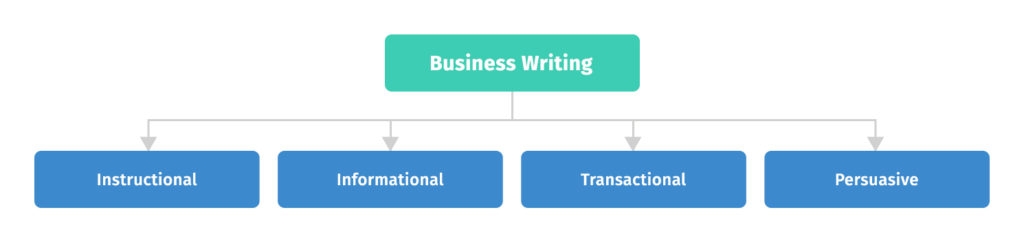
Most people use “type” and “format” interchangeably, but I separate them. A type is the purpose of the writing, while the format is the container, like an email, memo, proposal, or press release.
If you want the broader definition first, here’s my full guide to business writing. If you prefer to learn by example, keep these business writing examples open while you read.
Now, it’s time to cover the main types of business writing as well as offer real, practical, applicable examples.
Transactional business writing is the routine, operational writing that keeps work moving. It often requires a reply or an action, and it usually happens in high volume through emails, forms, invoices, confirmations, notices, and basic agreements.
The biggest success factor here is friction reduction. A clear subject line, a short setup, and an explicit next step will outperform a beautifully written paragraph that hides the request.
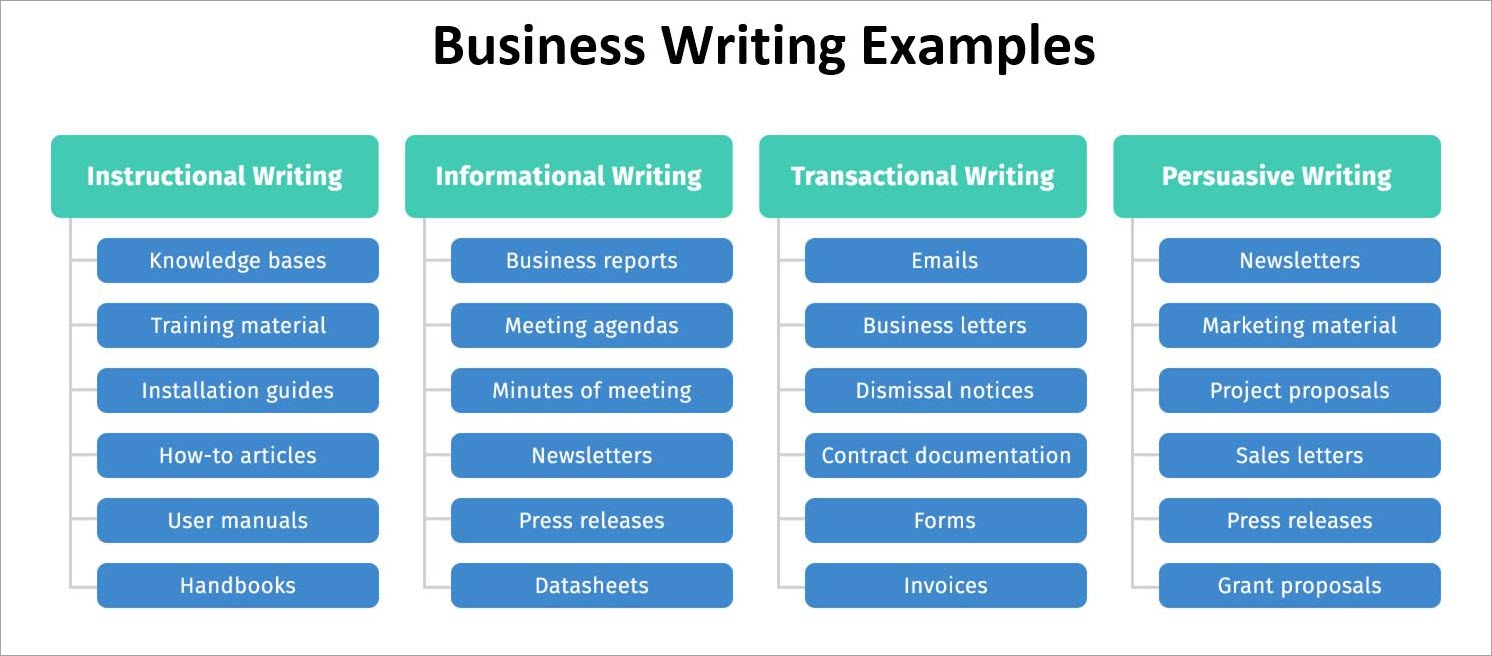
You’ll see transactional writing in internal emails, client emails, approvals, invoice and receipt communication, and contract-adjacent threads. It also shows up in memos and short notices when a team needs a record of what was communicated.
When I want to practice this skill intentionally, I focus on speed and clarity, which is why I like revisiting business writing skills alongside real inbox examples.
Informational business writing communicates facts, data, or knowledge to inform or update the reader. It usually does not demand immediate action, but it does shape decisions by making the current state visible.
This is where readability and structure matter more than people expect. Your reader is skimming for what changed, what matters, and what it means for stakeholders.
Informational writing includes business reports, quarterly reviews, business memos, meeting agendas, meeting minutes, financials, employee handbooks, and some white papers. You’ll also see informational sections inside press releases, where the goal is clarity, not hype.
If you’re unsure how much detail to include, I recommend studying a few formats in business writing examples and noticing how the best ones surface key takeaways early.
Instructional business writing teaches someone how to do something correctly. It includes procedures, guidance, and step-by-step instructions that support consistent execution.
This type overlaps with technical writing, especially when you’re dealing with specifications, troubleshooting guides, product specifications, and user manuals. The difference is that business instructional writing often sits closer to internal operations, onboarding, and performance workflows.
Instructional writing shows up in employee handbooks, onboarding instructions, training materials, performance improvement plans, knowledge libraries, support text, and instruction guides. It also includes internal how-to articles that help teams follow a process without reinventing it.
When I’m writing instructional content, I’m thinking about “moment of use.” I want the reader to be able to follow the instructions under pressure, without needing to interpret vague language.
Persuasive business writing aims to influence the reader to take action or adopt a viewpoint. This is where you’ll see business proposals, project proposals, grant proposals, sales emails, sales content, marketing communications, and product copy.
Persuasion in business is rarely about cleverness. It’s about making the case clearly, proving it with credible support, and ending with an obvious call to action that matches the business goal.
You’ll see persuasive writing in proposals, press releases, banners, flyers, content marketing copy, and sales outreach. White papers can be persuasive too, but they usually earn trust through depth, evidence, and a calm, confident tone.
If you want to compare real proposal structures, I keep a full collection of business proposal examples that show what “good” looks like across industries.
Conversational business writing is not a separate purpose; it’s a style choice. It’s a more informal and engaging tone that helps foster relationships, encourage open communication, and reduce the “corporate robot” vibe that makes people tune out.
This style is especially common in internal emails, Slack updates, newsletters, and friendly client communication. The key is keeping it approachable without losing professionalism, which means your tone stays polite, your language stays clear, and your message still respects the reader’s time.
Conversational writing shines when trust and speed matter more than formality. If you’re collaborating with a team you know well, a conversational writing style can reduce tension and make it easier for people to respond honestly.
It also helps when the topic is sensitive or potentially frustrating. A small personal touch, paired with clear next steps, often keeps the relationship intact while still being direct.
I lean on active voice, positive language, and a calm, courteous tone. I try to avoid industry jargon unless the audience requirements truly demand it, and I keep word choice simple enough that the message reads cleanly on mobile.
I also follow brand style guidelines when they exist. A consistent voice across communication channels builds trust, especially when multiple people might be speaking “as the company.”
I start with the outcome. If I need a reply, approval, or confirmation, I’m usually in transactional writing.
If I need to inform stakeholders without demanding action, I’m in informational writing. If I need the reader to do a task correctly, I’m in instructional writing.
If I need buy-in, budget, or a behavior change, I’m in persuasive writing. Then I decide whether a conversational tone will help, based on the relationship and the stakes.
If you want a simple way to level up across all five categories, I’d read this guide alongside business writing tips and practice rewriting one real document per week. That’s the fastest way I’ve found to turn “knowing” into “doing.”
If, on the other hand, you want the deeper framework, I break it down step-by-step in business writing principles. If you want the practical, day-to-day version, this guide on business writing tips is what I reference when I’m moving fast.
No matter the type, great business writing has the same backbone: clarity of purpose, logical structure, and a professional tone that matches the context. I write for scanning first, then understanding, then action.
Here are some of the top technical writing courses you can check out to strengthen your writing and documentation skills.

Here are the most frequently asked questions about business writing types.
The main types are transactional, informational, instructional, and persuasive. Conversational business writing is a style that can be applied to several of these types when the context supports a more approachable tone.
Transactional business writing is routine communication used to complete business tasks and transactions. It often requires a reply or action, like approvals, confirmations, invoices, notices, and many day-to-day emails.
Informational business writing shares facts, updates, or data to keep readers informed. Examples include reports, quarterly reviews, meeting agendas, financial summaries, and many internal memos.
Instructional business writing provides guidance, procedures, or step-by-step instructions so readers can complete tasks correctly. It includes onboarding instructions, training materials, troubleshooting guides, and user manuals.
Persuasive business writing aims to influence the reader to take action or agree with a recommendation. Common examples include proposals, sales emails, marketing communications, and some white papers.
Conversational business writing uses a more informal, engaging tone to support collaboration and relationships. It still stays professional through clear structure, polite language, and respectful word choice.
Get the weekly newsletter keeping 23,000+ technical writers in the loop.
Learn technical writing and advance your career.
Please check your email for a confirmation message shortly.





















Get our #1 industry rated weekly technical writing reads newsletter.
Your syllabus has been sent to your email