Our reviewers evaluate career opinion pieces independently. Learn how we stay transparent, our methodology, and tell us about anything we missed.

Our reviewers evaluate career opinion pieces independently. Learn how we stay transparent, our methodology, and tell us about anything we missed.
I like grant writing books when they do two things well: they teach you the structure of strong proposals, and they force you to practice. If you want the full context around how proposals, budgets, and attachments fit together, I’d start with my grant writing guide and then come back here to pick a book that matches where you are right now.
A quick note on how I’m thinking about this list: “Best” depends on whether you’re a beginner trying to understand the grant application process, or an experienced writer trying to tighten strategy, evaluation language, and budgets.
So, as you read the book blurbs below, I want you to keep one question in mind: do you need fundamentals, or do you need a better system?
If you’re brand new, I’d pair one beginner-friendly book with structured reps from my grant writing templates so you can practice without staring at a blank page. If you’re already writing proposals, I’d pair one strategy-heavy book with real comparison samples from these successful grant writing examples so you can see what “fundable” looks like across different formats.
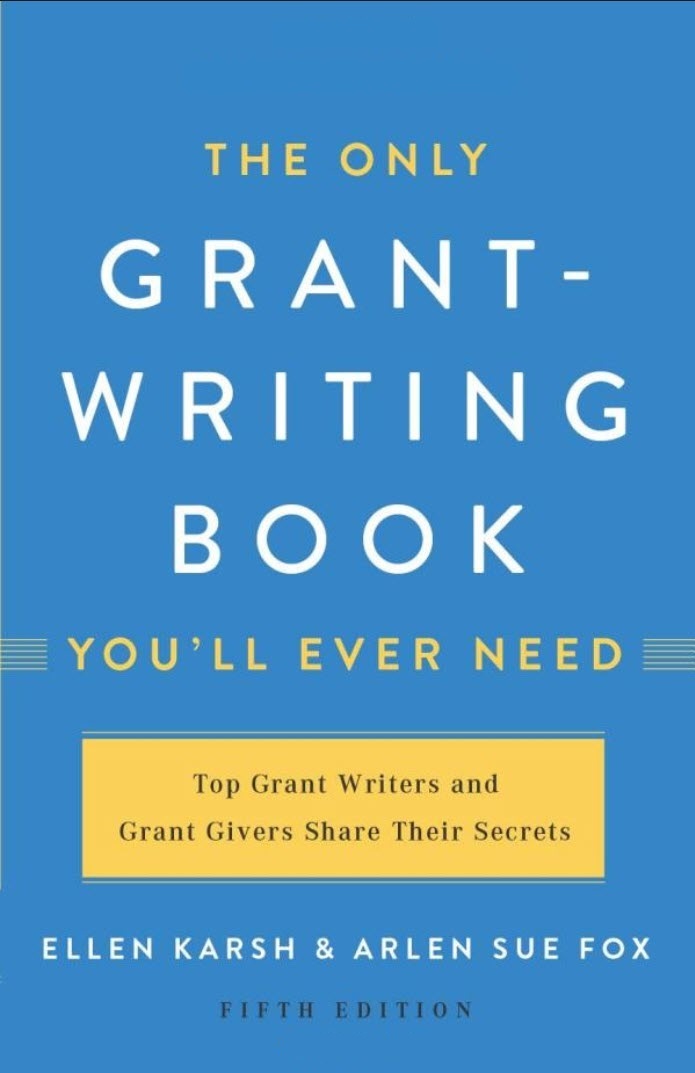
If you want one “classic” book to keep on your desk, this is the one I’d choose. It’s strong on end-to-end fundamentals: how funders think, how proposals are typically structured, and how to translate a project idea into a case a reviewer can score.
What I like most is that it treats grant writing as both writing and strategy. You’re not just filling in a narrative. You’re building an argument with logic, proof, and a clean flow that reduces reviewer uncertainty.
The Only Grant-Writing Book You’ll Ever Need offers:
Ellen Karsh and Arlen Sue Fox have over thirty years of experience in grant writing. They understand the nuances of what makes a successful grant proposal – from how competitive grants work to tailoring your message for different grant opportunities – and they know exactly where you should look when submitting proposals.
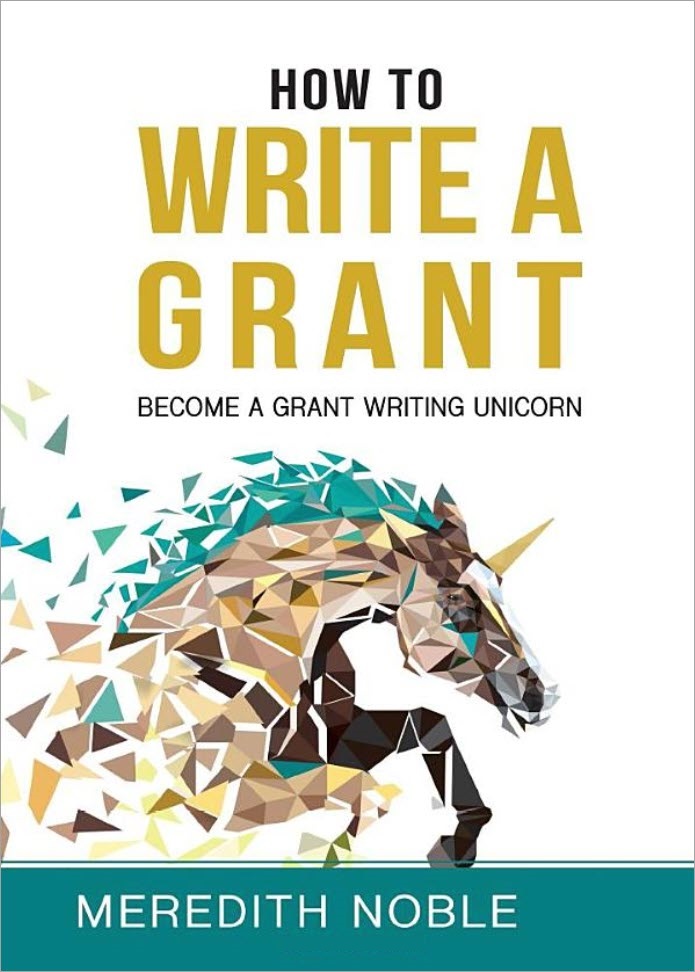
This one is especially useful if you want a modern, practical approach, and you want it in plain language. It’s the kind of book that helps you go from “I understand grants in theory” to “I can actually draft and ship proposals consistently.”
It’s also one of the better picks if you’re thinking about grant writing as a career, because it speaks to the workflow side. It covers how to manage the process, avoid running out of time, and build repeatable habits instead of relying on last-minute heroics.
Meredith Noble is America’s foremost cattle rancher, and she splits her time between Wyoming and Alaska. This 5th-generation beef producer founded SenecaWorks to teach others how to be talented grant writers, the best in their class.
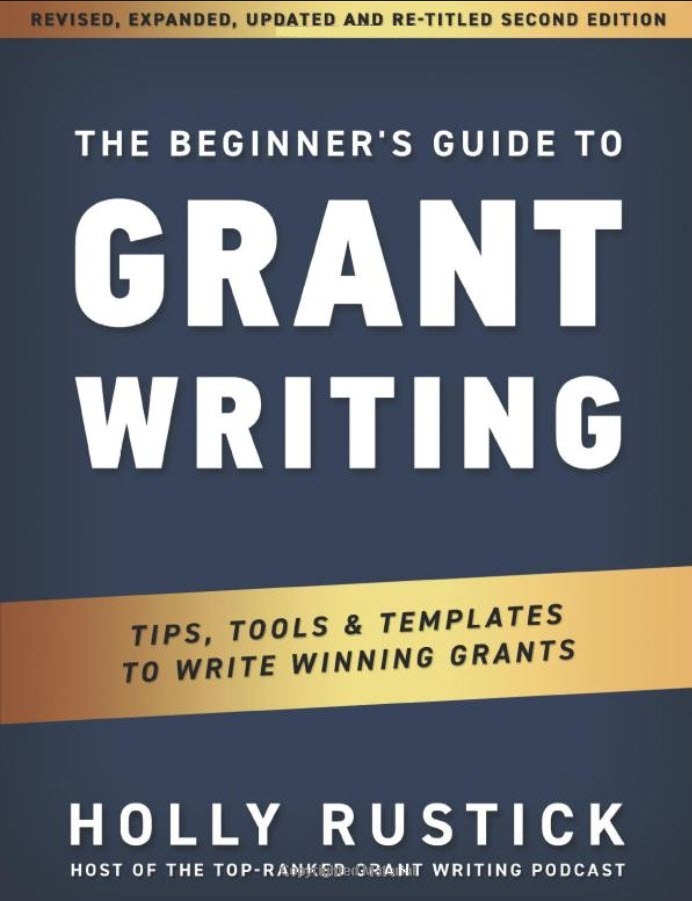
If you’re brand new, this is one of the easier on-ramps. It’s beginner-friendly without being fluffy, and it focuses on the parts that actually trip people up: the statement of need, the logic of the narrative, and the mechanics of pulling a proposal together without getting lost.
One detail that’s worth calling out is the book’s focus on practical systems, including frameworks like the G.R.A.N.T.S. formula and how it connects narrative, strategic budget, and budget narrative work.
Holly Rustick, the creator of WEGO Consulting, is known as “the go-to person” for writing proposals in North America. She has over ten years of experience writing proposals or reviewing them for companies worldwide.
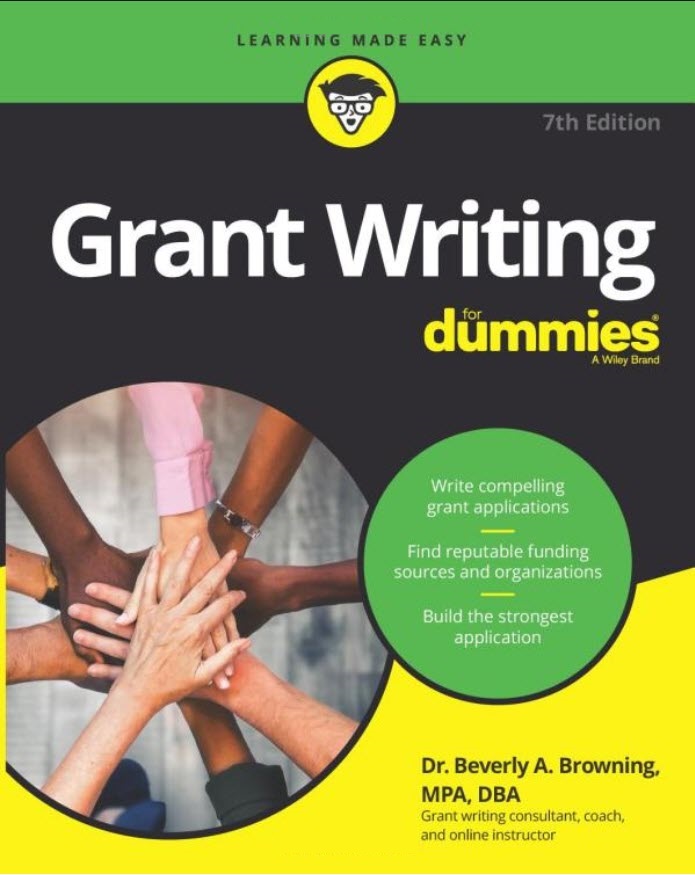
I know “For Dummies” gets dismissed sometimes, but this one earns its spot because it’s broad and operational. It’s useful when you want a single resource that covers grant research, proposal basics, and how government funders tend to work, without assuming you already know the landscape.
It’s also a solid fit if you’re supporting a nonprofit team that needs shared language. When multiple stakeholders are contributing to the application, having one “common reference” reduces misalignment and speeds up reviews.
Dr. Beverly Browning is a 40-year award-winning grant writer and consultant who has helped others strengthen their professional acumen through organizational capacity building. She has received more than $450 million in contract awards for clients she has assisted. She is the author of 43 publications on various topics related to obtaining grants.
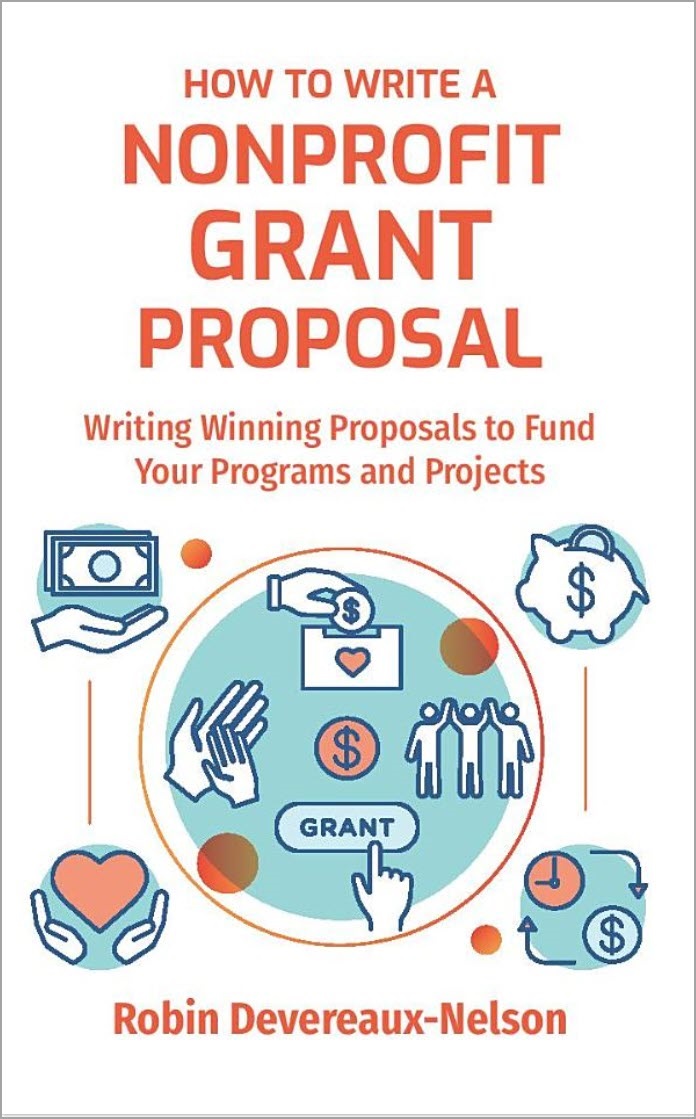
This is a short, direct book aimed at nonprofit proposals specifically, and it’s best used as a quick primer. If you’re overwhelmed and you need something that helps you understand the basic components fast, it can be useful.
I’d treat it as a starting point, not the only resource you rely on. The biggest risk with shorter guides is that they can’t cover the nuance funders care about, like evaluation language, compliance constraints, or the deeper logic of aligning a budget with activities.
Robin Devereaux-Nelson authored this book with Content Arcade Publishing, a well-known Amazon Kindle Direct Publishing publisher.
Content Arcade Publishing is an independent publishing company that provides high-quality books for all readers on Amazon. It has a vast library of over 200 e-books and print novels catering to millions of book lovers, featuring many established authors.
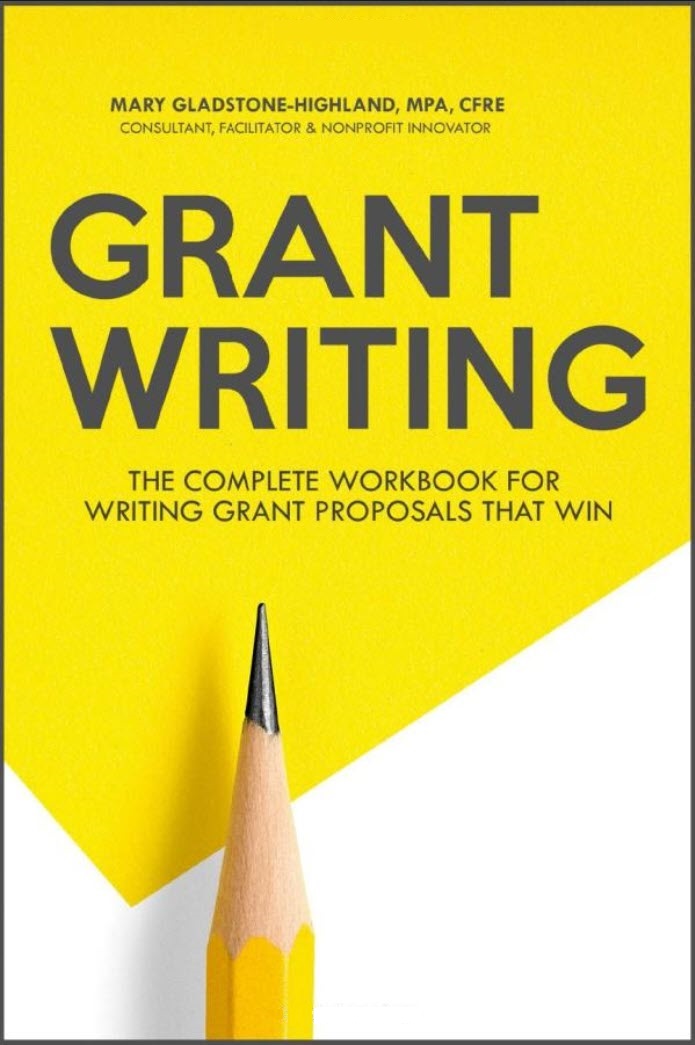
If you learn by doing, this is the one I’d pick. Workbooks force you to produce, and that matters because grant writing is not a purely intellectual skill. You get better by drafting sections, revising them, and seeing where reviewers get confused.
I like this as a companion to a more comprehensive “strategy” book. You read the strategy, then you execute the exercises, and your drafts get sharper faster because you’re not just consuming information.
A graduate of the Maxwell School of Citizenship and Public Affairs, Mary Gladstone-Highland holds a Master’s in public administration with an advanced certificate in conflict management. As a certified fundraising executive, she has raised over $3 million for numerous organizations.
If you’re a beginner, pick one book that teaches fundamentals and one resource that forces reps. A beginner-friendly book plus practice using my 8-step process for writing grant proposals is usually enough to get your first solid draft.
If you’re intermediate, you’re usually not struggling with structure. You’re struggling with persuasion, evidence, and reviewer confidence. That’s where reading and comparing real documents helps, especially alongside grant proposal cover letter guidance and a budgeting reference like the grant proposal budget template I use.
If you’re advanced, you want strategy and systems. You’re thinking about pipelines, funder relationships, readiness, and how to present evaluation and sustainability in a way that feels credible.
Once you have one general grant writing book under your belt, you’ll get outsized gains by adding one “lens” book that matches your environment.
If you write for nonprofits where narrative and human impact matter, “Storytelling for Grantseekers” is a strong option because it explicitly frames proposals as narratives written for an audience of grantmakers.
If you work in higher education, government-heavy funding, or complex institutional environments, you’ll usually benefit from resources that emphasize compliance language, budget alignment, and review criteria.
This is the part that gets underestimated. Most grant proposals don’t lose because the idea is wrong. They lose because the writing creates doubt.
When your sentences are bloated, your syntax is tangled, or your key messaging is fuzzy, reviewers work harder to understand you. When reviewers work harder, they get stricter.
The best grant writing books teach structure, but your everyday writing habits decide whether that structure actually lands. Clear and concise writing is how you make a reviewer’s job easy, especially when they’re reading quickly.
If you feel like your drafts get wordy, look for books that drill sentence structure and clarity. You want resources that help you write simple, direct sentences without sounding childish, and that teach you how to cut fluff without cutting meaning.
A practical way to use these books is to rewrite one real section at a time. Take your statement of need, rewrite it for clarity, then rewrite it again for brevity. If you can cut 15 percent while making the argument easier to follow, you’re moving in the right direction.
Grant writing is persuasive writing, but it’s persuasion under constraints. You’re not trying to “sell.” You’re trying to make funding feel safe.
Books that focus on persuasive communication help you tighten the logic of your narrative. They teach you to connect problems to solutions, solutions to activities, activities to outcomes, and outcomes to measurement without leaving argument gaps.
I like to treat this as a flow test. If a reviewer asked “Why this, why now, and why you?” could they answer those questions without flipping pages or guessing your intent?
Grant proposals often fail because they have too many messages. The proposal tries to be about the need, the organization, the partnership, the urgency, the innovation, and the entire history of the program.
Writing and communication skill resources help you pick a single throughline, then support it. That can look like one core claim, three supporting points, and a consistent set of phrases you repeat across sections so reviewers don’t have to re-interpret what you mean.
This is also where a framework like the G.R.A.N.T.S. formula can help, because it forces you to stay outcome-driven, narrow objectives, and tie the plan to a strategic budget instead of generic spending.
In grant writing, grammar and mechanics are signals. If a reviewer sees sloppy syntax or inconsistent terminology, they unconsciously wonder what else is sloppy, like reporting, compliance, or budget controls.
That’s why I recommend at least one writing-craft resource that’s obsessed with correctness. Not because you need to sound formal, but because you need to sound reliable.
If you’re choosing between two books, I’ll take the one that includes editing checklists, revision strategies, and examples of “before and after” writing. Those help you build repeatable habits instead of depending on vibes.
A budget narrative is where many proposals quietly die. The numbers might be fine, but the explanation feels weak, inconsistent, or defensive.
I like grant writing resources that treat the budget as part of the story. The goal is to explain costs in a way that feels strategic, not arbitrary, which is why “strategic budget” and “budget narrative” guidance matters so much.
A good budget narrative reads like clear technical writing. It names the cost, ties it to an activity, explains the basis for the estimate, and makes it easy for a reviewer to cross-check.
Phrase books get a bad reputation, but they can be useful when you’re stuck on how to word standard sections. A book like “Perfect Phrases for Writing Grant Proposals” is essentially a phrase bank you can use to jumpstart introductions, goals language, and supporting document phrasing.
My rule is to treat ready-to-use phrases as a sketch, not a final draft. Copying them directly can make your proposal feel generic, but adapting them can help you find the right tone faster, especially when you’re writing under deadline.
If you want a practical way to apply this, here’s the stack I’d build:
This is the part people skip because it feels “too basic.” It’s also the part that makes your proposals feel confident, coherent, and fundable.
That’s also why I like mixing books with practice assets, whether that’s free grant writing templates or a structured plan like my grant writing process walkthrough.
Books can make you dramatically better, but only if you turn reading into output. My rule is simple: every chapter should produce an artifact. A revised needs statement. A tighter objectives section. A cleaner budget narrative. A sharper executive summary.
Here, I answer the most frequently asked questions about grant writing books.
If you want a gentle on-ramp, choose a beginner-focused guide that explains the core sections clearly and gives you templates or exercises. Beginners improve fastest when they can read a section, draft their own version, and revise with a checklist.
I look at the author’s credentials, the level of specificity, and whether the book includes examples. I also check whether it covers budgeting, evaluation language, and the real workflow of research, drafting, review, and submission.
Yes, but you should pick differently. Experienced writers get more value from strategy, positioning, and systems, like how to strengthen readiness, align narratives with budgets, and write evaluation plans that feel feasible.
Not immediately, but they help once you have the fundamentals. Sector context affects tone, evidence, evaluation expectations, and compliance rules, so a sector-specific resource can make your proposals sound more “native” to the reviewer’s world.
Turn chapters into deliverables. After each chapter, revise one real proposal section, update one template, or build one reusable checklist you can apply to future submissions.
Books are great for knowledge, but classes can compress your learning curve because they create feedback loops. If you’re stuck, the fastest unlock is often a structured review, not more reading.
Get the weekly newsletter keeping 23,000+ technical writers in the loop.
Learn grant writing and advance your career.
Please check your email for a confirmation message shortly.



















Get our #1 industry rated weekly technical writing reads newsletter.
Your syllabus has been sent to your email