Our reviewers evaluate salary independently. Learn how we stay transparent, our salary methodology, and tell us about anything we missed.

Our reviewers evaluate salary independently. Learn how we stay transparent, our salary methodology, and tell us about anything we missed.
Whenever I write about entry-level positions, I always start with the same example. The challenge of beginning as a technical writer isn’t writing; it’s learning how to think clearly in public. In other words, asking questions without feeling dumb.
That’s what this guide is for. I’m going to walk you through what an entry-level technical writer does, what skills make you valuable fast, how to build your portfolio and job search strategy, and how to grow past “entry-level” without burning yourself out.
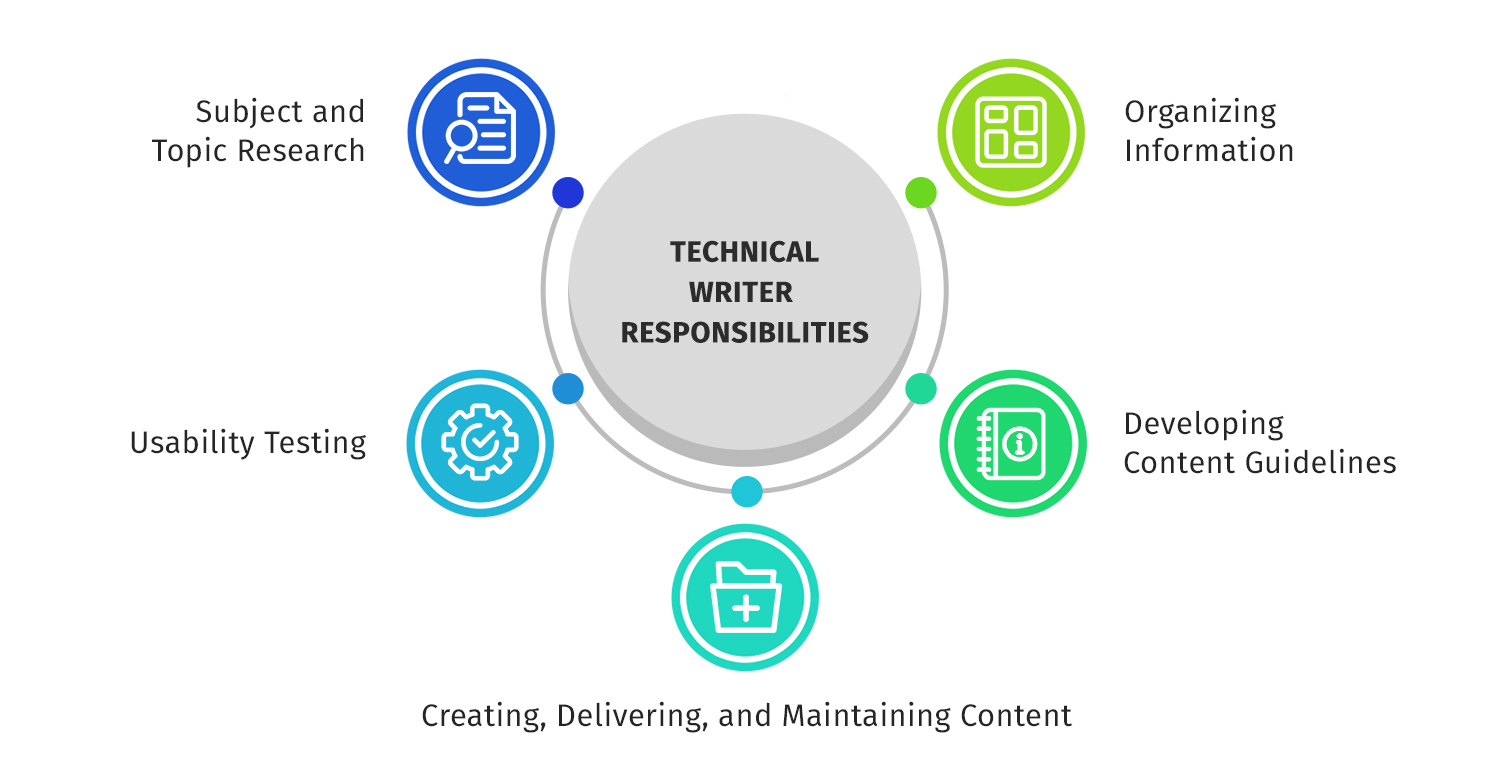
At the entry level, your job is not to be the “final authority” on anything. Your job is to be the person who makes information usable. That means you are taking technical content from engineers, product managers, support teams, and existing technical publications, then shaping it into documentation that matches the end user’s experience.
A typical week can include writing or updating instruction manuals, how-to guides, operating instructions, assembly instructions, FAQs, and supporting documents for a release. You will often work alongside software development teams and collaborate with engineers to understand what actually changed.
The “writing” part matters, but the bigger skill is building clarity out of technical challenges and incomplete inputs. The Bureau of Labor Statistics frames it well: Technical writers determine user needs, study product samples, work with technical staff, revise supporting content, standardize content across platforms, and collect user feedback to improve content.
A big part of the role is audience knowledge. You are making judgment calls like: “Is this reader a brand-new user or a power user?” and “What is the least we need to explain so they can succeed?”
That’s why entry-level writers get pulled into usability studies, content reviews, and conversations about diagrams, screenshots, and visuals. Sometimes a small diagram saves you 300 words, and nobody complains about reading less.
You also start learning the boring-but-important side: Technical content consistency, quality standards, versioning, and review workflows. It’s not glamorous, but it’s what makes documentation trustworthy.
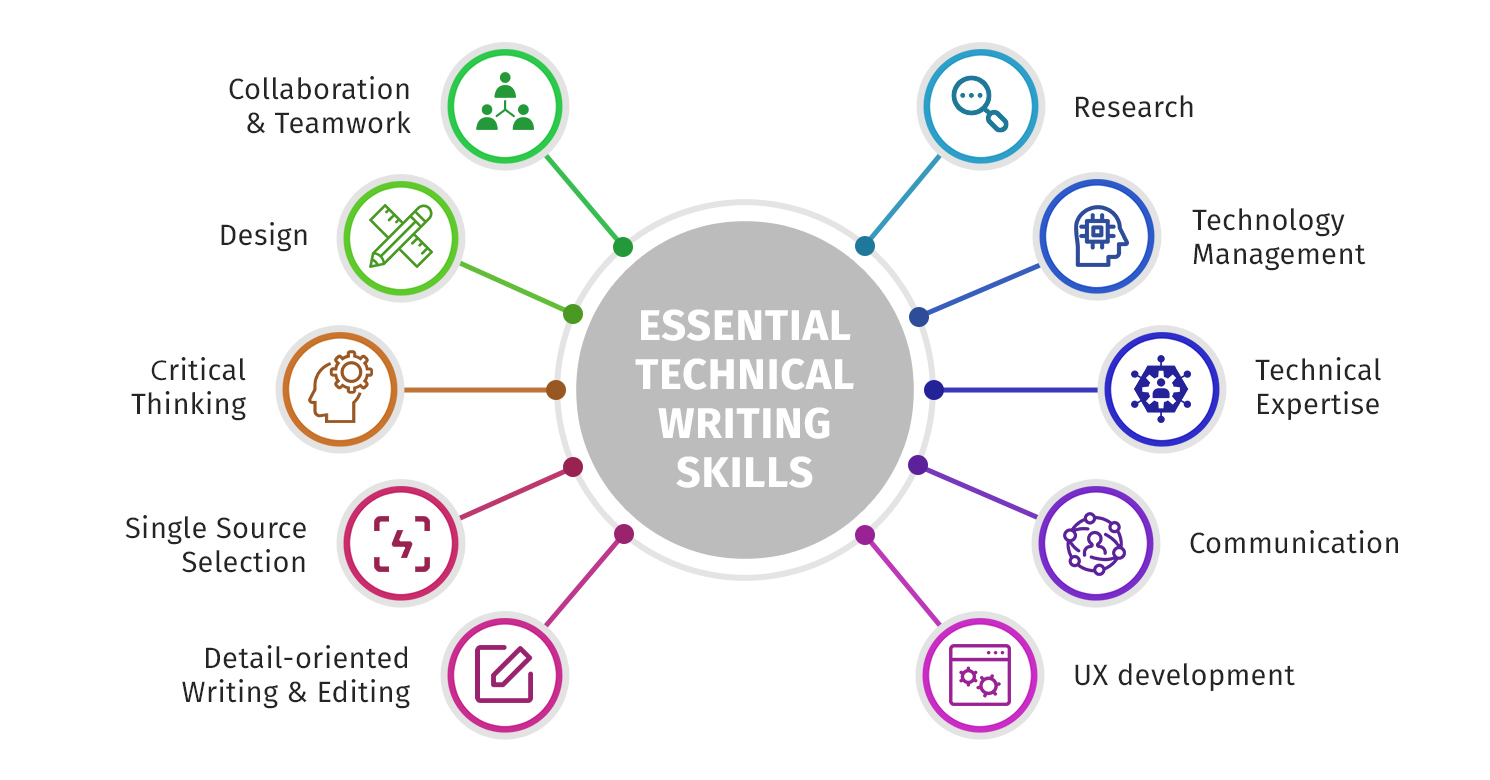
Entry-level technical writer job descriptions love vague phrases like “strong communication skills” and “attention to detail,” but the reality is more practical. Here are the skills that employers look for:
If you cannot organize your own thinking, you cannot organize the reader’s. This shows up in front-loading techniques (putting the most important info first), strong headings, short paragraphs, and writing that answers the reader’s question early.
Developers and end users do not read docs like novels. They scan, search, and jump. Your structure needs to respect that.
Most entry-level writers underestimate how much time they will spend editing. You will edit your own drafts, fix SME drafts, and tighten content for consistency. You are also doing lightweight quality assurance: checking steps, validating terminology, spotting contradictions, and ensuring the doc matches the product.
This is one reason I like recommending a skills baseline, like essential technical writing skills, when you are trying to level up.
In real teams, you do not always get perfect access to SMEs. You learn to pull answers from multiple communications channels: tickets, specs, release notes, Slack threads, PRs, and internal wiki pages. When you can say, “I verified this in the product,” your credibility goes up fast.
BLS calls out critical-thinking skills, being detail-oriented, teamwork, and technical skills as core qualities for the occupation. You do not need to be an engineer, but you do need to be comfortable learning technical subjects and asking questions until something is clear.
Hiring managers want proof you can produce user-friendly content that is accurate, consistent, and easy to scan.
Education helps, but it’s rarely the deciding factor.
For technical writers overall, the BLS lists the typical entry-level education as a bachelor’s degree, plus short-term on-the-job training, and often less than five years of related work experience. In other words, companies expect you to arrive with basic writing maturity, then adapt to a more descriptive style of writing once you are in the role.
If you have a degree in English, communications, journalism, or technical communication, great. If your degree is in something technical like engineering, computer science, or biology, also great. In my experience, the “best” background is the one that helps you understand the technical subject you are documenting and communicate it clearly.
What matters more than the major is whether you can show:
That’s why targeted training can be useful. For example, Google offers free technical writing courses aimed at improving documentation skills (the same curriculum Google engineers use).
If you want something structured that also helps you build portfolio-ready samples, a technical writing certification course can be useful too, especially for people switching careers.

You will also hear about certifications as a “professional credential.” BLS notes that certifications are not mandatory, but can demonstrate competence and may increase advancement opportunities. Practically, I treat certifications as optional. They help when they produce real work samples or teach you workflows you will use on the job.
If you do only one thing here, do this: Choose a technical topic, create a small doc set, and iterate it through feedback. That beats a pile of certificates with no proof.
Here’s what to focus on:
Wrapping all of these practices into your process early on will not only make you a more effective technical writer but also help you build trust with your team and users alike.
Entry-level technical writing job searches are won by proof and positioning:
On the application side, your resume and cover letter need to be scannable. For a clean structure, use this technical writer resume guide and pair it with a focused technical writer cover letter example. Keep your story tight: “Here’s what I documented, here’s how I worked with SMEs, here’s the impact.”
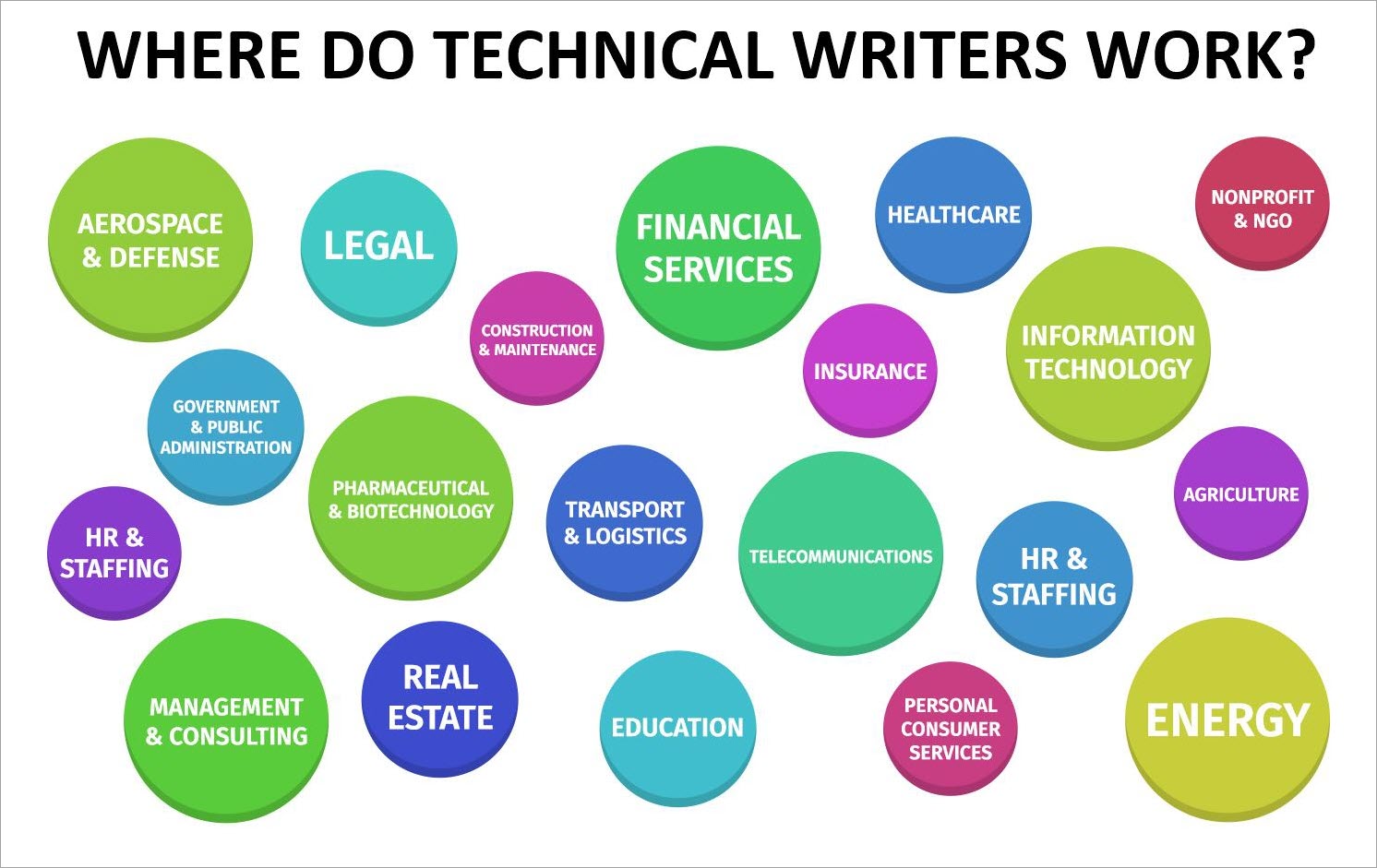
Most entry-level technical writers work full time, and the work environment looks a lot like the teams you support. BLS notes that technical writers usually work in offices, are concentrated in the computer and management, scientific, and technical industries, and most work full time. In 2026, that often translates to hybrid setups, lots of Slack, and lots of meetings that could have been shorter (but that’s a separate article).
Here’s what matters: your schedule will often be driven by deadlines. When a product ships, documentation needs to be ready. That means planning ahead, building relationships with SMEs early, and keeping a running list of “docs risk” items like missing screenshots, unclear workflows, or features that are still changing. Even in a healthy team, you will occasionally feel deadline pressure. BLS notes that technical writers may be expected to work evenings and weekends to meet deadlines.It does not happen everywhere, but it is common enough that you should expect it during launches.
Location also matters. BLS mentions technical writing jobs are often concentrated in places with lots of information technology or scientific and technical research companies, citing California and Texas as examples. Remote work has widened access, but clusters still exist, especially for companies that prefer in-office collaboration.
One thing I like about entry-level roles in larger orgs is mentorship. BLS notes that in large companies, beginning writers may shadow experienced writers before being assigned projects. That is the ideal environment when you are learning quality standards, tooling, and review workflows. In smaller orgs, you may get projects right away, which is exciting, but it can also be sink-or-swim.
Let’s separate two realities: the official occupation data and the entry-level experience band.
At the occupation level, BLS reports the median annual wage for technical writers was $91,670 in May 2024, and employment is projected to grow 1% from 2024 to 2034, with about 4,500 openings each year on average. That is the most reliable public baseline, and it is worth anchoring to because it is tied to OEWS and BLS projections.
Entry-level compensation will typically be lower than the median because you are earlier in experience. What moves your entry-level range up or down tends to be:
If you want more market color beyond BLS, PayScale publishes a current average salary estimate for technical writers and breaks it down by experience and location. For a more documentation-specific lens, the Write the Docs community runs a salary survey that benchmarks compensation across regions and experience levels.
One more practical tip: when you compare compensation, compare the total package, not just the base. Benefits, learning budget, mentorship, and the scope of work can matter more early in your career than squeezing out a slightly higher number. If a role gives you ownership of real documentation, strong feedback loops, and a path to complex projects, it often pays off faster than a “higher salary, lower growth” situation.
Entry-level is not a life sentence. It is a ramp. BLS notes that advancement prospects generally include working on more complex projects and leading or training junior staff. That is exactly how growth happens in the real world. You start by executing well. Then you earn trust. Then you get a bigger scope.
Here’s the path I like because it is predictable and measurable:
Your early portfolio is about proving you can write usable docs. Your next portfolio is about proving you can own documentation end-to-end.
That means you show information architecture decisions, content audits, and how you improved the end user’s experience. If you need a roadmap, the technical writer career path article maps the progression.
The fastest way to level up is to become the writer engineers trust. That means you ask focused questions, you summarize decisions accurately, and you do not waste time.
When you can pull clarity out of SMEs and ship clean documentation, you become the person who gets assigned the important work.
A personal blog can be useful if it builds your authority in a niche. The key is quality over volume. If you choose blogging platforms like Medium, Dev.to, or your own site, treat the posts like technical documentation: clear structure, examples, and user-focused explanation.
Regular blogging also gives you reps in editing and clarity of thought, which transfers directly to work.
Specialization can speed up advancement. API docs, developer experience, knowledge bases, and regulated industries all have strong demand. You can specialize while still being flexible.
Finally, pay attention to professional communities. STC was historically a major professional association, but it ceased operations in January 2025. In practice, communities like Write the Docs have become even more important for networking, mentorship, and career momentum.
If you’re trying to break into technical writing, entry-level roles can feel intimidating because you think you need “perfect” technical knowledge. You don’t.
You need a process. You need curiosity. You need the ability to learn a technical subject, ask good questions, and write in a way that respects the reader’s time.
If I were you, I’d focus on three things: build a small portfolio that proves you can document real workflows, practice editing until clarity becomes your default, and get close to feedback loops through user feedback, support channels, and (if you can) usability studies.
That’s how you turn entry-level into “trusted,” and “trusted” turns into better projects, better pay, and faster advancement.
Most days are some mix of research, writing, and editing. You gather information from subject matter experts, specs, and existing documents, then turn it into usable documentation like how-to guides, FAQs, onboarding docs, or release-related updates. You also spend time coordinating reviews and updating content based on feedback.
Not always, but many employers expect it. BLS lists a bachelor’s degree as the typical entry-level education for technical writers, along with short-term on-the-job training. In practice, a strong portfolio can sometimes offset a missing degree, especially if you can prove you can document a technical subject clearly.
Include a short how-to guide, a troubleshooting article, and a conceptual overview. Make sure at least one piece shows you can work with SMEs or real constraints. If you want examples and structure ideas, use a portfolio guide like the one on Technical Writer HQ.
Use open-source projects, volunteer documentation, internal documentation at your current job, or small freelance gigs. The goal is to build proof. Even one well-executed doc set can be enough to get interviews if it demonstrates clarity, accuracy, and organization.
BLS projects technical writer employment will grow 1% from 2024 to 2034, with about 4,500 openings per year on average. The openings matter more than the growth rate because they reflect replacement demand and ongoing need for documentation.
Sometimes, especially around deadlines and product launches. BLS notes technical writers may be expected to work evenings and weekends to meet deadlines, although most positions are full time.
If you are new to technical writing, we recommend taking our Technical Writing Certification Course. You will learn the fundamentals of being a technical writer, how to dominate technical writer interviews, and how to stand out as a technical writing candidate.
Learn technical writing and advance your career.
Your syllabus has been sent to your email