Our reviewers evaluate career opinion pieces independently. Learn how we stay transparent, our methodology, and tell us about anything we missed.

Our reviewers evaluate career opinion pieces independently. Learn how we stay transparent, our methodology, and tell us about anything we missed.
When I wrote software documentation for a video-editing company early in my career, I didn’t think of it as a “career move.” I thought of it as solving a problem everyone kept tripping over. Users were confused, support was swamped, and engineers were tired of repeating themselves.
That’s still the core job. Technical writing is a leverage role. You turn tribal knowledge into something that scales.
If you’re new to the field and want a quick overview of what the job entails, I’d start with what a technical writer does day to day, then come back here for the transition plan.
The easiest mistake engineers make is assuming technical writing is “just writing.” It’s not. It’s product thinking, information architecture, stakeholder wrangling, and a lot of calm translation. The good news is you already have a huge advantage: you understand how software is built, what can go wrong, and what engineers mean when they talk.
Here’s the step-by-step approach I’d use if I were switching today.
If you’re employed as an engineer right now, your best first move is often internal. You already know the product, the codebase, the release rhythm, and the people. That removes the hardest part of technical writing, which is ramping up on a new domain while still trying to ship docs.
Starting internally also gives you easier access to subject matter experts and stakeholders, which can help you improve your documentation faster. A simple way to test the waters is to volunteer for one documentation surface area and own it for a release cycle. You’ll learn fast whether you enjoy the work and whether documentation aligns with your strengths.
Engineers can write. The challenge is writing for an audience that does not share your context. If you want a structured way to build that skill quickly, either take our course, or I also recommend Google’s technical writing courses for engineers, which focus on clarity, structure, and reader intent rather than fluffy “writing tips.”
The mindset shift is the real work here. As an engineer, you’re rewarded for precision and completeness. As a technical writer, you’re rewarded for usefulness.
I’d start with a small loop that forces clarity:
That feedback loop is technical writing in miniature.
Most engineers think “portfolio” means “I need a blog.” Not necessarily. Your portfolio can be built from practical documentation you already touch:
If you want inspiration for how to present it, I’d scan technical writing portfolio examples that hiring managers actually like and model your structure after the strongest samples.
Keep it tight. One or two great pieces beat ten mediocre ones.
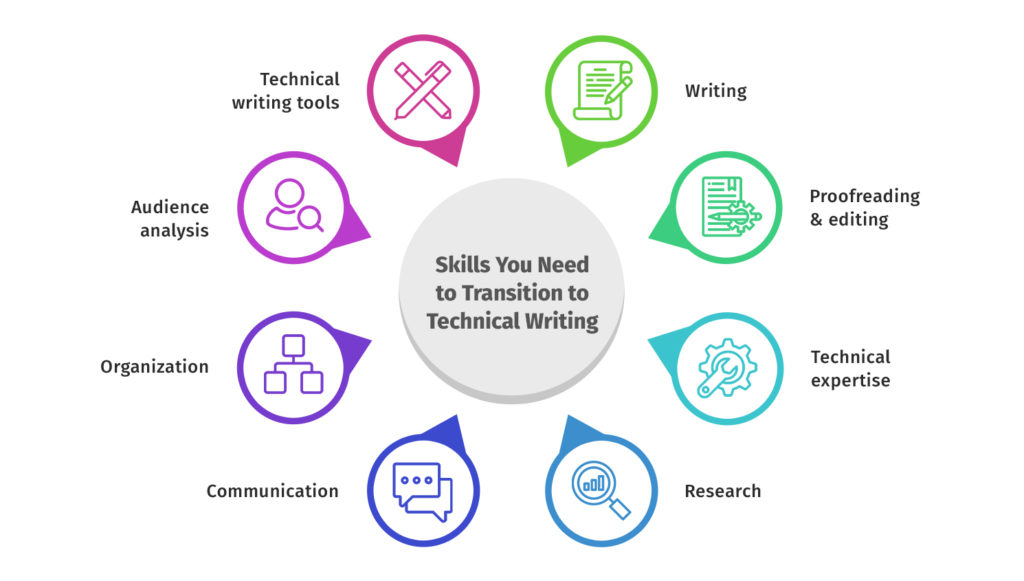
This is where most transition resumes fall apart. Engineers list technologies. Technical writers list outcomes.
Instead of “built X service,” reframe as:
If you’re unsure what belongs on a technical writing resume, I’d use the same approach as this technical writer job description breakdown and map your experience to responsibilities like stakeholder interviews, content maintenance, and documentation quality.
Here’s the unglamorous truth: your writing skill matters, but your ability to extract information matters more.
A big chunk of the job is getting clarity out of busy subject matter experts, then turning it into something readable without losing accuracy. As an engineer, you already have an edge here. You know how to ask technical questions. The upgrade is learning how to ask them in a way that produces usable documentation.
When I’m interviewing an SME, I lean on a few prompts:
Those questions prevent docs that read like internal notes.
Technical writing responsibilities change a lot depending on whether you’re writing for users, developers, or internal teams.
If you want a simple way to practice the end-user side, I’d try writing one piece using a straightforward software documentation process and treat it like a mini project.
This is where I see engineers get surprised. Technical writer compensation can be strong, but it varies more by industry and company maturity than people expect.
For a stable baseline, the U.S. Bureau of Labor Statistics lists the median annual wage for technical writers at $91,670 (May 2024) and projects 1 percent growth from 2024 to 2034, with about 4,500 openings per year on average.
If you’re aiming specifically for senior roles, compensation shifts based on scope, ownership, and whether you’re in a docs-as-code environment. You can benchmark those ranges using senior technical writer salary expectations and ranges and then compare to what you’re seeing in your target industry.
I’d negotiate around scope, not title. If the role expects you to own a doc site, lead release documentation, or drive information architecture, you’re not “just switching careers.” You’re bringing senior-level product context and execution. That should show up in compensation.
Some engineers switch because they want to write more. Others switch because they want to lead documentation systems. Both are valid, but they lead to different next steps:
If you want a general roadmap for breaking in, especially if you’re not switching internally, I’d follow this guide on becoming a technical writer without experience and treat your engineering background as proof of domain fluency.
If you’re a software engineer considering technical writing, the best way to think about the transition is this: you’re not leaving “technical” work. You’re changing where your impact shows up.
Instead of shipping features, you’re shipping understanding. And in a lot of organizations, understanding is the real bottleneck.
Here I answer the most frequently asked questions about transitioning from a softare engineer role to a technical writer.
It’s not hard in the “can you do it” sense. The main challenge is the mindset shift from writing for peers to writing for readers without your context.
No. Many technical writers come from engineering and other technical backgrounds. What matters most is clarity, structure, and proof you can produce useful documentation.
Audience awareness, information structure, editing, and the ability to run SME interviews cleanly. Tools and markup matter too, but the reader-first mindset is the bigger unlock.
Start with real artifacts: improved READMEs, onboarding guides, troubleshooting docs, and a short tutorial. One strong piece that solves a real user problem goes a long way.
Engineering is building systems. Technical writing is making systems understandable and usable. You’ll spend more time interviewing, structuring, editing, and coordinating reviews than you probably expect.
It can, especially in larger tech companies and in senior roles with ownership. But it varies more by company and industry, so the fastest path to higher pay is usually broader scope and clear impact.
Get the weekly newsletter keeping 23,000+ technical writers in the loop.
Learn technical writing and advance your career.
Please check your email for a confirmation message shortly.





















Get our #1 industry rated weekly technical writing reads newsletter.
Your syllabus has been sent to your email