Our reviewers evaluate writing services independently. Learn how we stay transparent, our methodology, and tell us about anything we missed.

Our reviewers evaluate writing services independently. Learn how we stay transparent, our methodology, and tell us about anything we missed.
I’ve built content teams. I’ve hired freelance writers. I’ve tested agencies. And I’ve also made the mistake of hiring “cheap content” that technically hit word count but did nothing for rankings, conversions, or brand credibility.
Content writing is not just writing blog posts. It’s SEO strategy, brand voice alignment, editorial review, scalable production, and making sure what you publish actually supports your business objectives.
If I needed content support in 2026, these are the services I’d consider. I’m judging them on writing talent, SEO capability, process maturity, scalability, and value for money.
Here’s my pick of the 11 best services from the lineup reviewed.
Content writing services are not interchangeable. Some are essentially freelance writer networks. Others are feature-rich content platforms with proprietary content production processes, automated QA checks, and built-in project management.
If you don’t define what you need before you choose, you’ll waste money. So let’s break this down.
Before we compare providers, let’s clarify something.
Content writing is a profession built around strategic communication. It includes blog writing, SEO content writing, case studies, white papers, technical writing, product descriptions, social media writing, ghostwriting, and long-form educational content.
Modern content writing also involves:
Great content writing isn’t just creative. It’s structured, data-driven, and built to perform.
Next, here are my detailed reviews of the best writing services.

Technical Writer HQ focuses on technical and structured content—documentation, knowledge bases, SOPs, white papers, and product explainers. Unlike many general content platforms that mainly produce SEO blog posts, this service specializes in technical communication where accuracy, clarity, and structured information matter.
This makes it particularly valuable for SaaS companies, startups, and technical teams that need writers capable of translating complex systems into understandable documentation. Instead of relying on generalist content writers, businesses can work with writers experienced in documentation workflows, developer-focused content, and technical storytelling.
I picked Technical Writer HQ because technical content requires a very different skill set than typical marketing content. Writing documentation, developer guides, or technical tutorials requires working with subject matter experts, understanding systems, and structuring information logically.
Technical Writer HQ focuses on those workflows rather than treating technical writing as just another type of blog content.
Pros
Cons
LEARN MORE ABOUT Technical Writer HQ
Check out Technical Writer HQ job board

Textbroker is built for scalable production. If you need consistent blog posts, product description writing, or web content quickly, it’s efficient.
It operates through a freelance writer network. You can scale up or down based on volume, which makes it appealing for businesses testing content marketing or running aggressive SEO campaigns.
However, quality depends heavily on your brief and the writer tier selected. You’ll need strong SEO content briefs and internal editorial review if brand voice consistency matters.
I picked Textbroker because scalability matters. If your strategy requires 20 blog posts a month, you need infrastructure, not just talent.
Pros
Cons
LEARN MORE ABOUT Textbroker
Check out Textbroker on their website: Textbroker
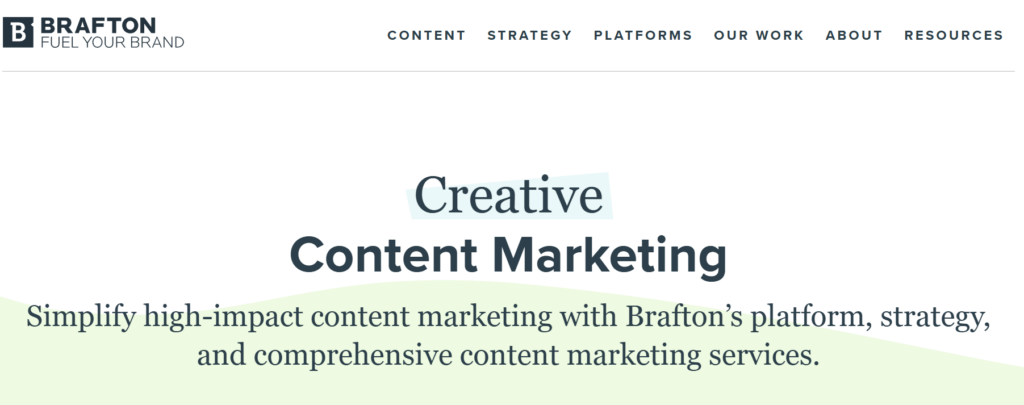
Brafton functions more like an agency. You’re not just buying words. You’re buying SEO-focused content strategies, keyword research, content planning, and execution.
They typically include data-centric content strategy, technical site audits, backlink analysis, and competitive analysis. This makes them stronger for businesses serious about search engine visibility.
It’s ideal if you want a partner managing content creation workflows end-to-end.
If your content supports real business objectives like traffic growth, inbound leads, and digital marketing campaigns, you need more than writers. You need process and strategy.
Pros
Cons
LEARN MORE ABOUT Brafton
Check out Brafton on their website: Brafton

Upwork is about control. You hire directly and build relationships over time.
If you find a writer who understands your brand voice, industry expertise, and target audience, that relationship can outperform most platforms.
The downside is vetting. You must review samples, run trial projects, and manage editing and proofreading yourself.
Because content is better when writers understand your business strategy. A long-term relationship beats random assignments.
Pros
Cons
LEARN MORE ABOUT Upwork
Check out Upwork on their website: Upwork
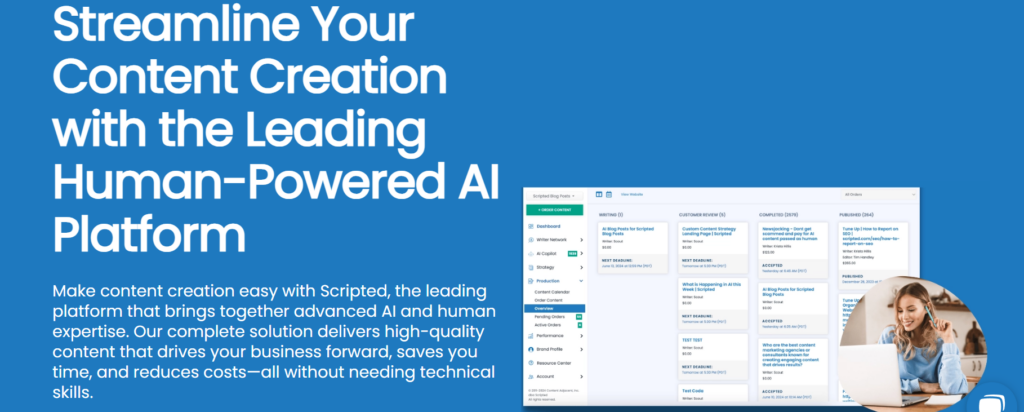
Scripted combines a freelance network with editorial processes. This means drafts often go through stronger QA compared to open marketplaces.
If you want consistent blog writing without building your own editorial team, this is appealing.
Editorial review is underrated. Quality assurance professionals and structured workflows reduce the rewrite cycle.
Pros
Cons
LEARN MORE ABOUT Scripted
Check out Scripted on their website: Scripted

Contently is ideal for brands managing large-scale content ecosystems. It includes proprietary content production processes, project management excellence, and governance systems.
This is for companies treating content as infrastructure.
When content volume and complexity grow, you need workflows, not just writers.
Pros
Cons
LEARN MORE ABOUT Contently
Check out Contently on their website: Contently
When I compare content writing providers, I don’t start with “who’s most popular.” I start with “what job are we hiring them to do?” A platform that’s perfect for 40 SEO blog posts a month can be a terrible fit for one flagship white paper that needs interviews, narrative structure, and executive-level polish.
Here’s the simplest way I bucket these providers based on how they operate. Think of it like choosing between a gym, a personal trainer, and a physical therapist. They all help you “get in shape,” but they’re not interchangeable.
These platforms are best when you want flexibility, fast hiring, and lots of options. You’ll get a wide range of pricing and talent, but you’ll also need to manage briefs, editing, and consistency more actively.
Examples: Upwork, ProBlogger Job Board, Textbroker
These services sit in the middle. You still tap into a freelance writer network, but the provider adds editorial processes, some level of QA, and usually a smoother content creation workflow.
Examples: Scripted, Compose.ly, WriterAccess, Verblio
This is where you go when content is part of a bigger growth system. These providers tend to offer data-centric content strategy, competitive analysis, technical SEO audits, and multi-level teams (strategists, editors, writers, QA).
Examples: Brafton, Contently, ClearVoice
If I needed to choose fast, here’s how I’d match provider types to real scenarios:
“Content writing” is one of those umbrella terms that means 15 different things depending on who you ask. When someone says they want content writing, I always clarify what content types they actually mean and what the content needs to accomplish.
Most content writing services fall into these buckets.
This is search-driven content designed to rank and bring in qualified traffic. It typically includes blog writing, article writing, pillar pages, and refreshes of existing posts, all guided by keyword research and search intent.
This is where SEO content briefs matter most. If the provider can’t talk clearly about structure, internal linking, and intent, you’re probably buying generic writing, not SEO.
This is content designed to drive action: landing pages, homepages, product pages, email sequences, and ad copy. Copywriting is less about “more words” and more about clarity, persuasion, and a tight value proposition.
A lot of services say they do this, but the best ones will ask about your business objectives and funnel stage before they write anything.
This is where you get deeper: white papers, ebooks, reports, and research-backed guides. These assets often require content ideation, narrative structure, subject matter expert interviews, and heavier editing and proofreading.
If your goal is trust, credibility, and sales enablement, this bucket usually performs better than pure blogging.
This includes founder posts, LinkedIn articles, executive blog content, and op-eds. The job here is tone and voice, not just correctness, so brand voice alignment and stakeholder interviews matter.
A good ghostwriter will ask for raw inputs, examples of your voice, and how you want to be perceived.
This includes technical writing, product-led content, engineering-heavy explainers, and niche content where accuracy matters more than style. It often requires subject matter experts, tighter editorial review, and sometimes technical SEO audits for structure.
If you’re in a regulated industry, this is where trust factors and QA become non-negotiable.
A lot of providers also offer supporting elements that affect how “complete” the deliverable feels.
When I evaluate a content writing service, I’m not just grading the writing. I’m grading the system behind the writing. Because at scale, content fails due to workflow, QA, and strategy gaps, not because someone forgot a comma.
Here’s what I look for.
Real SEO writing starts before the draft. The provider should be able to produce or work from keyword research reports, build SEO content briefs, and explain how they map intent to structure.
If they offer competitive analysis or backlink analysis, even better. That usually means they understand search visibility as a system, not a checkbox.
Most content services can write in “professional English.” Far fewer can match your brand voice and tone consistently over months. If your content needs to sound like one team wrote it, the provider needs a process for voice onboarding.
The easiest signal is whether they ask for examples. If they don’t request samples, tone guidance, or positioning notes, consistency will be a struggle.
This is the part people skip and regret later. I look for editorial review, editing and proofreading steps, and whether they use automated QA checks for basics like formatting, links, and originality.
The best providers have quality assurance professionals or at least multi-level teams where an editor is separate from the writer. That separation catches issues early.
Content production is a workflow problem as much as a writing problem. Strong providers can explain their content creation workflow clearly, including handoffs, timelines, revision loops, and approvals.
If they offer an account manager, that often improves speed and reduces miscommunication. But only if that account manager actually understands content planning and not just scheduling.
A freelance writer network can be great, but only if the provider can route the right writer to the right job. I look for signals like niche specialization, subject matter experts, and how they evaluate writers internally.
If you’re in a technical niche, this is where the best providers separate themselves. You don’t want a generalist trying to “research their way into” expertise every week.
I care about value, not cheapness. A provider can be expensive and still be a bad deal if you spend hours rewriting drafts or managing a messy workflow.
I look at pricing structure and whether it matches reality:
If you’re choosing a content writing service, the trick is not “find the best one.” The trick is to avoid buying the wrong system for your goals. Here’s the exact decision process I’d use.
If your goal is SEO traffic, you need SEO-focused content strategies, keyword research, and structure. If your goal is conversions, you need copywriting and positioning. If your goal is credibility, you need long-form authority assets.
Write down the business objective in one sentence. If you can’t do that, the provider can’t solve it.
This sounds basic, but it prevents wasted money. Are you buying content ideation, writing, editing, publishing-ready formatting, and content planning, or are you only buying drafts?
A lot of disappointment comes from scope mismatch. One service thinks you want “a blog post,” while you expected “a fully SEO-briefed, optimized, internally linked article with images.”
Before you sign anything, ask questions that expose how they operate. A good provider will answer clearly without hand-waving.
AI-assisted content is normal now, but it changes what you should evaluate. If a provider uses AI, the value is in their human editing and proofreading, QA, and ability to maintain brand voice, not in raw draft speed.
The question is not “do you use AI?” The question is “how do you prevent AI from producing generic or inaccurate content?”
Most teams test with an easy blog post, then get surprised later when a white paper goes sideways. I do the opposite. I test with a representative, challenging piece that reflects your real standard.
Your pilot should stress-test:
If you have strong internal editors, you can use marketplaces and manage quality yourself. If you’re lean, a managed platform or agency will usually save time even if it costs more.
This is the tradeoff most teams ignore. Paying more for workflow often saves more than paying less for drafts.
Content writing is about producing strategic, SEO-driven, and brand-aligned content that delivers results. Whether your goal is to improve rankings, generate leads, or build authority, the right service can make a big difference.
Freelance platforms offer flexibility, while managed platforms and agencies provide structured workflows and scalability. Choose a provider that aligns with your goals and delivers consistent quality.
With the right service, you can create content that supports your strategy and drives growth. Use this guide to find the best fit for your needs.
Here I answer the most frequently asked questions about content writing services.
Content writing focuses on educating, informing, and building long-term trust. Copywriting focuses on driving immediate action and conversions.
Ask for keyword research reports, backlink analysis examples, and structured SEO briefs.
Many now integrate AI tools into production workflows. The key question is whether humans handle editorial review and quality control.
Pricing varies by complexity and volume. Subscription plans work for ongoing production. Per-project pricing works for one-off assets.
Platforms offer scalability and process. Hiring directly offers control and relationship depth. Choose based on your internal capacity.
Yes, but confirm they have subject matter experts or experience in your industry before committing.
Get the weekly newsletter keeping 23,000+ technical writers in the loop.
Learn technical writing and advance your career.
Please check your email for a confirmation message shortly.





















Get our #1 industry rated weekly technical writing reads newsletter.
Your syllabus has been sent to your email